

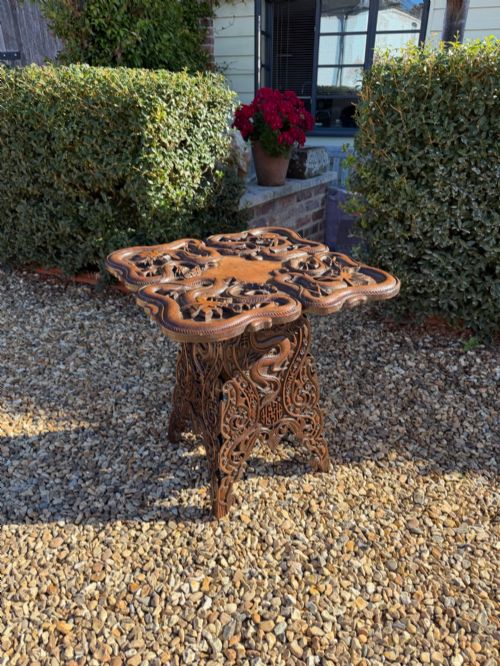
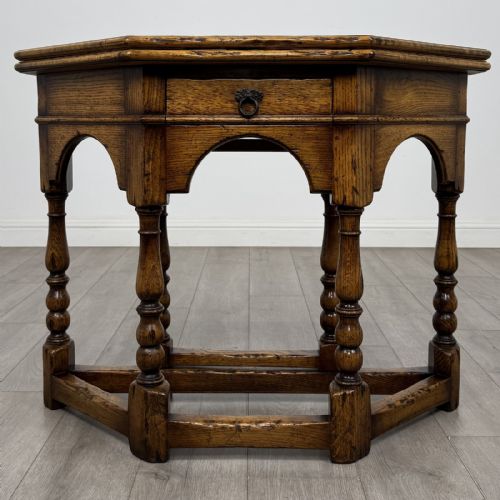
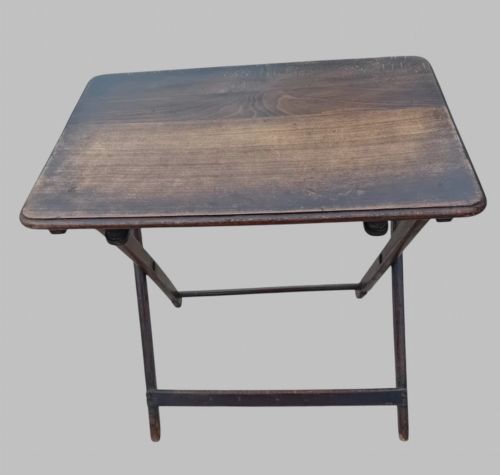
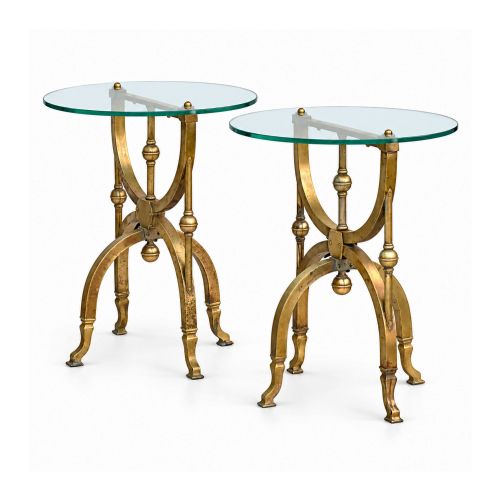
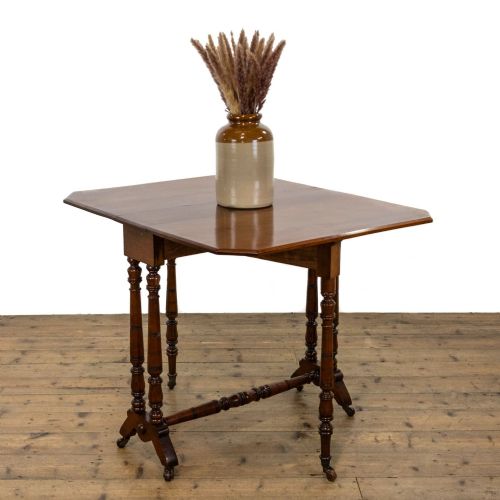
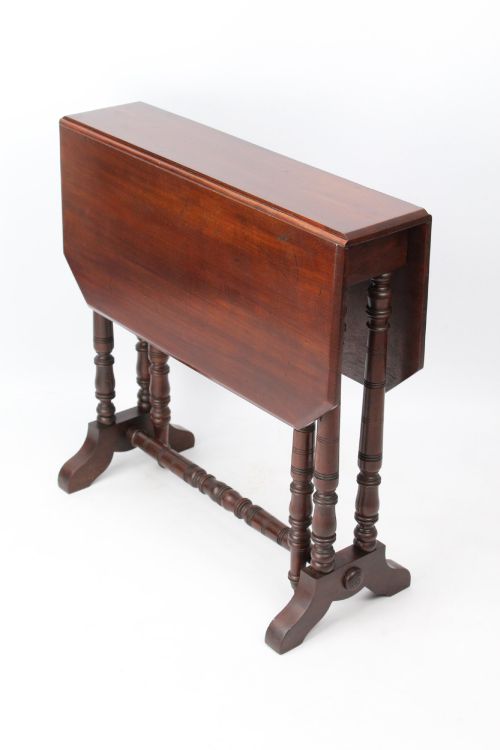
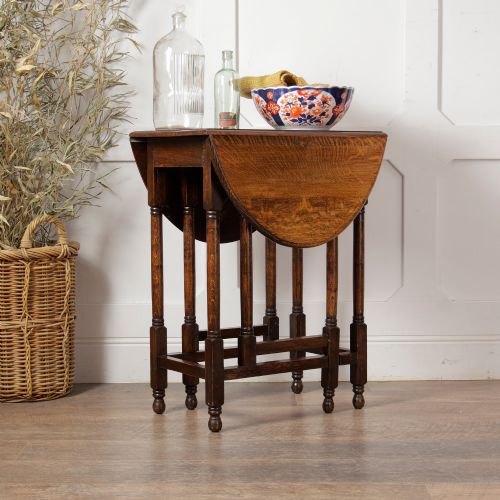
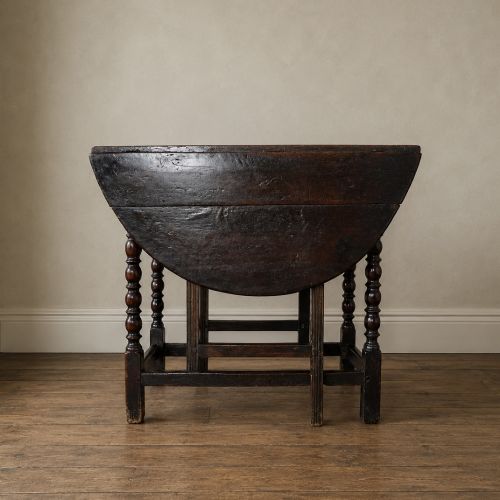
Vintage Folding Accent Table
A vintage folding accent table provides flexible surface space in compact interiors, combining practical mechanics with traditional cabinetmaking.
Vintage Folding Accent Table
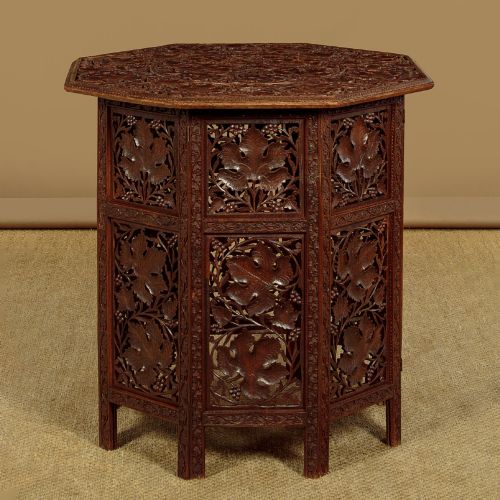
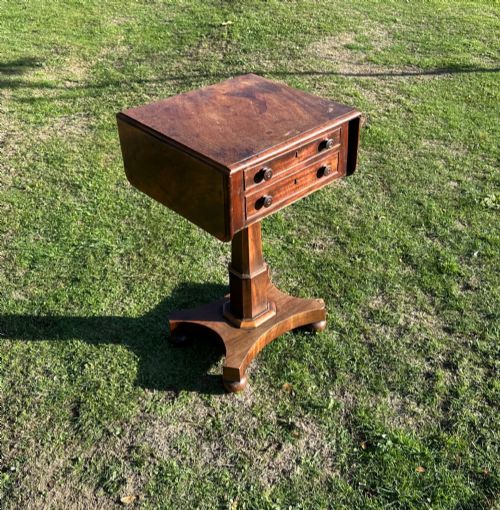
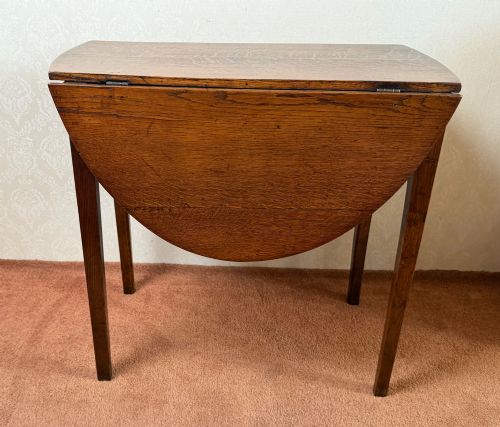
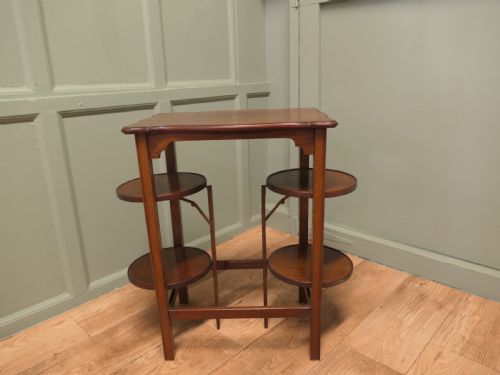
When you search for a vintage folding accent table, you find pieces designed to expand or collapse according to domestic needs. These items function as side tables, occasional tables, and tea tables within living spaces.
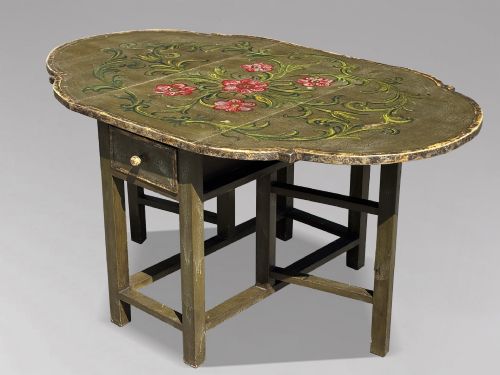
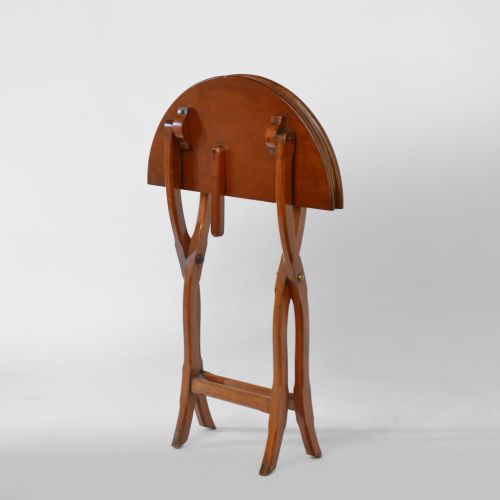
The selections on this page span the nineteenth and early twentieth centuries, drawing on periods such as the Edwardian era and Victorian times. Forms range from gateleg tables and Sutherland tables to Pembroke tables and campaign pieces.
Origin styles include English Country, Anglo-Indian, Georgian, and Regency designs. Most examples rely on domestic timbers or imported hardwoods configured for mobility and space-saving storage.
Materials and construction methods
Cabinetmakers utilised a range of solid timbers and veneers, predominantly mahogany, oak, walnut, burr walnut, and teak, alongside hardwoods like beech and padauk. Brass hinges, brackets, and catches support the folding mechanisms of drop leaves and gatelegs.
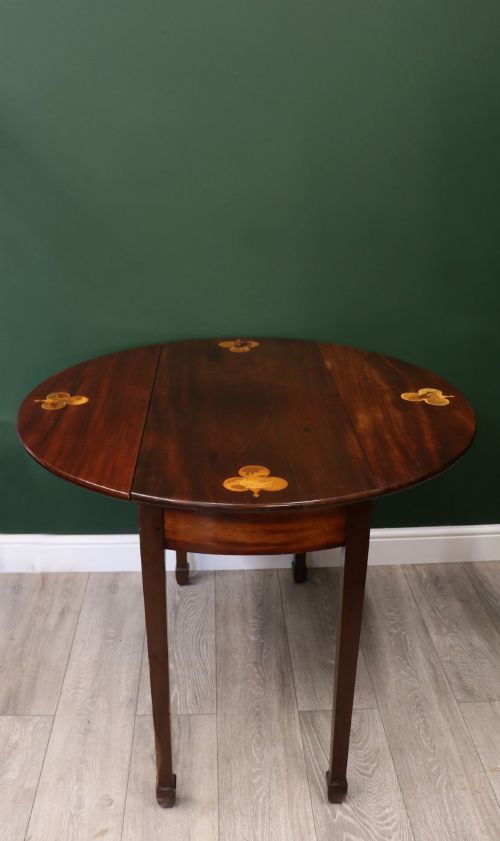
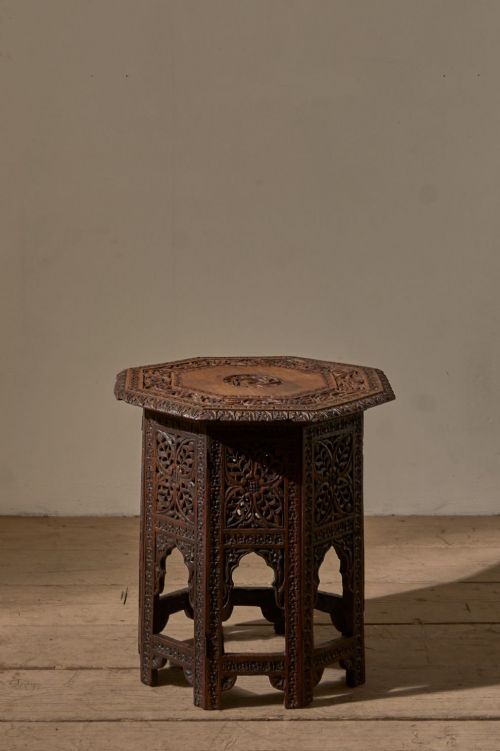
Surface treatments include polished wood finishes, black lacquer, green paint, and ragwork decoration, complemented by carved detailing in Anglo-Indian and Oriental pieces. Inlaid stringing and figured timbers appear on finer Edwardian and Georgian examples.
Vintage Folding Accent Table Retail Price Guide 2026
Typical asking prices for vintage folding accent table among the pieces listed under this phrase on Sellingantiques today, from the lower quarter to the upper quarter. They describe what is for sale here now, not the wider market.
Listings feature woods spanning mahogany, oak, walnut, burr walnut, teak, beech, padauk, and birch across the nineteenth and early twentieth centuries.
Factors that distinguish quality
The integrity of the folding mechanism dictates daily utility, separating rigid, smooth-acting gatelegs and drop leaves from loose or stiff joints. Superior examples feature precise joinery that keeps leaves level when extended.
Selection of timber grain and the execution of carved or inlaid decoration define the aesthetic tier. Finely figured burr walnut, balanced mahogany flames, and crisp hand-carving elevate utilitarian forms into decorative focal points.
The Vintage Folding Accent Table Glossary
- Gateleg table
- A drop-leaf table with hinged legs that swing out to support the raised flaps. This construction allows a compact surface to double in size.
- Pembroke table
- A drop-leaf table featuring two hinged flaps on opposite sides and typically one or more drawers. It originated in the eighteenth century as a breakfast or writing table.
- Sutherland table
- A narrow table with exceptionally slender drop leaves supported by swinging gate legs. When folded completely, it occupies minimal floor space.
- Campaign style
- Furniture engineered for portability and ease of transport during military deployment. These pieces often incorporate folding frames and brass corner reinforcements.
- Drop-leaf table
- A table with a fixed central section and hinged flaps that lower at the sides. It offers adjustable surface dimensions for variable room layouts.
Vintage Folding Accent Table: Frequently Asked Questions
How do I operate a gateleg table mechanism?
Lift the drop leaf until it rests horizontally, then swing the hinged supporting leg outward from the centre frame.
Ensure the swinging leg locks securely into position beneath the leaf before placing any items on the surface.
Where can I place a folding accent table?
These pieces fit well beside sofas, in hallways, or as bedside surfaces where occasional extra space is useful.
Their folding design allows you to collapse the leaves and store them flat against a wall when floor space is restricted.
How do I distinguish Edwardian tables from Victorian ones?
Victorian tables often display heavier proportions and darker finishes, utilising dense mahogany or walnut alongside robust turned supports.
Edwardian examples tend to feature lighter framing, inlaid mahogany veneers, and delicate leg profiles influenced by earlier revival styles.
What maintenance do these wooden tables require?
Dust surfaces regularly with a dry cloth and occasionally apply a traditional beeswax to nourish the polished timber.
Keep folding tables away from direct heat sources and moisture to prevent the wood from warping and the hinges from binding.