
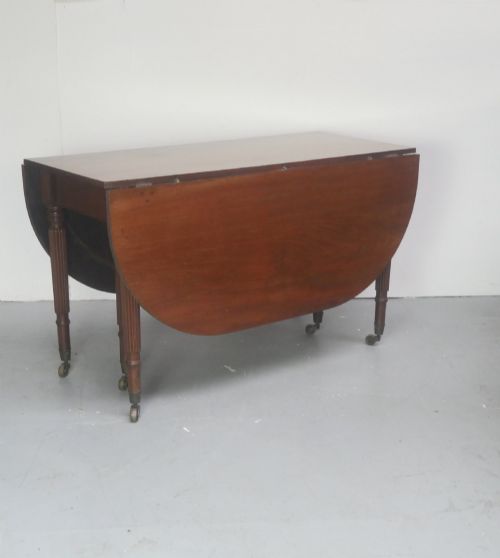
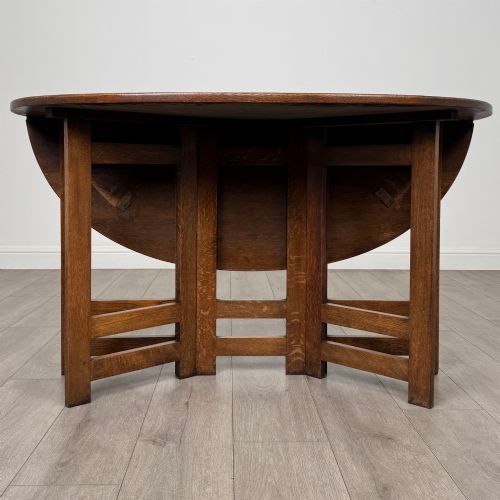

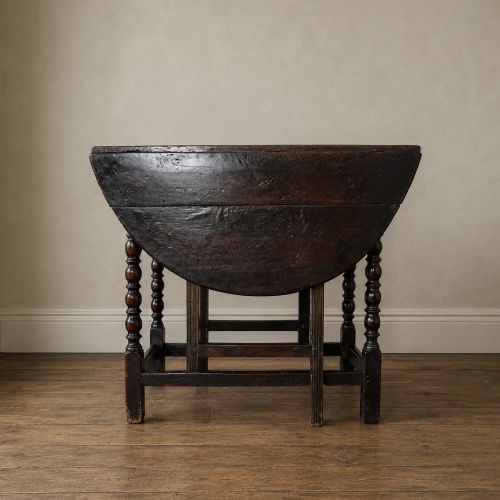
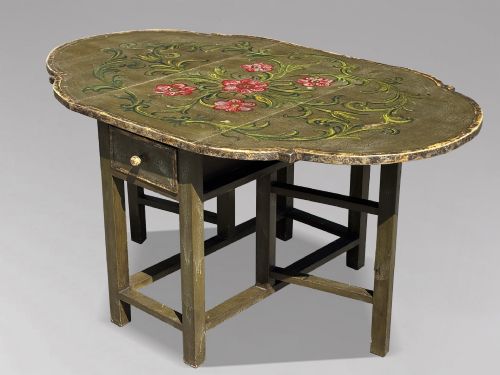
Vintage Fold Leaf Table
These vintage fold leaf tables provide adaptable surfaces that expand for dining and drop away to save space when not in use.
Vintage Fold Leaf Table
When buyers search for a vintage fold leaf table, they encounter versatile furniture designed to adapt room layouts through hinged leaves. These pieces range from compact occasional surfaces to large dining tables intended for everyday gatherings.
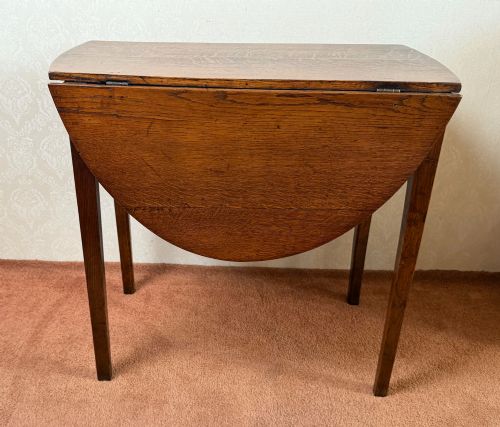
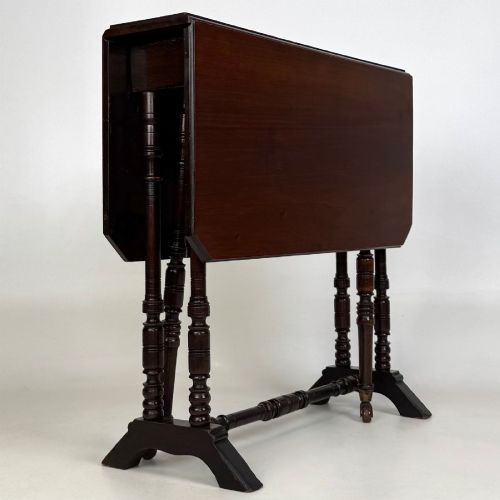
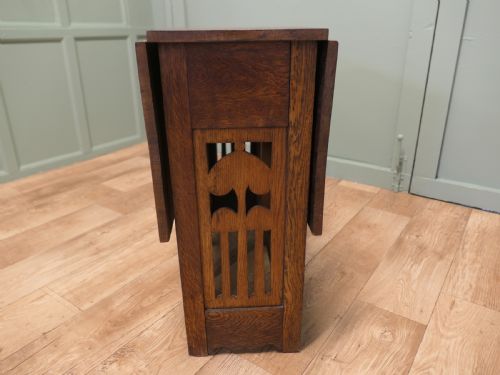
The selection on this page relies heavily on gateleg designs, Sutherland tables, and Pembroke tables originating from the seventeenth century through the early twentieth century. Oak and mahogany dominate the forms, reflecting periods from the Georgian era to the Arts and Crafts movement.
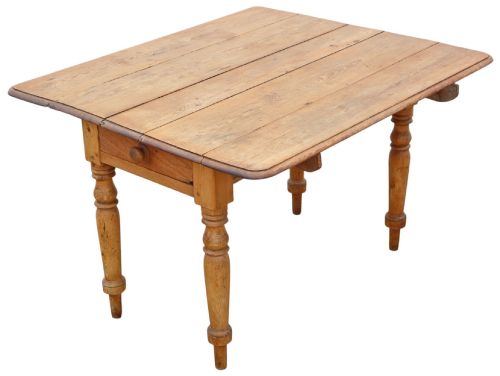
The most common examples met here are oak gateleg dining tables from the early twentieth century and mahogany Pembroke tables from the Georgian and Edwardian periods. Smaller pine and walnut variations also appear, offering flexible options for kitchen and living spaces.
How they were made
Joiners and cabinetmakers utilised solid hardwoods like oak and mahogany alongside softer timbers such as pine, constructing frames with sturdy mortise and tenon joints to support the moving flaps. Table leaves are secured with pivoting wooden gatelegs, sliding brackets, or drop-leaf hinges that bear the weight of the extended surface.
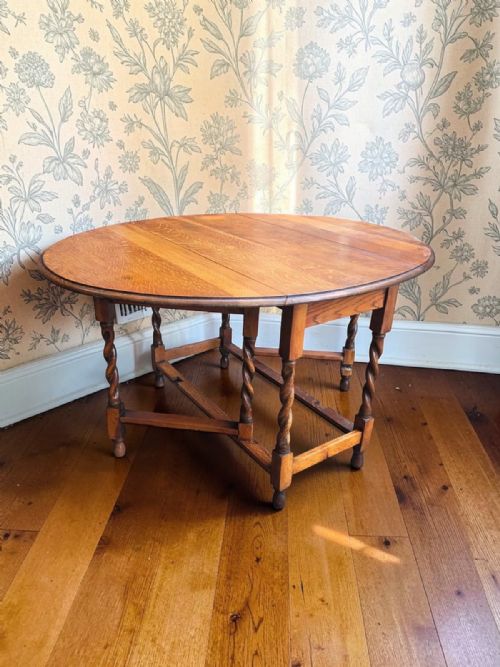
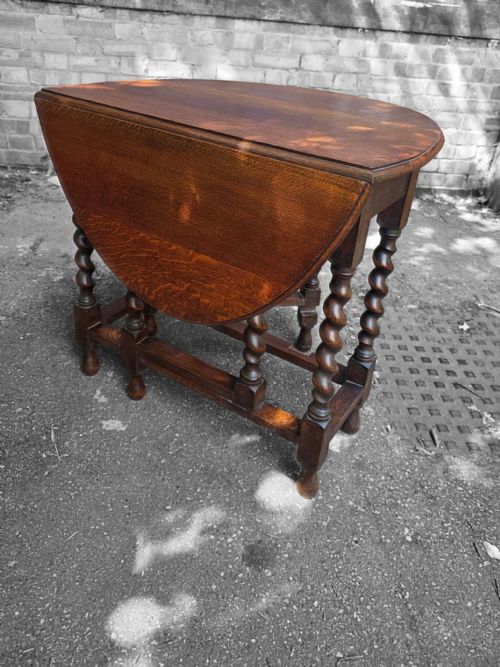
Decorative touches in the evidence include barley twist turnings, satinwood and boxwood stringing inlays, green paint finishes, and brass hardware. Surfaces received wax, polish, or oil finishes to protect the wood while enhancing natural grain patterns and patinas.
Listings span oak, mahogany, walnut, and pine, reflecting centuries of woodworking traditions from the 17th century through the Edwardian era.
What varies in quality
Quality rests on the selection of timber and the precision of the joinery where the folding leaves meet the fixed centre top. Pieces constructed from dense, figured woods like burr walnut or well-matched mahogany show superior material selection compared to simpler pine or utilitarian workshop builds.
The stability of the folding mechanism dictates daily usability. Sturdy gateleg frames and tightly fitted hinges maintain level surfaces across the entire table without sagging when extended.
The Vintage Fold Leaf Table Glossary
- Gateleg table
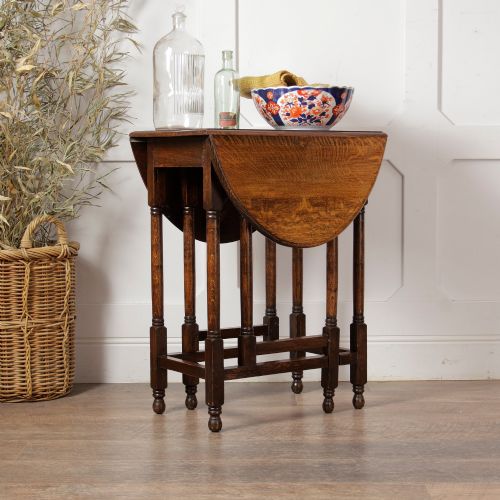
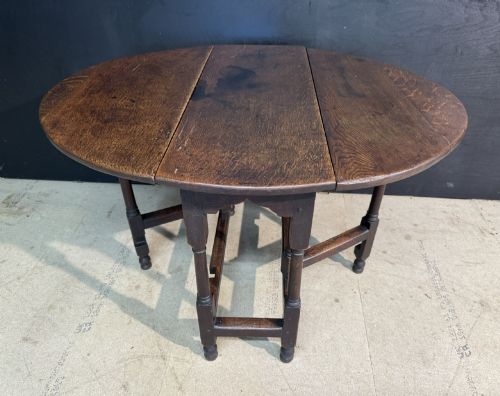
- A table with hinged leaves supported by swinging legs that pull out like a gate. This design provides robust support for large drop-leaf dining surfaces.
- Sutherland table
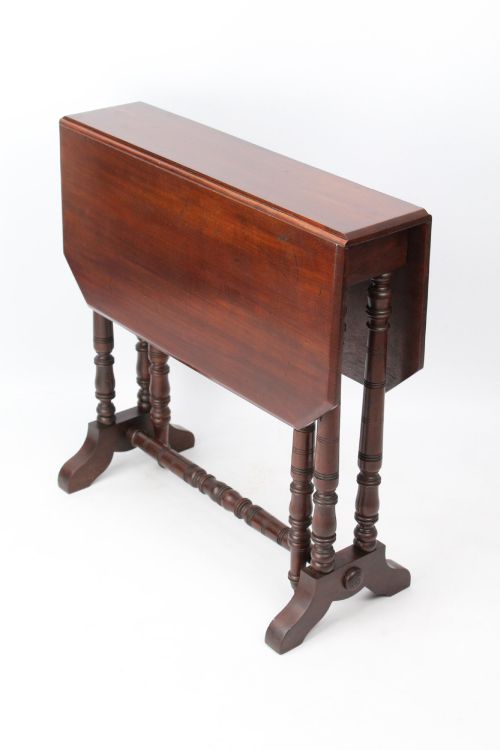
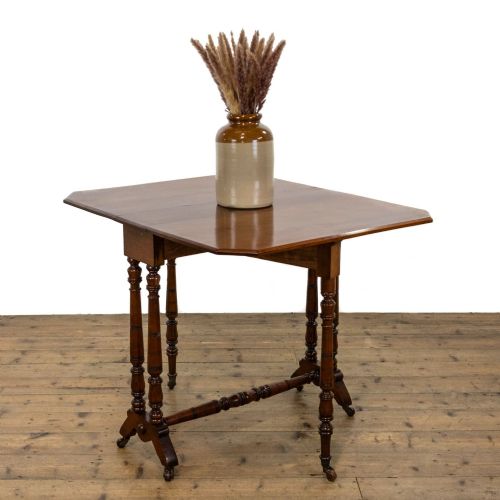
- A narrow drop-leaf table with exceptionally slender leaves and folding legs that stand flat against the frame when lowered. These pieces function well as compact tea or occasional tables.
- Pembroke table
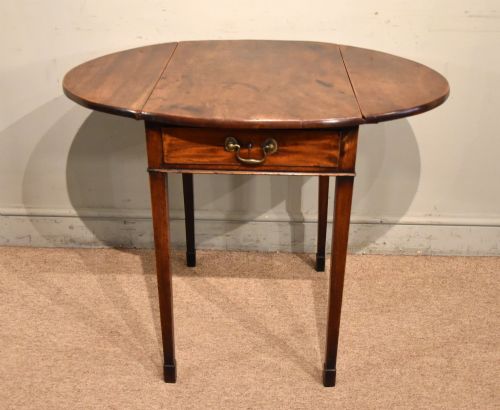
- A small rectangular or oval table featuring two folding side flaps and typically one or two small drawers. The design originated in the eighteenth century for versatile use in parlours and bedrooms.
- Barley twist
- A carved wooden column shaped into a spiral twist resembling rising dough or rope. This decorative turning appears frequently on seventeenth-century and revival oak furniture.
- Patina
- The surface sheen and colour developed over decades through handling, waxing, and ageing. Collectors prize this indicator of authenticity and historical depth.
Vintage Fold Leaf Table: Frequently Asked Questions
How do gateleg tables support weight?
Gateleg tables utilise pivoting legs that swing outward from the central frame to hold up the drop leaves. This mechanical action transfers downward pressure directly to the floor.
Additional wooden stretchers stabilize the leg assembly, preventing lateral movement when the leaves are fully extended for dining.
Where do Pembroke tables fit best?
Pembroke tables suit smaller reception rooms, hallways, or sitting areas where floor space changes throughout the day. Dropping the side leaves creates a narrow profile against a wall.
Raising both leaves transforms the piece into an impromptu writing desk or small serving surface.
What is a Sutherland table used for?
Sutherland tables serve as versatile tea tables or occasional furniture that stores in a minimal footprint. Lowering both leaves leaves a very slim central frame.
They slide easily beside chairs or sofas until needed for drinks, books, or small gatherings.
How can I identify an 18th-century oak table?
Eighteenth-century oak tables display hand-cut joinery, pegged joints, and deep patinas acquired through centuries of use. The timber grain often shows medullary rays characteristic of quarter-sawn oak.
Construction details lack the uniformity of machine-made nineteenth-century furniture, reflecting individual workshop creation.