
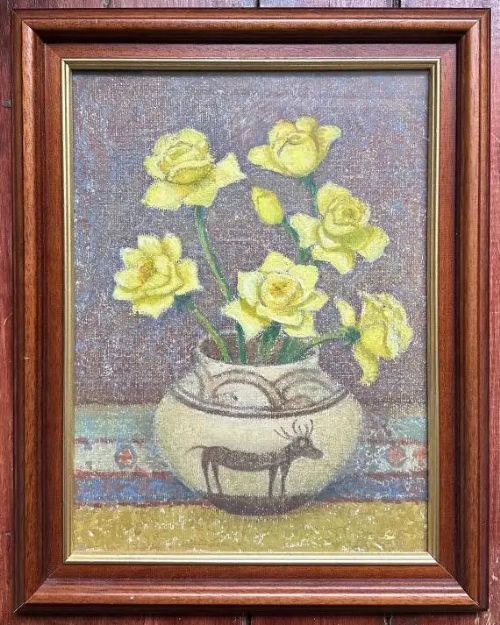
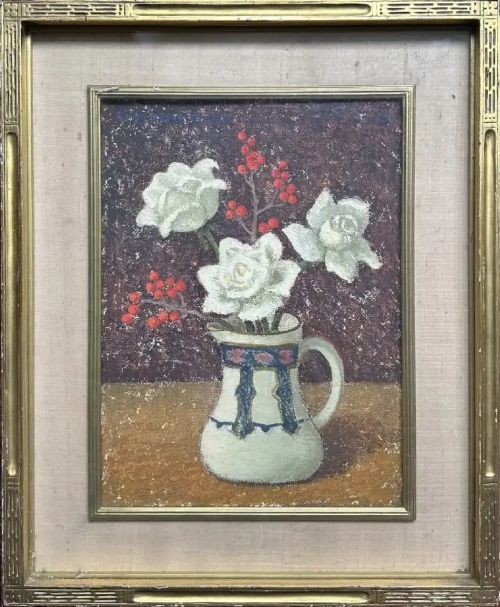
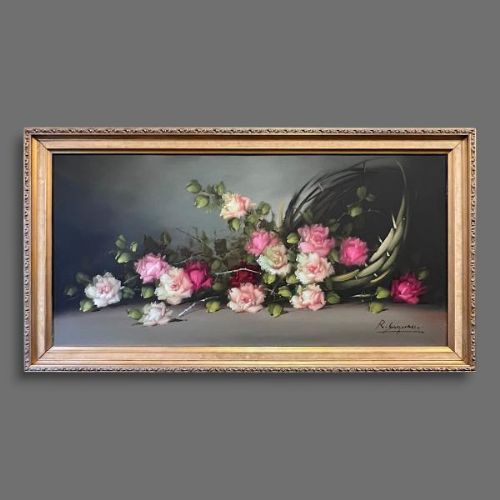
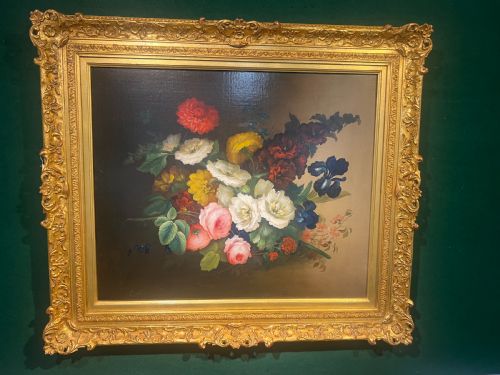
Vintage Flower Oil Painting
A vintage flower oil painting brings botanical colour and texture into a room through lasting pigments laid down on canvas or board.
Vintage Flower Oil Painting
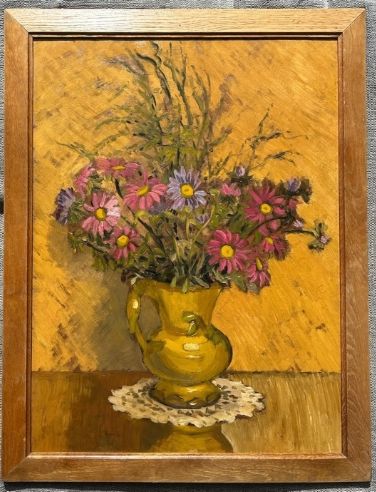
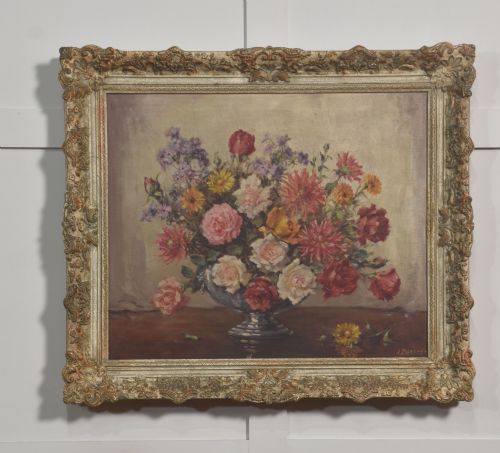
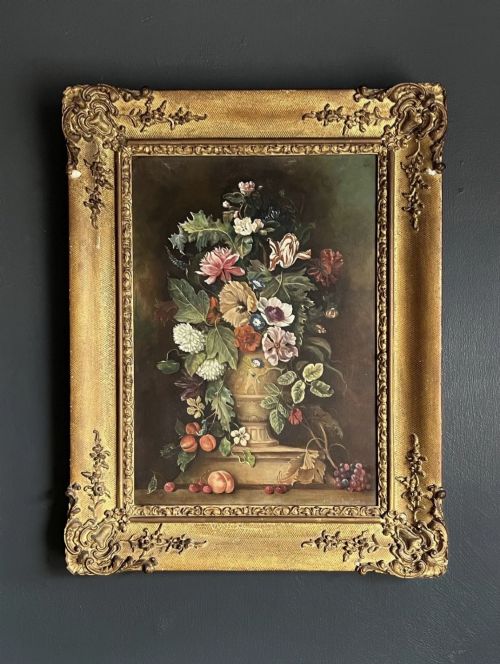
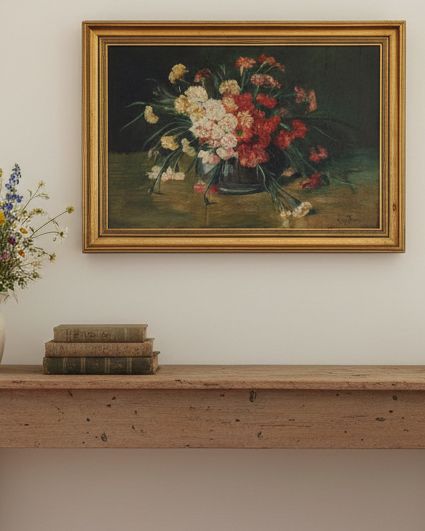
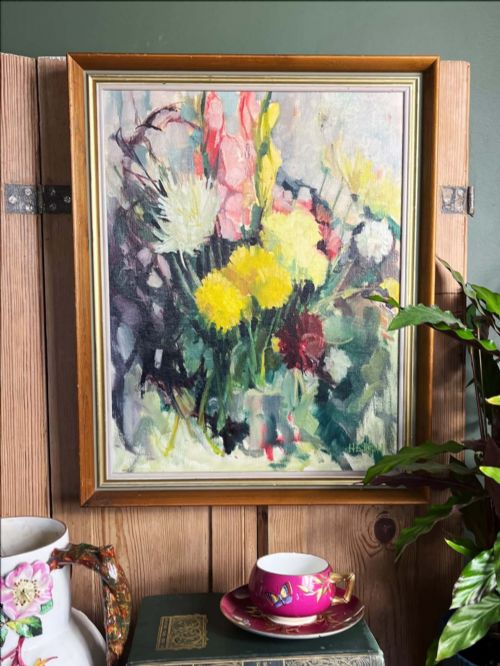
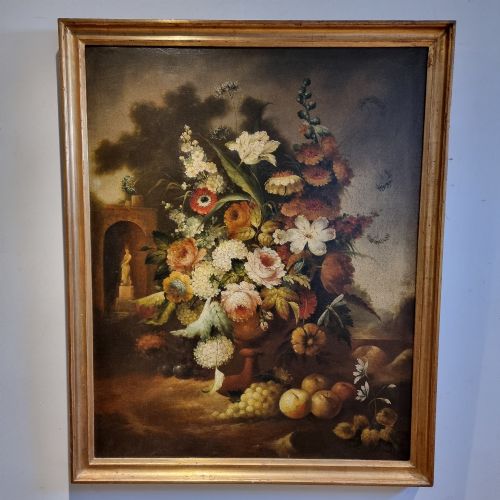
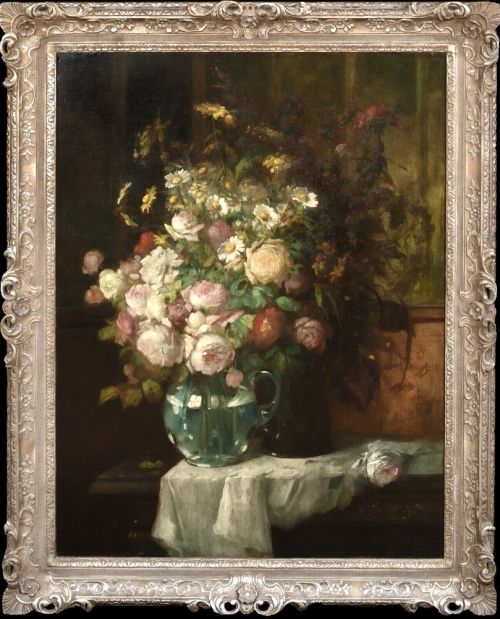
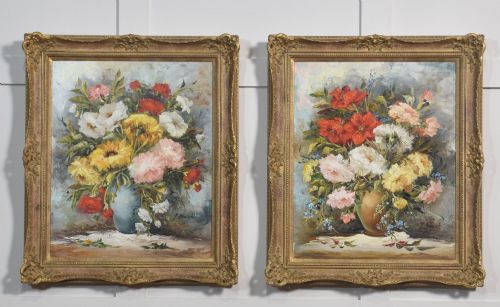
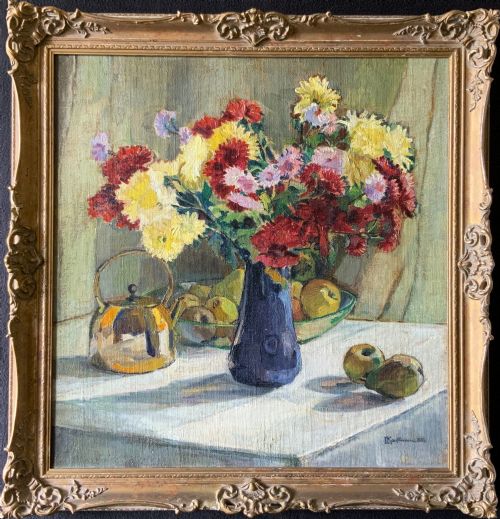
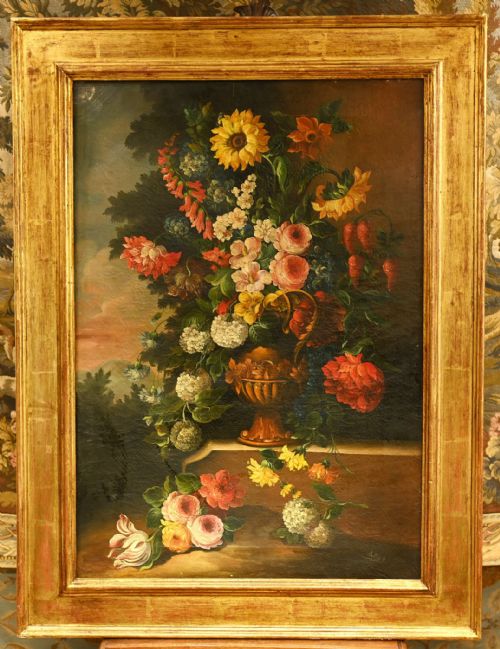
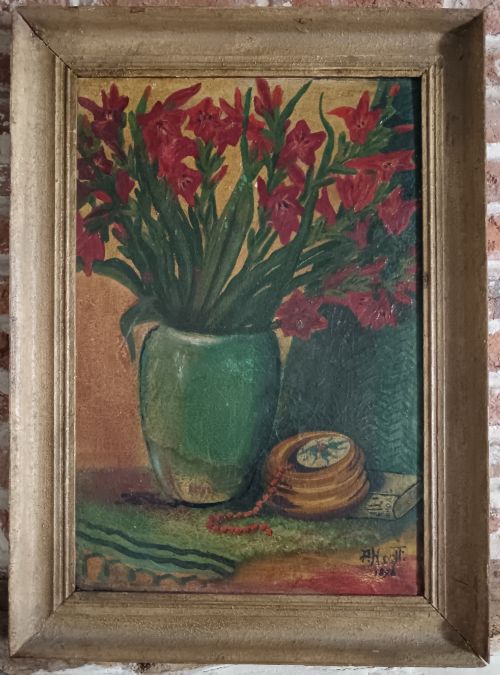
When you search for a vintage flower oil painting, you encounter still lifes and botanical studies spanning from the seventeenth century through to the mid-twentieth century. The selection ranges from naive renderings and dark Flemish-style compositions to bright Impressionist and Mid-Century Modern interpretations.
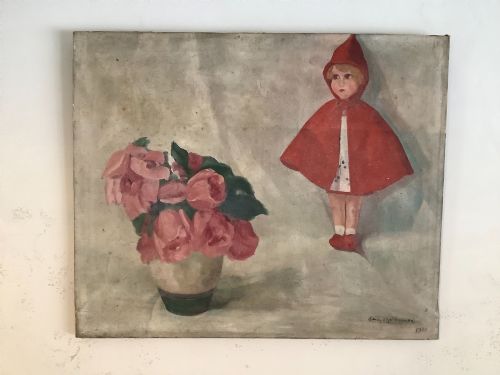
The most common examples on this page date from the early to mid-twentieth century, particularly the 1920s, 1930s, and 1950s. These typically depict roses, carnations, and summer blooms arranged in vases, baskets, or pots.
Works appear on stretched canvas, canvas boards, and wooden panels, frequently housed in their original frames. Painters captured these floral subjects across Britain, France, Belgium, and wider Europe.
How they were made
Artists built these images using oil paint applied to prepared surfaces such as canvas, wood, or board. The slow-drying nature of oil allowed painters to blend hues and build impasto texture.
Many works incorporate wooden frames finished with gesso and gilt leaf. These surrounds provide structural support and complement the tones within the painted composition.
Vintage Flower Oil Painting Retail Price Guide 2026
Typical asking prices for vintage flower oil painting among the pieces listed under this phrase on Sellingantiques today, from the lower quarter to the upper quarter. They describe what is for sale here now, not the wider market.
Listings feature works spanning from the seventeenth century through to the 1960s, executed in oil on canvas, wood, and board.
What varies in quality
Quality rests in the handling of light, shadow, and spatial depth within the floral arrangement. Skilled artists capture the translucency of petals and the weight of ceramic or glass vessels.
The cohesion between the painting and its original frame influences the overall integrity of the piece. Brushwork dexterity and the preservation of the pigment layer distinguish finer works from simpler decorative studies.
Kenneth Cozens·I. Berezny·Konstantin Stoitzner·Emma Fordyce MacRae·Edwin Steele·Manuela Bonati·Owen Bowen·Gertrude Hayes·Simon Pietersz Verelst·Winifred Turner·Amile Coppieters·Florence Hess·A. Nikolokov·Calzolari·Ernest Higgins Rigg·Sir Matthew Smith·Albert E Jackson·William H Barnes·John Burns Robertson·Thomas Sherlock Evans·Albert Henrich·Eleanor Plumpton
The Vintage Flower Oil Painting Glossary
- Oil Paint
- A slow-drying paint made by mixing pigments with oils such as linseed. This medium allows for rich colour saturation and subtle blending.
- Impasto
- Paint applied thickly to a surface, standing out in relief from the plane. This technique adds tactile dimension to floral petals and leaves.
- Gesso
- A plaster-like mixture applied to wood or canvas to prepare a smooth surface for painting or gilding. It forms the base beneath many gilded frame finishes.
- Still Life
- A work of art depicting mostly inanimate subject matter, typically commonplace objects or natural items such as flowers and fruit. Artists arrange these elements to study form, light, and colour.
- Impressionism
- A style of painting that focuses on capturing the visual impression of a moment, emphasising shifting light and unblended brushstrokes. This approach appears frequently in twentieth-century floral studies.
Vintage Flower Oil Painting: Frequently Asked Questions
Where were these paintings displayed?
These works hung primarily in domestic interiors, adding warmth and natural imagery to sitting rooms and halls. Collectors placed them above mantelpieces or on panelled walls where natural light could illuminate the pigments.
Today, they serve a similar decorative purpose, anchoring a room's colour palette while bringing historical character to modern spaces.
How do I identify the period?
Dating relies on stylistic clues, framing materials, and the preparation of the canvas or board. Twentieth-century works often display brighter palettes and looser brushwork associated with Impressionism and Mid-Century Modernism.
Earlier pieces from the nineteenth century and earlier tend towards darker backgrounds and more formal compositional structures, reflecting the conventions of their respective eras.
Are these paintings original works?
The listings consist of original hand-painted works rather than mass-produced prints. Each piece records the direct touch of an artist's brush upon canvas, board, or wood.
Signatures, dates, and inscriptions found on the front or reverse provide further evidence of individual authorship and creation.
How do I care for an oil painting?
Protection from direct sunlight and stable indoor humidity levels ensure the longevity of the canvas and paint layer. Dusting requires only a soft, dry brush applied gently across the surface.
Avoiding harsh cleaning agents preserves the original varnish and prevents damage to fragile impasto or gilt frames.