

Vintage Flower Cluster Ring
A vintage flower cluster ring brings together central gemstones and surrounding petals in gold and platinum across Edwardian, Art Deco and mid-century periods.
Vintage Flower Cluster Ring
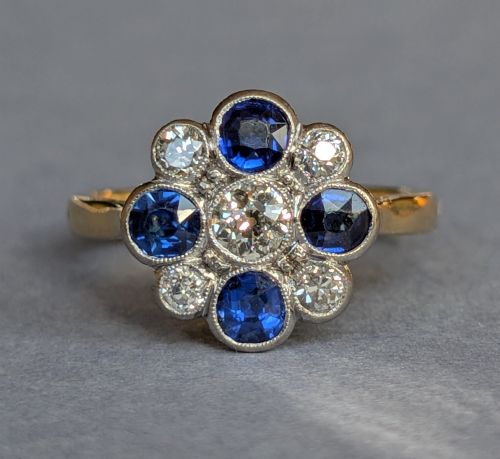
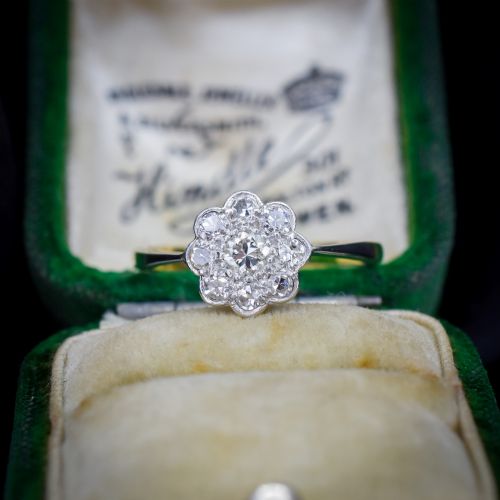
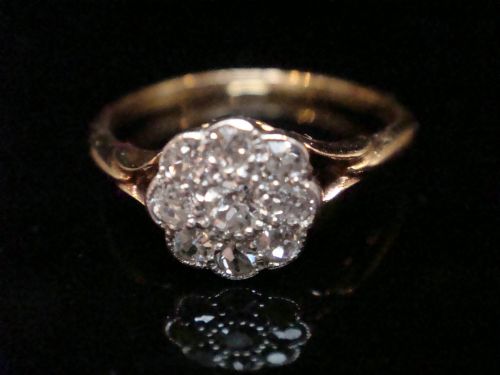
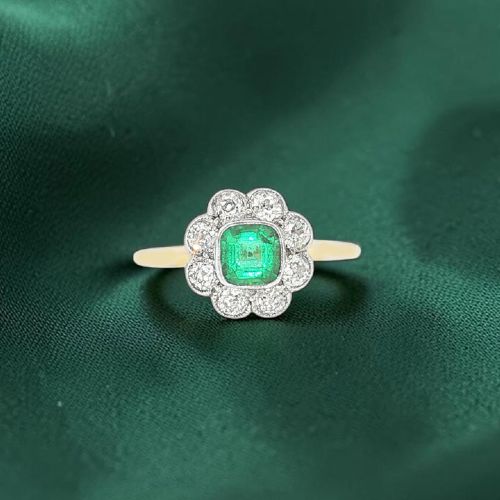
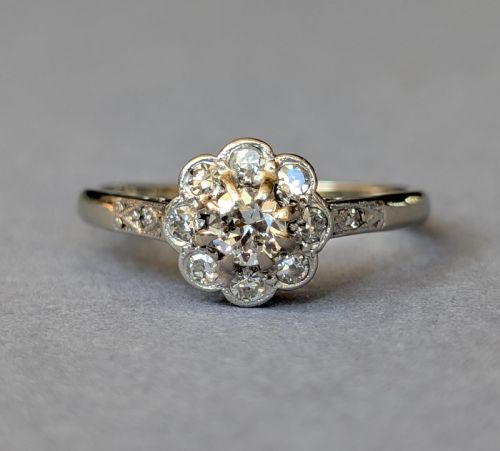
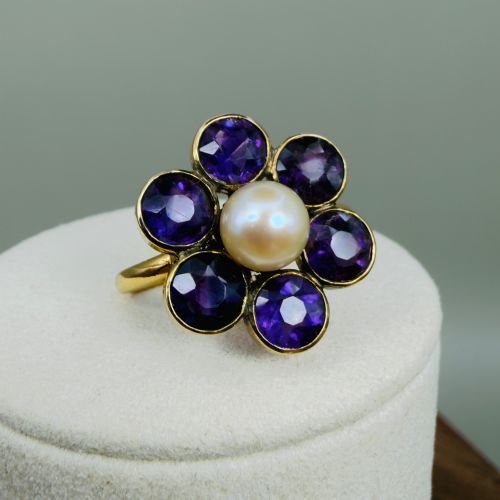
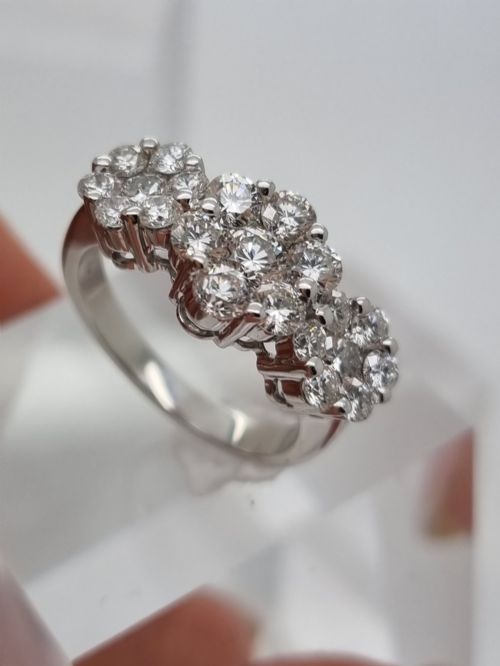
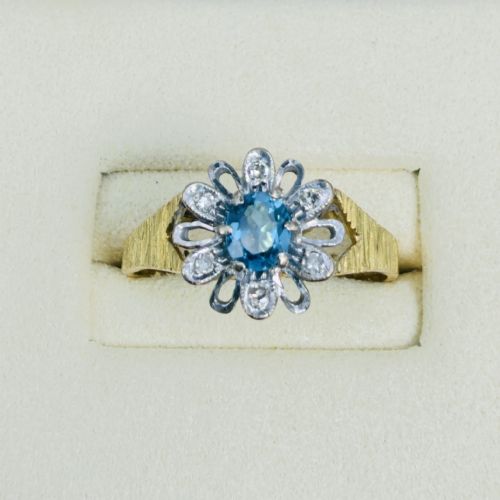
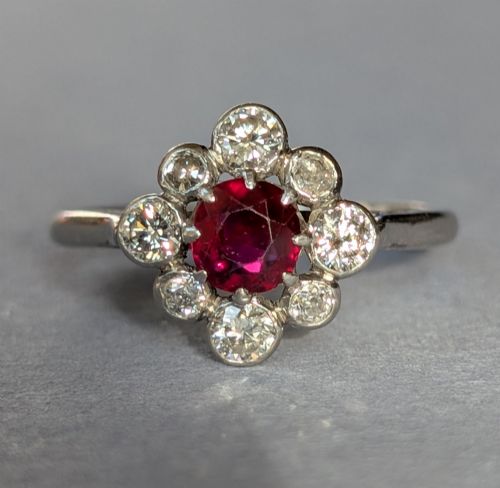
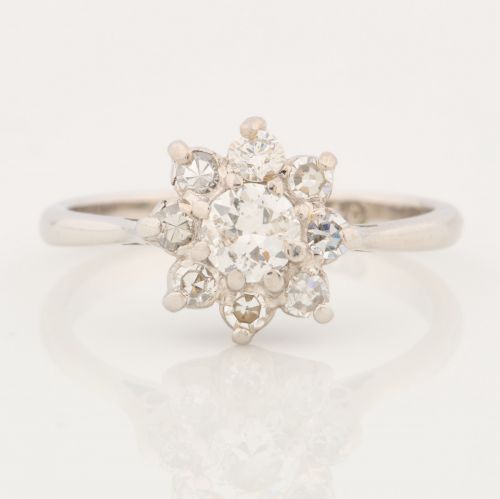
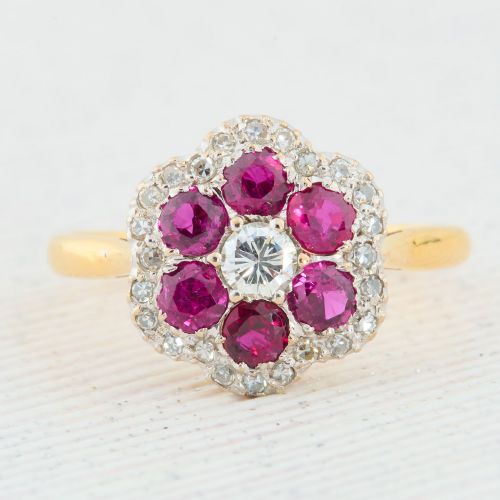
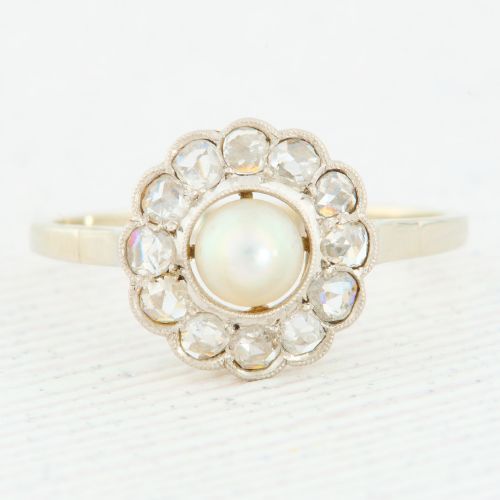
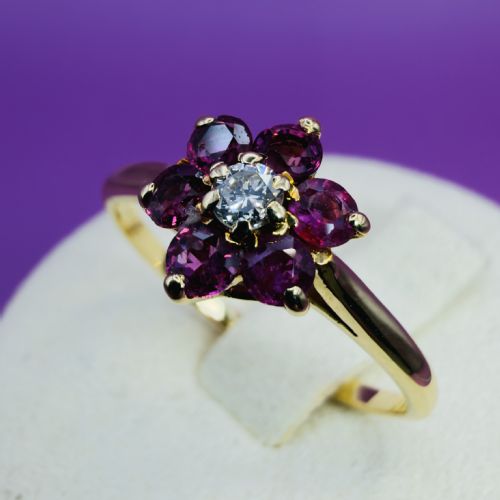
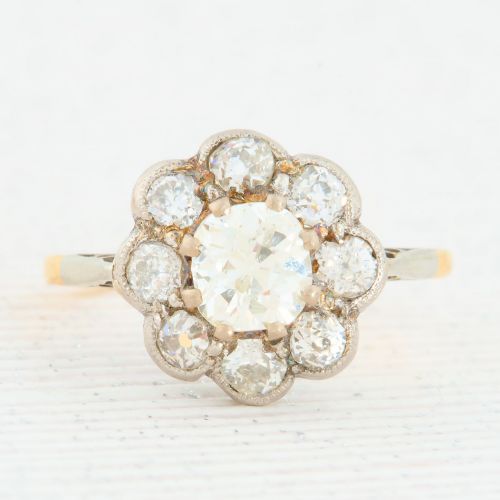
A vintage flower cluster ring groups multiple stones into a floral or daisy formation, drawing the eye to a distinct central gem surrounded by smaller accents. Buyers searching this phrase encounter pieces shaped like blossoms, rosettes and starbursts, often referred to as daisy rings.
The selections span Victorian, Edwardian, Art Deco and mid-century eras, with the Edwardian and Art Deco periods particularly well represented. These designs rely on concentric settings that make smaller stones read as a single, larger floral presence on the finger.
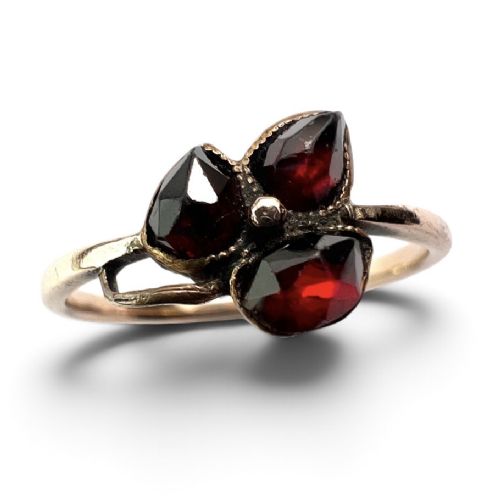
Beyond pure diamonds, the cluster format accommodates sapphires, rubies, emeralds, pearls, turquoise, garnets and opals. This variety means a buyer can select a monochromatic diamond piece or a coloured stone arrangement depending on period taste.
Materials and Construction
Makers set these stones in 18ct yellow gold, 18ct white gold, 9ct gold and platinum, frequently combining yellow gold shanks with platinum topped settings to keep diamond claws bright and white. This mixed-metal approach defines much of the Edwardian and Art Deco output.
Gems receive old cut, brilliant cut or rose cut faceting depending on the decade, secured in claw or bezel settings designed to trace organic petal contours. Gemstones like sapphires, rubies and emeralds form the centres, while diamonds outline the outer petals.
Some Edwardian makers doubled the pleasure by twisting the band into a double helix right where the flower lands.
Distinctions in Quality
Quality rests on the precision of the stone matching and the integrity of the setting work, where uniform stone size and tight spacing create a convincing floral silhouette. Lesser examples show uneven gaps between stones or heavy-handed claw work that obscures the metal's fineness.
The choice of materials also elevates a piece, distinguishing higher carat gold or platinum mountings set with natural sapphires and old cut diamonds from simpler 9ct gold iterations carrying synthetic stones.
Julius Cohen
The Vintage Flower Cluster Ring Glossary
- Cluster ring
- A ring featuring a central gemstone surrounded by a border of smaller stones. This arrangement maximises visual impact and light reflection.
- Daisy ring
- A specific type of cluster ring where a round central stone is encircled by white diamond petals. The resulting shape mimics a simple garden flower.
- Old cut
- A diamond facet style hand-cut before the advent of modern brilliant cutting standards. These stones display smaller tables and high crowns suited to candlelight.
- Platinum
- A dense, white precious metal used extensively in Edwardian and Art Deco settings. Its strength allowed jewellers to fashion exceptionally fine, secure claws.
Vintage Flower Cluster Ring: Frequently Asked Questions
What periods do these rings come from?
The listings encompass Victorian, Edwardian, Art Deco and mid-century decades. Each era brings distinct metal choices and stone cuts to the floral cluster format.
Victorian and Edwardian examples often feature yellow gold and platinum combinations, while Art Deco pieces lean towards geometric symmetry and bright white settings.
What stones are used in these clusters?
Diamonds form the most common petal arrangement, paired either with a central diamond or a coloured centre stone. Sapphires, rubies, emeralds, pearls and turquoise also serve as central or accent gems.
Makers matched these materials to achieve high contrast between the core stone and the surrounding border.
Are these rings suitable for everyday wear?
Most 18ct gold and platinum cluster rings are robust enough for regular wear, provided the settings receive routine checks. Their secure multi-stone layout distributes pressure across the finger.
More delicate configurations involving softer gems like pearls or opals require greater care against impacts.