



Emerald Halo Ring
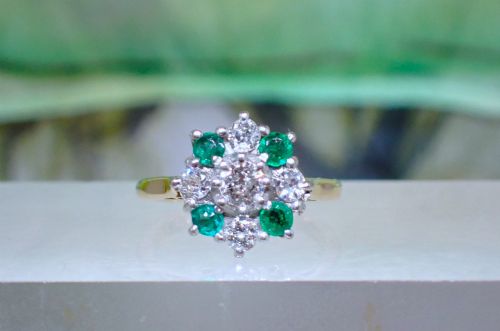
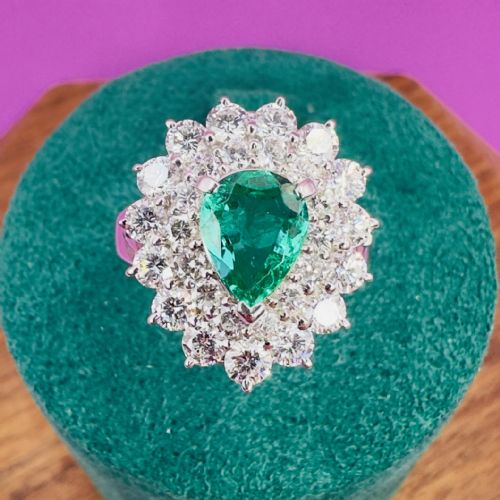
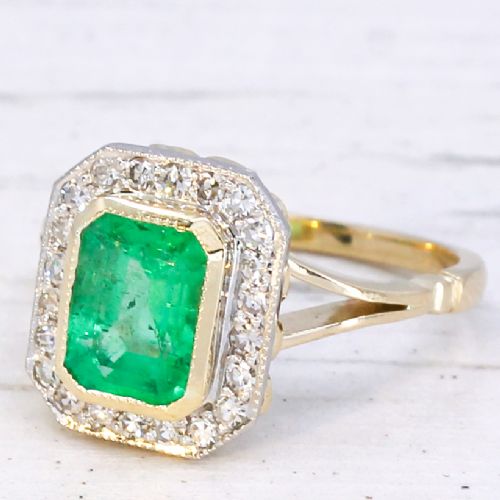
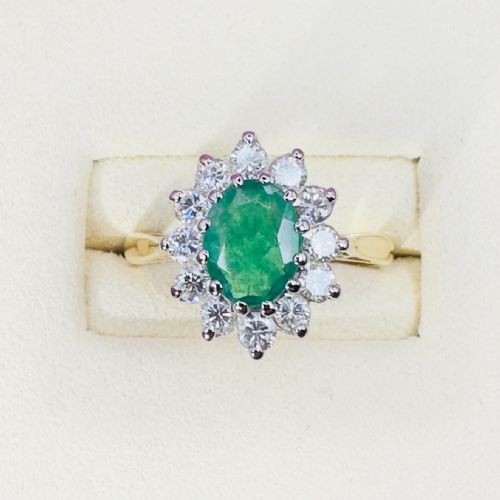
An emerald halo ring frames a central green beryl with a bright circle of diamonds, offering striking contrast and timeless geometric presence.
What these rings are
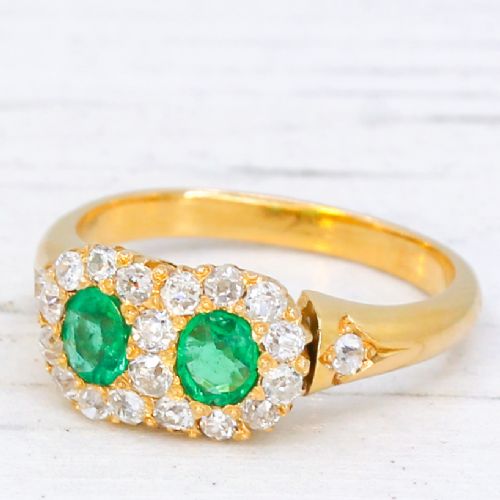
An emerald halo ring centres on a green beryl surrounded by a glittering border of diamonds, creating a distinct cluster silhouette. Buyers searching this phrase will find pieces spanning several decades, from Georgian creations up to Mid-Century and 1960s dress rings.
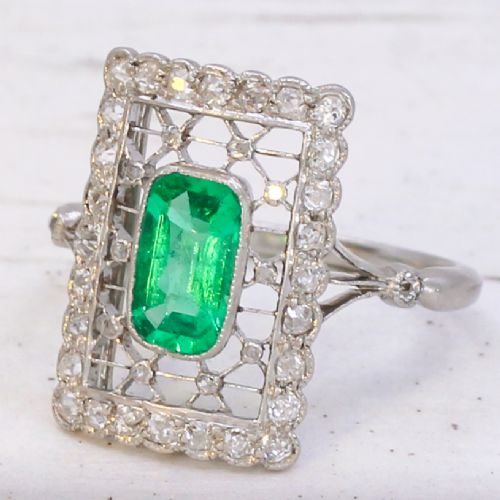
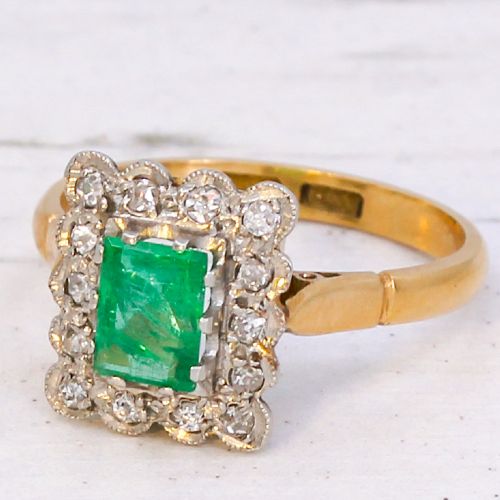
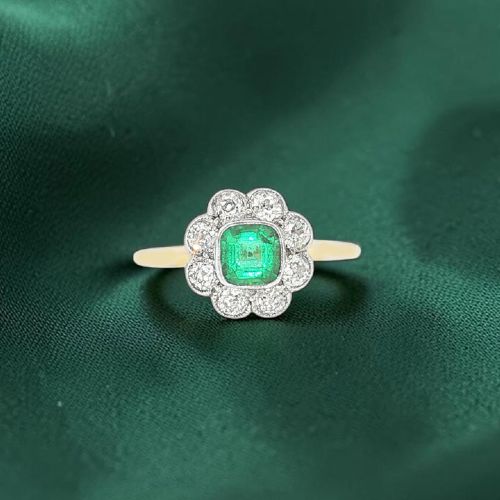
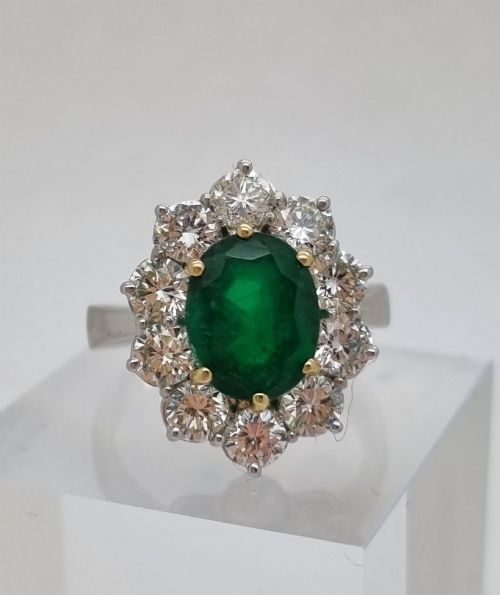
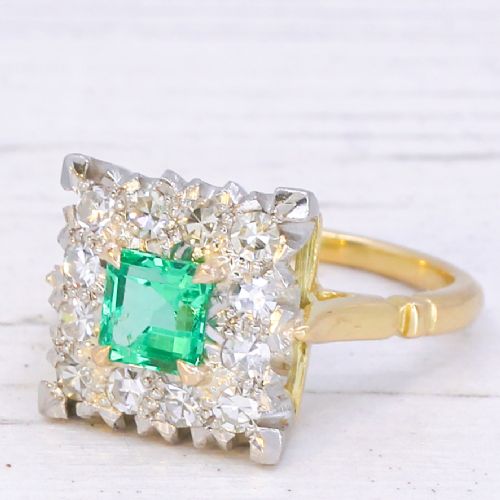
The most common forms on this page include traditional cluster configurations alongside distinct Art Deco geometric layouts. Settings vary from flower-like arrangements to snowflake designs, incorporating both oval and round centre stones.
Origins stretch across British and continental workshops, encompassing periods such as the Edwardian era and the 1930s. Metal choices shift according to the decade of manufacture, moving from early silver-topped gold through to classic 18ct yellow and white gold or platinum.
How they were made
Master jewellers constructed these mountings using precious metals suited to the period, such as platinum, 18ct white gold, and traditional yellow gold. Earlier examples frequently paired an 18ct gold shank with a silver setting at the face to enhance the brilliance of the stones.
The diamond surrounds utilise various cutting styles, ranging from rose cuts in Georgian pieces to old mine and modern brilliant cuts in later twentieth-century examples. Stones are meticulously set by hand into cluster formations that tightly encircle the central emerald.
Retail Price Guide 2026
Typical UK retail prices for emerald halo ring, calculated from the Sellingantiques database of over a million retail prices indexed since 2003. This retail price guide relies exclusively on Sellingantiques data; no external sources or auction records are used, so the figures do not describe the wider market.
Some Edwardian rings secretly paired diamonds with glittering paste stones, letting the sparkle fool the room without anyone knowing.
What varies in quality
Quality rests primarily on the saturation and clarity of the central emerald, coupled with the matching and brilliance of the surrounding diamond border. Superior examples demonstrate a vivid green hue without excessive internal inclusions, alongside clean, well-proportioned diamond work.
Execution of the metalwork also defines the tier, where finer craftsmanship shows delicate claw or grain setting that secures the stones with minimal visible alloy. The integrity of the original mount, whether from the Georgian era or the Art Deco period, preserves the aesthetic intent of the maker.
The Emerald Halo Ring Glossary
- Halo
- A concentric border of smaller gemstones encircling a larger centre stone. This layout enhances the perceived scale and brilliance of the principal gem.
- Cluster
- A stone arrangement where multiple smaller gems group tightly around a focal point. This term frequently overlaps with halo designs in vintage jewellery taxonomy.
- Rose cut
- An antique diamond cut featuring a flat base and a faceted dome that resembles an unopened rosebud. These stones yield a soft, translucent glow rather than modern scintillation.
- Old cut
- A hand-faceted diamond shape typical of earlier periods, characterised by a high crown, small table, and deep pavilion. They catch candlelight particularly well.
- Paste
- Hand-cut lead glass used historically as an alternative to precious gemstones. Edwardian and Georgian pieces occasionally incorporated paste alongside genuine diamonds.
Frequently Asked Questions
How should I clean an emerald halo ring?
Clean your ring gently using warm water and a soft cloth, avoiding harsh ultrasonic cleaners or chemical dips that can damage emeralds.
Because emeralds are a softer gemstone with natural inclusions, gentle manual care preserves both the stones and the delicate surrounding metalwork.
Are these rings suitable for daily wear?
Many buyers wear these pieces daily, though emeralds require more care than harder stones like diamonds.
Taking the ring off during rigorous activities protects the central beryl from sharp impacts and keeps the delicate diamond claw settings secure.
How do I identify the period of a ring?
Dating relies on stylistic clues like geometric Art Deco lines, Edwardian filigree, or the specific silver-topped gold mounts typical of Georgian workshops.
Examining the shank, setting style, and cut of the diamonds helps pinpoint the era in which the piece was originally fashioned.