


Vintage Floral Transferware
Vintage floral transferware brings patterned earthenware and porcelain to the table, offering durable domestic ceramics decorated with printed motifs that collectors prize for everyday use and display.
Vintage Floral Transferware
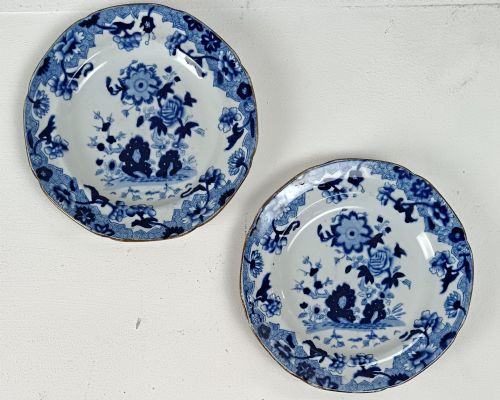
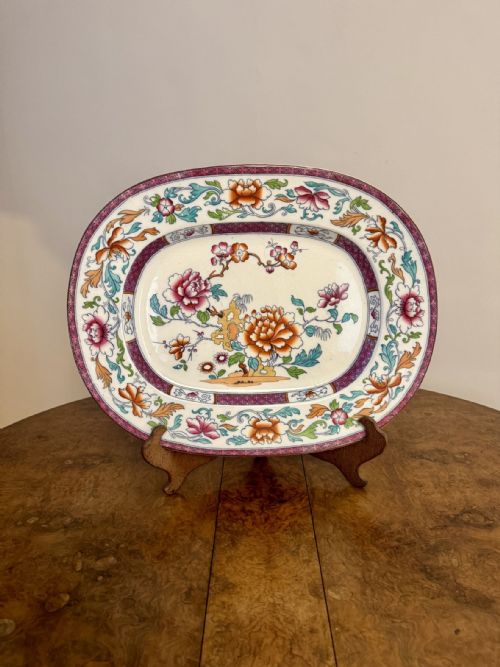
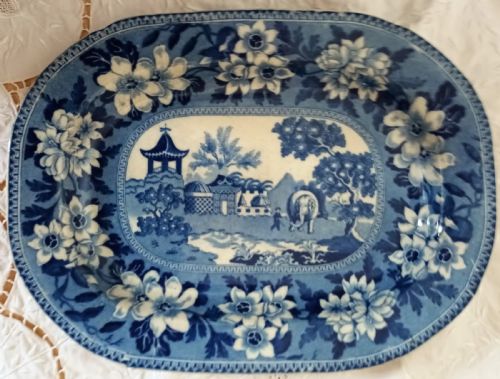
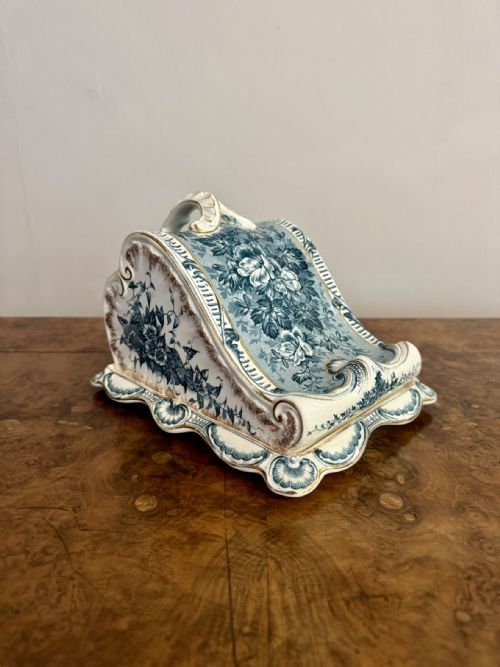
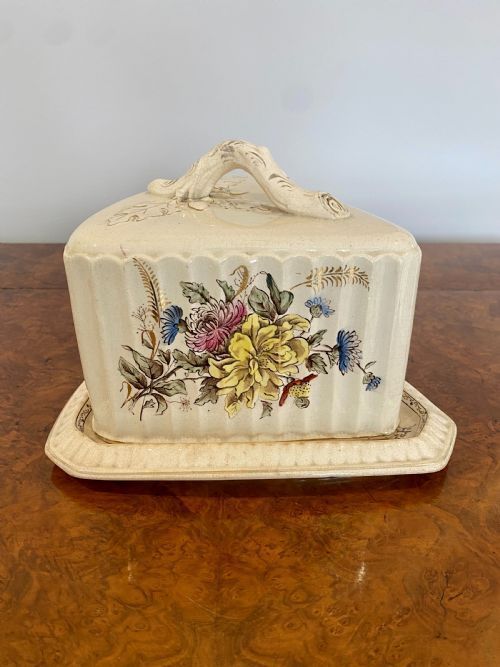
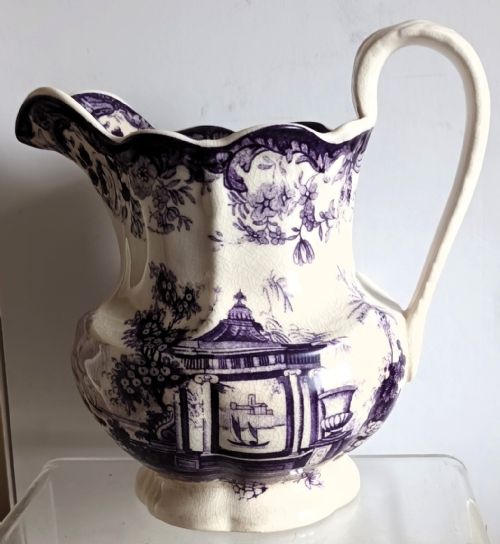
Vintage floral transferware encompasses nineteenth-century and early twentieth-century ceramics decorated using a copper-plate printing method to transfer botanical and floral patterns onto earthenware, porcelain, and pottery bodies. Buyers searching for vintage floral transferware typically find serving platters, dinner service sets, tea plates, jugs, and cheese dishes spanning the Georgian, Victorian, and Edwardian periods.
The pieces appearing most frequently on this page date from the nineteenth century, particularly the Victorian era, alongside Georgian and Edwardian examples. Common forms include large meat platters, washstand jugs and bowl sets, and comprehensive dinner services executed in blue and white or magenta transfer prints.
What varies in quality
The clarity and crispness of the transfer print dictate much of the visual merit, with superior items displaying sharp lines and deep, even colour saturation across the pattern without smudging or fading. The quality of the underlying ceramic body also matters, distinguishing fine, thin porcelain or refined earthenware from heavier, more utilitarian utilitarian pottery.
Completeness and matching consistency elevate sets and pairs, particularly when large dinner services or platters retain their original unified glaze tones and uniform decorative registration. Subtle hand-painted additions, such as enamel touches or gilding applied over the print, separate standard production ware from superior workshop output.
Nineteenth-century households relied on matching ceramic toilet sets and chamber pots to maintain morning routines in proper Victorian style.
John Rogers and Son·Elkin and Newbon·Caughley Coalport·Carlton Ware·Minton·Spode
The Vintage Floral Transferware Glossary
- Transferware
- Pottery decorated by pulling an engraved copper plate impression onto tissue paper and transferring the ink onto the ceramic body before glazing. This mechanical process allowed for intricate, repeating pictorial and floral patterns.
- Earthenware
- A porous, opaque ceramic fired at lower temperatures than porcelain. It forms the robust body for the majority of nineteenth-century platters, jugs, and chamber pieces.
- Glaze
- A glassy coating fused to the ceramic surface during firing to render the vessel waterproof and give it a lustrous sheen. It protects the underlying transfer print from wear.
- New Stone
- A durable, refined type of heavy earthenware or semi-porcelain developed in the nineteenth century to imitate Chinese porcelain. Spode notably produced tableware in this resilient material.
- Enamel
- Opaque glass-like pigments applied over the fired glaze to add colour highlights to the transfer-printed design. These supplementary colours required an extra low-temperature firing.
Vintage Floral Transferware: Frequently Asked Questions
How do I clean vintage transferware?
Wash these ceramics gently by hand using warm water and a mild detergent. Avoid harsh scouring pads and abrasive dishwasher cycles to protect the historic glaze and delicate transfer prints.
Soaking pieces with stubborn staining for prolonged periods can risk moisture penetrating old, crazed earthenware bodies. Dry them thoroughly with a soft cloth after washing.
Can I use transferware for food?
Most nineteenth-century transferware is safe for serving dry or cold foods during everyday dining. Older glazes can sometimes contain trace elements, so assess the interior condition of each vessel before serving hot or acidic items.
Pieces used primarily for decorative display or washing, such as chamber pots and washstand jugs, are best kept off the dining table. Inspect the surface for heavy wear or cracks that might trap food particles.
What causes crazing on transferware?
Crazing appears as a fine network of tiny cracks across the glossy surface glaze, caused by the ceramic body and the outer glaze expanding at different rates over time. This natural ageing process happens frequently in nineteenth-century earthenware as the material absorbs microscopic amounts of moisture.
While crazing does not necessarily weaken a sturdy platter or plate, it can discolour if exposed to dark liquids or prolonged washing. Accepting minor crazing is part of collecting authentic period ceramics.
How do I date nineteenth-century transferware?
Examine the ceramic body, the style of the printed border, and any impressed or printed factory marks on the underside. Georgian and early Victorian pieces often feature specific registry diamonds or maker names that narrow down the production decade.
Comparing the shade of the blue transfer print and the weight of the earthenware also helps differentiate early 1800s output from later Victorian mass production.