


Vintage Floral Study Print
These vintage floral study print examples offer botanical precision and painted colour, bringing 19th-century and later nature studies directly onto the wall.
Vintage Floral Study Print
A vintage floral study print captures botanical and natural forms through watercolours, gouache, oils, and engravings spanning multiple centuries.
Buyers seeking a vintage floral study print will find Victorian botanical works, 19th-century watercolours, and mid-century prints framed in wood or gilt wood.
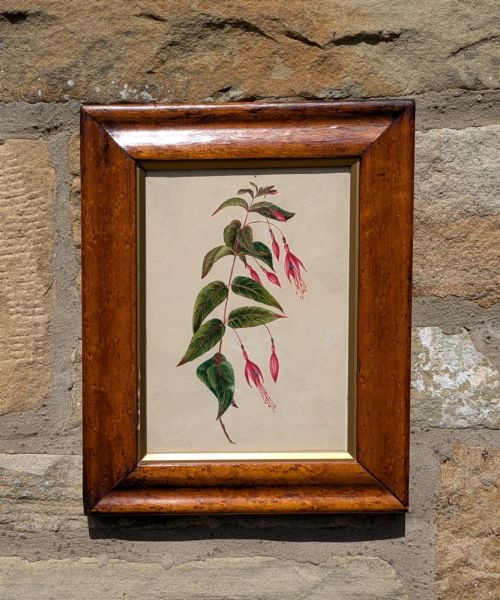
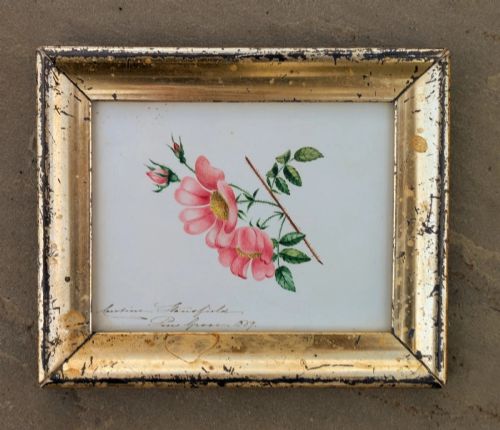
These wall art pieces range from single flower studies like fuschias and roses to sets of engravings and lithographs documenting plants and insects.
Materials and methods
Works on paper utilise watercolour, gouache, ink, and pencil, often enhanced by hand colouring on engravings and lithographs.
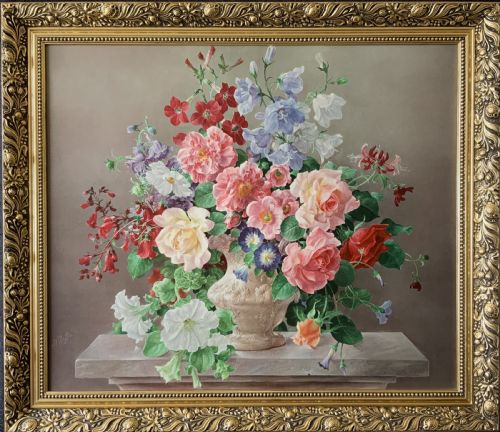
Some pieces employ oil on canvas or are presented as oleograph prints after artists such as Harold Clayton.
Framing materials include wood, gilt wood, and glass to protect fragile works dating from the 18th century onwards.
The listings include works spanning the 18th, 19th, and 20th centuries, executed in watercolour, oil, gouache, and hand-coloured engraving.
Judging quality in botanical works
Quality rests on the precision of the draughtsmanship, the vibrancy of surviving pigments, and the subtlety of hand colouring.
Context matters, distinguishing original 19th-century watercolours and period engravings from later mid-century offset or oleograph prints.
The integrity of the original framing, whether period gilt wood or simple wooden moulding, influences the overall character of the piece.
Harold Clayton·John Curtis·Charlotte Isa James·Margaret Evangeline Wilson·M.K Rhodes·George Dionysius Ehret
The Vintage Floral Study Print Glossary
- Gouache
- An opaque water-soluble paint that provides flat areas of dense, matte colour. It is frequently combined with watercolour and pencil in 19th-century botanical sheets.
- Engraving
- A printmaking technique where an image is incised into a metal plate to hold ink. Hand-coloured engravings feature pigment applied by hand after printing.
- Oleograph
- A type of chromolithography textured to imitate an oil painting on canvas. These appeared in later decades to reproduce popular still life works.
- Lithography
- A planographic printing process using oil and water on a stone or metal plate. It enabled the mass production of detailed tile designs and botanical plates.
Vintage Floral Study Print: Frequently Asked Questions
How do I date an old botanical print?
Dating relies on paper characteristics, printing technology, and handwritten inscriptions or signatures on the reverse or mount. Engravings and watercolours often carry period watermarks or stylistic markers unique to the 19th century.
Examining the framing materials and glass can also provide clues, as many pieces retain their original Victorian or Edwardian frames.
Are these works hand painted?
Many pieces on this page are original hand-painted watercolours, gouaches, or oil paintings executed directly by the artist. Others are period engravings and lithographs that received meticulous hand colouring after printing.
Descriptions specify the exact medium used, distinguishing unique paintings from printed plate work.
How should I hang and light floral studies?
Works on paper require protection from direct sunlight to prevent the fading of watercolour pigments and hand-applied colours. Hanging them away from bright windows preserves the integrity of the original media.
Framing with UV-filtering glass offers an extra layer of conservation for 19th-century works.
What is the difference between a study and a finished painting?
A study is typically an observational drawing or painted record focusing on a specific plant, flower, or insect specimen. These were often created for scientific recording or as preparatory work for larger compositions.
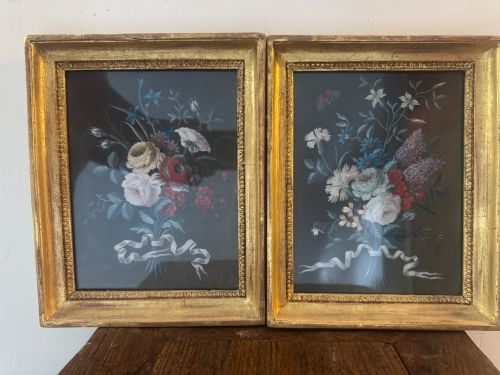
Finished paintings tend to present composed still life arrangements intended primarily for decorative display.