

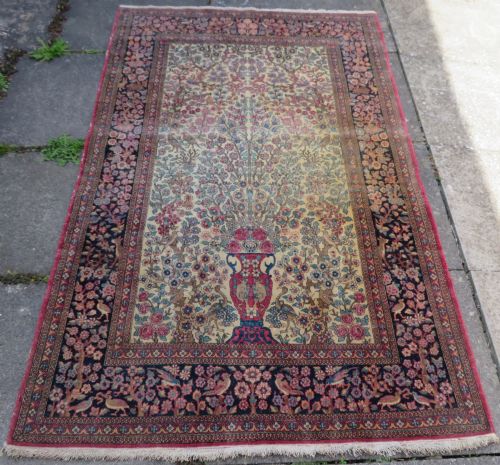
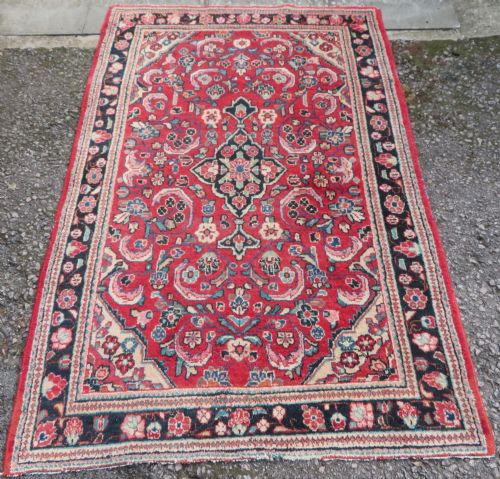

Vintage Floral Rug
A vintage floral rug brings warmth, colour and centuries of weaving tradition straight to the floor.
Vintage Floral Rug
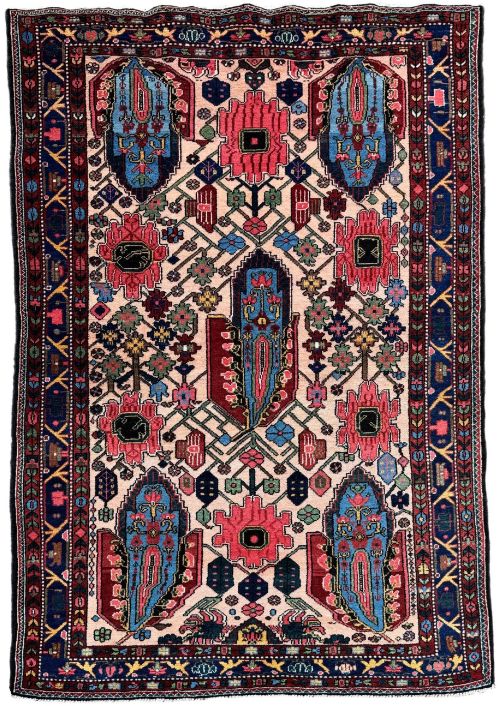
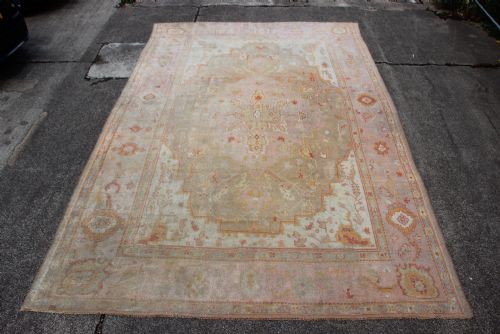
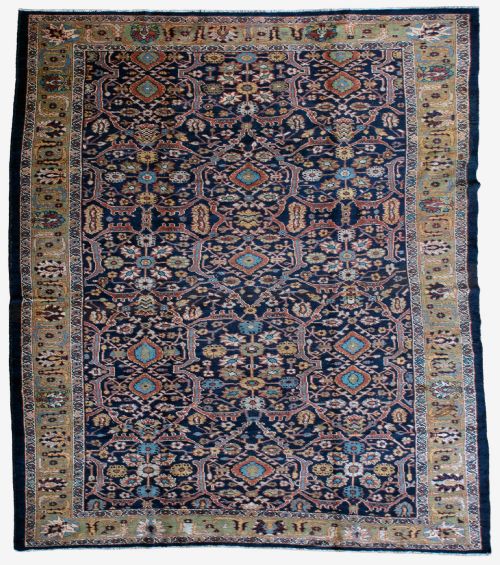
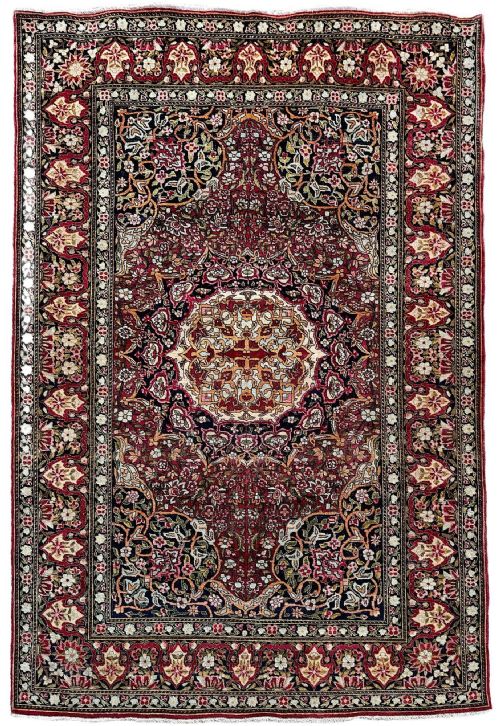
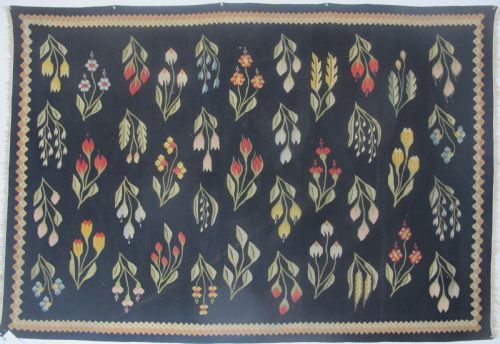
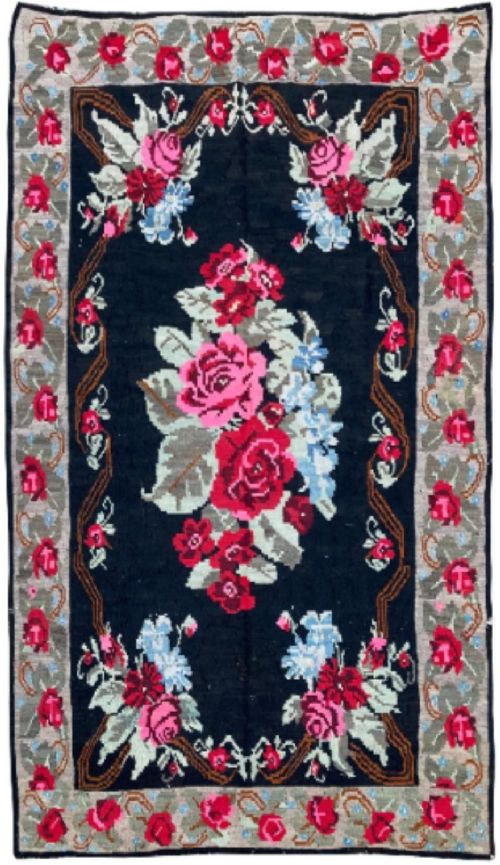
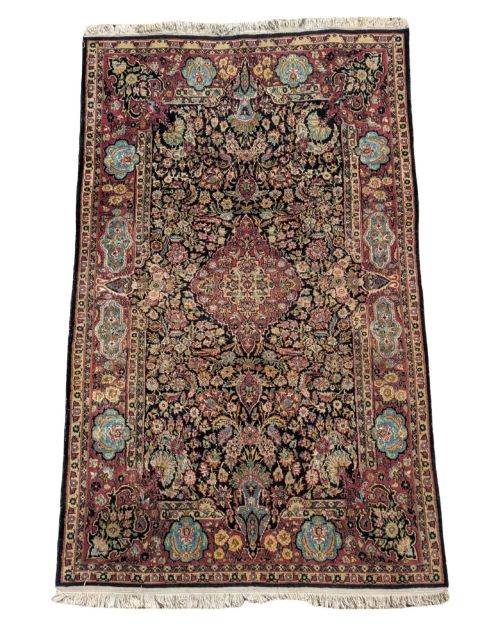
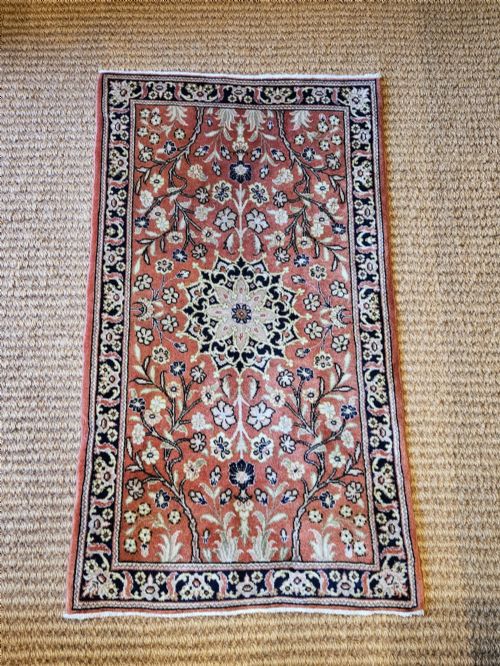
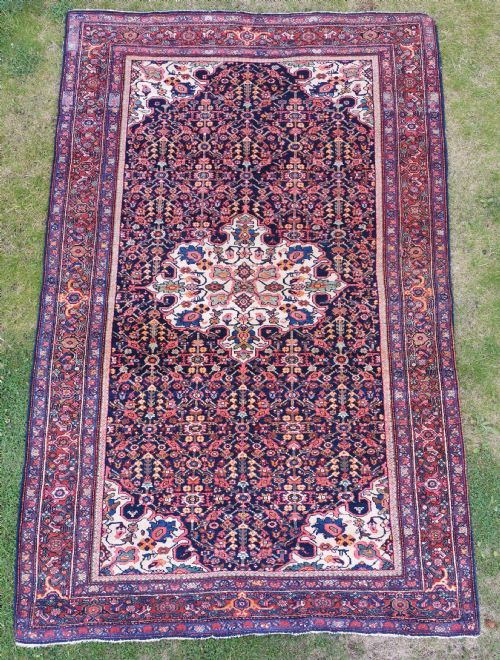
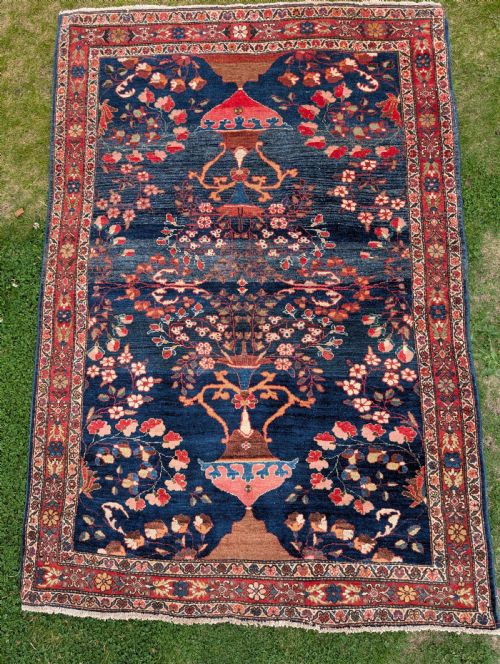
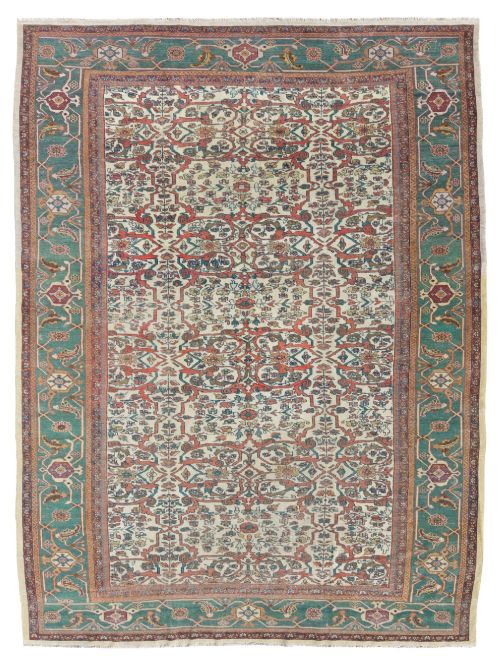
When searching for a vintage floral rug, buyers encounter floor coverings woven across Persia, the Caucasus, Central Asia, and Europe during the nineteenth and early twentieth centuries. These textiles range from room-sized carpets down to hearth-sized rugs, runners, and decorative tapestries.
The prevalent types on this page include Persian room carpets and village rugs featuring botanical motifs, alongside Caucasian kilims, Uzbek suzanis, and Ottoman embroidered fragments. Each piece displays distinct regional drawing and pattern organisation rooted in traditional craft.
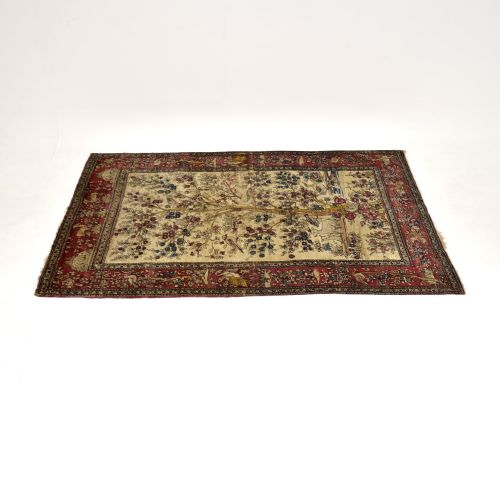
Buyers choose these textiles to anchor interior spaces with organic forms, floral lattices, and tree of life compositions. The selection spans varied formats, from modest scatter rugs to grand country house carpets.
How they were made
The primary materials recorded in these pieces are wool, cotton, silk, and metallic thread, employed according to regional techniques. Wool provides the durable foundation and pile for village and tribal rugs, while cotton serves frequently for warps and wefts in larger city carpets.
Weavers utilised hand-knotted pile construction alongside flatweave kilim techniques and delicate embroidery on cotton or linen grounds. Silk highlights and metal threads appear in select city carpets to add reflective detail to the floral field.
Vintage Floral Rug Retail Price Guide 2026
Typical asking prices for vintage floral rug among the pieces listed under this phrase on Sellingantiques today, from the lower quarter to the upper quarter. They describe what is for sale here now, not the wider market.
Some nineteenth-century weavers hid tiny rogue flower motifs inside grand geometric borders just to test watchful eyes.
What varies in quality
Quality in these textiles depends heavily upon the precision of the drawing and the handling of the floral motifs. Master workshops achieved crisp botanical articulation and subtle colour shading, whereas simpler village pieces display charmingly naive, geometric interpretations of flowers.
The choice of materials also divides the range, with fine silk highlights, densely packed wool pile, and intricate needlework representing superior execution. Structural integrity and the fineness of the knotting further distinguish high-grade carpets from standard utility weaves.
The Vintage Floral Rug Glossary
- Pile
- The cut vertical loops of yarn that form the soft surface of a rug. This layer absorbs wear and displays the woven design.
- Kilim
- A flatweave textile made without a pile by tightly interweaving warp and weft strands. These rugs are typically lighter and reversible.
- Suzani
- An embroidered textile from Central Asia featuring decorative needlework on a fabric ground. They were traditionally produced as part of a bride's dowry.
- Warp
- The stationary vertical threads stretched across the loom before weaving begins. Wefts are passed across these foundational strands to secure the structure.
- Tapestry
- A form of textile art woven by hand on a vertical loom. The design is built by interweaving coloured weft threads through visible warps.
Vintage Floral Rug: Frequently Asked Questions
How do I clean a vintage floral rug?
Professional gentle dusting and specialist immersion washing preserve the natural wool and silk fibres. Avoid harsh chemical treatments and excessive moisture.
Regular light vacuuming without a rotating brush bar prevents dirt accumulation in the pile. Keep the textile out of direct sunlight to protect the dyes.
Where should I place a vintage floral rug?
These rugs suit low-traffic living areas, bedrooms, and studies where foot traffic remains moderate. Use a breathable underlay to keep the textile stable on hard floors.
Protect delicate silk highlights and fine embroideries by avoiding placement in damp spaces or direct entryways.
How do I identify regional rug styles?
Examine the border arrangements, floral drawing styles, and structural materials. Persian city carpets often show curvilinear floral vines, while village and Caucasian pieces display bolder, geometric flower heads.
Knot types and the choice of foundation yarns offer further clues to origin. Comparing edge finishes and colour palettes helps narrow down the production area.
What is a tree of life design?
The tree of life motif depicts a central botanical tree flanked by floral branches, birds, or animals. It symbolises growth, continuity, and paradise in traditional weaving.
Master weavers in city workshops often rendered this motif with fine detail and high knot density. It remains one of the most collectible pictorial compositions.