

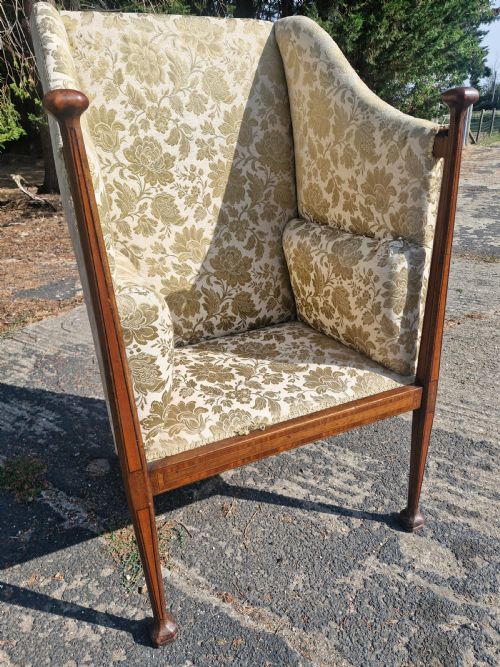
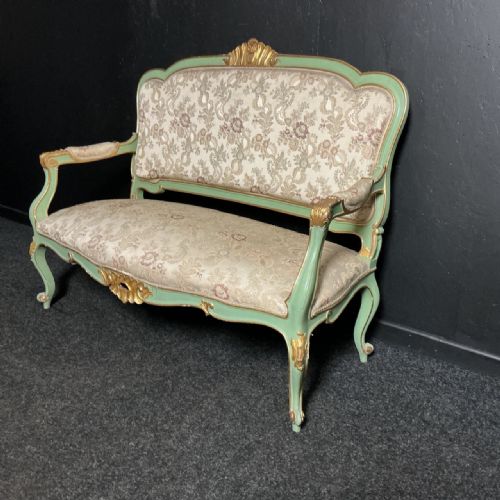
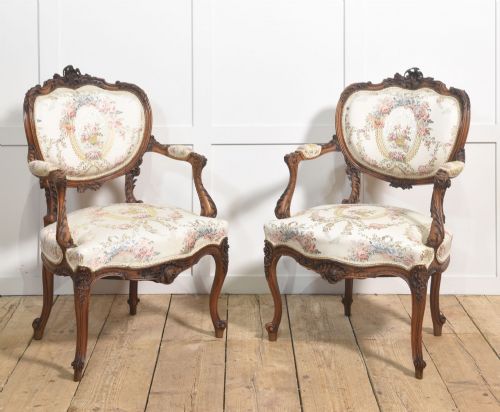
Vintage Floral Chair
These vintage floral chair examples range from Victorian mahogany to Edwardian occasional seats, offering patterned textiles and solid timber frames for domestic interiors.
Vintage Floral Chair
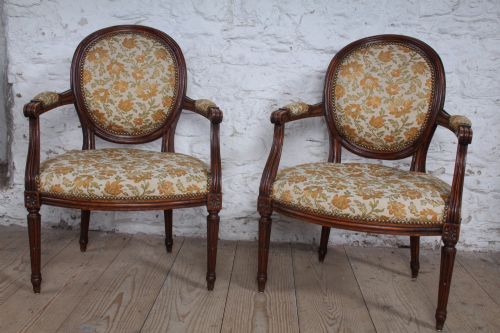
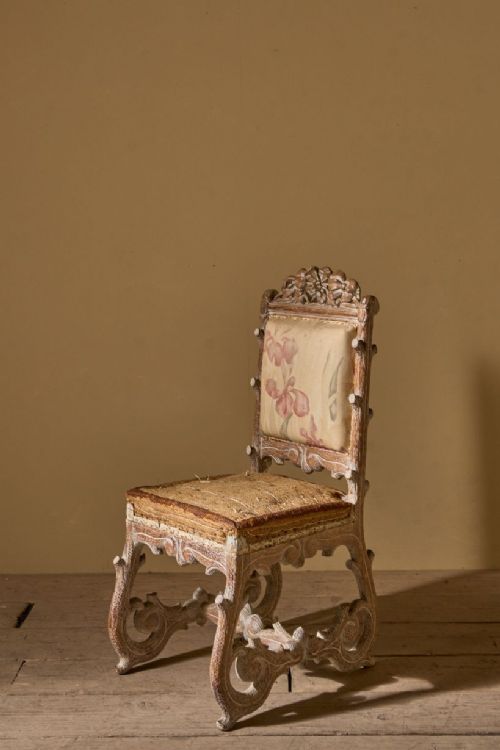
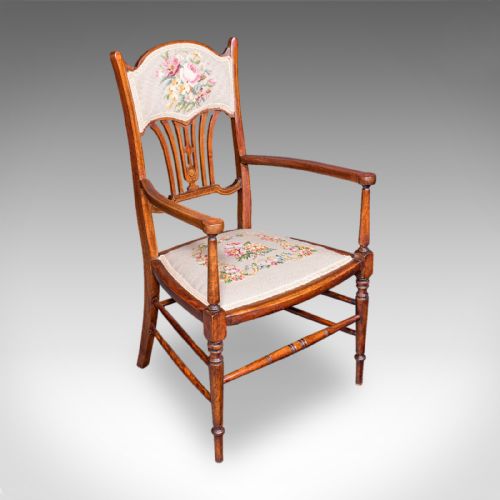
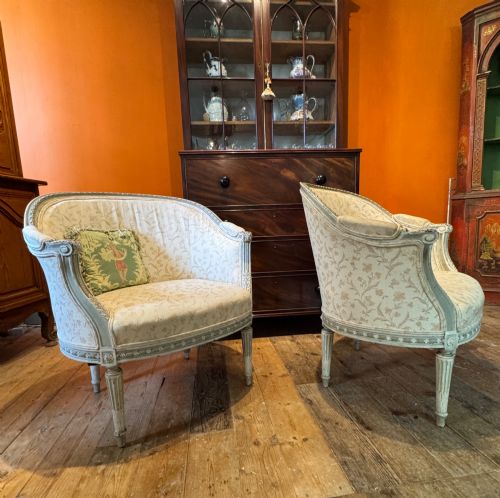
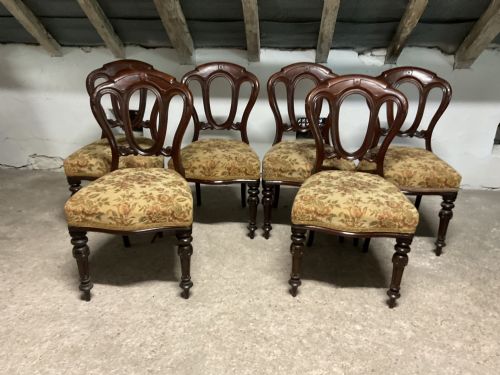
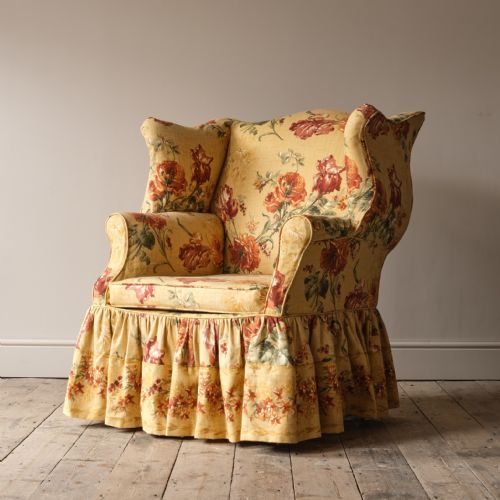
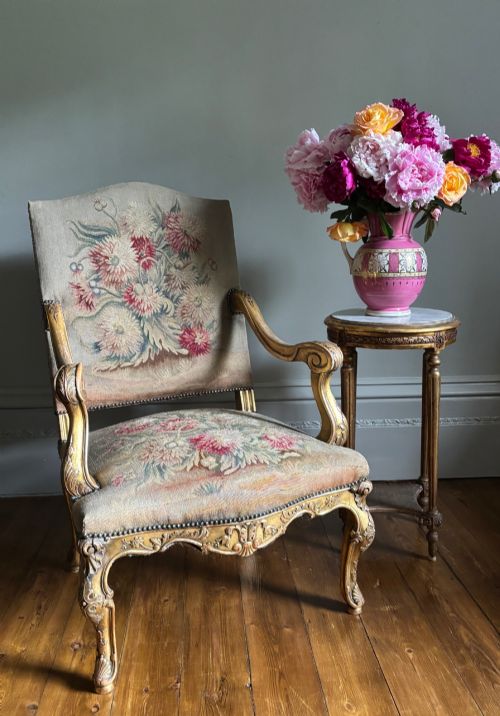
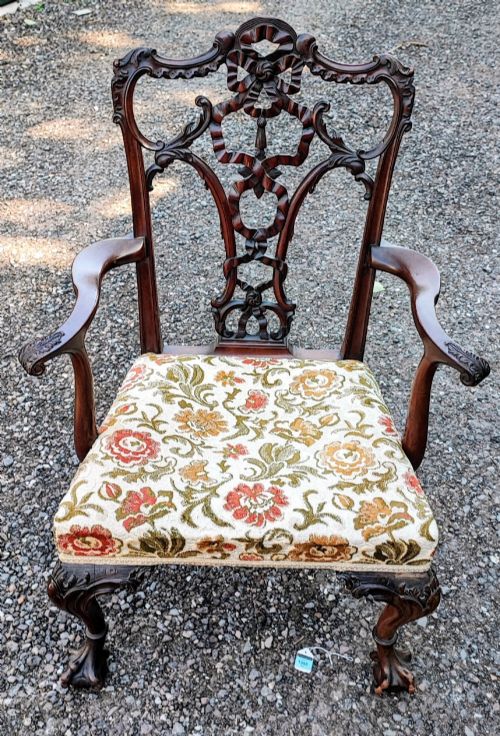
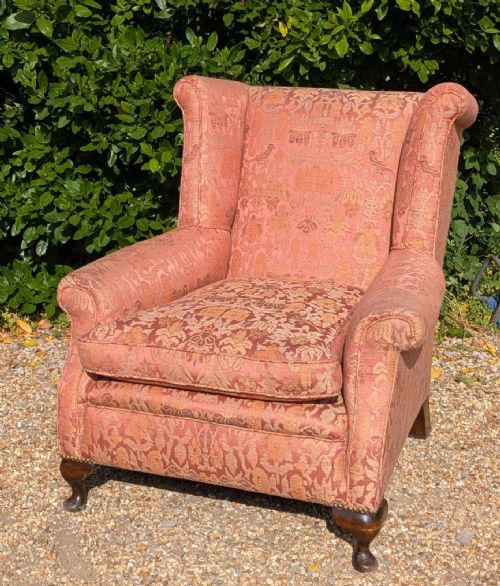
A vintage floral chair encompasses seating upholstered in patterned textiles, tapestry, needlepoint, or chintz, paired with timber frames spanning the nineteenth and early twentieth centuries.
The selections on this page appear most frequently in Victorian and Edwardian periods, manifesting as armchairs, side chairs, dining chairs, and stools.
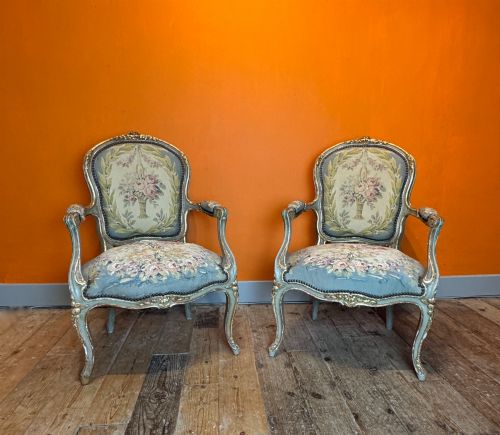
Makers and workshops of the era employed styles ranging from English Country House and Queen Anne Revival to Art Nouveau and French revival forms.
What varies in quality
The distinction rests in the execution of the timber carving, the choice of primary hardwood, and the integrity of the original or period upholstery.
Proportion and decorative restraint set individual pieces apart, distinguishing standard utilitarian seating from elaborately styled revival armchairs.
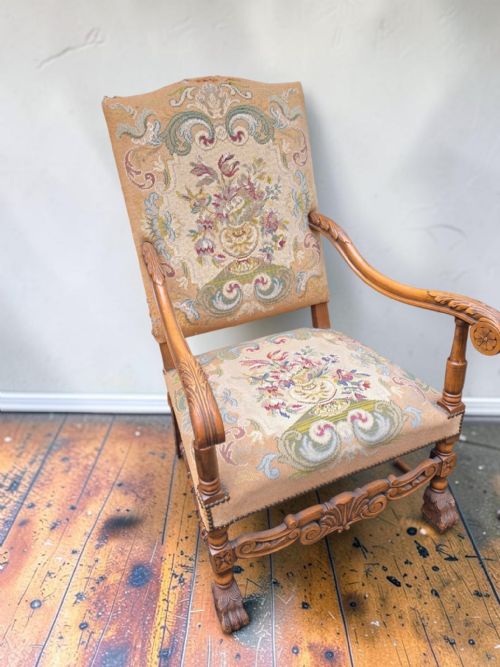
Listings feature mahogany, walnut, oak, and beech frames paired with fabric, tapestry, and needlepoint upholstery.
Waring and Gillow·Whytock and Reid·Sanderson
The Vintage Floral Chair Glossary
- Bergere
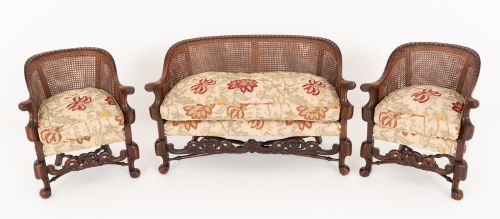
- An enclosed or open armchair with a cane or upholstered back and sides, commonly resting on a wooden frame.
- Tapesty
- A form of heavy textile art woven on a loom, frequently utilised for durable upholstery on nineteenth-century seating.
- Slipper chair
- A low-seated upholstered chair designed originally for dressing rooms and bedrooms during the Victorian era.
- Giltwood
- Timber that has been coated with gold leaf or a gold-coloured finish, seen on decorative French revival frames.
Vintage Floral Chair: Frequently Asked Questions
How do I identify the period?
Dating relies on timber choices such as mahogany or walnut, structural joinery, and stylistic markers like carved cabriole legs or inlay.
Reference points span Victorian, Edwardian, and earlier revival eras represented in the woodwork and textile patterns.
Where were these chairs placed?
Original placements varied from morning rooms and drawing rooms to bedrooms and dressing tables, depending on the scale and form.
Smaller side chairs and stools served occasional seating needs, while large wingbacks and armchairs anchored principal living spaces.
Are the upholstery fabrics original?
Upholstery ranges from period needlepoint and tapestry panels to later replacement covers in complementary floral designs.
Listing details specify whether textiles represent the original period installation or subsequent reupholstery.