


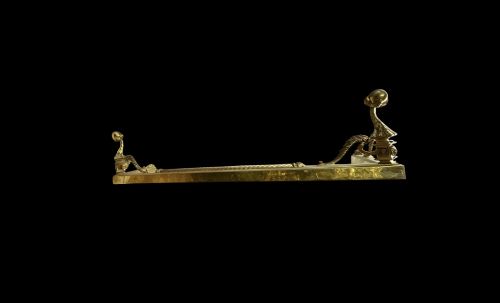

Vintage Fireplace Kerb
A vintage fireplace kerb frames the hearth with metal and leather, containing the fire while offering a seat by the flames.
Vintage Fireplace Kerb
When searching for a vintage fireplace kerb, buyers encounter low metal barriers designed to sit on the hearth around an open fire. These pieces span from the Georgian period through the Victorian, Edwardian, and Art Deco eras, utilising various metals to frame the grate.
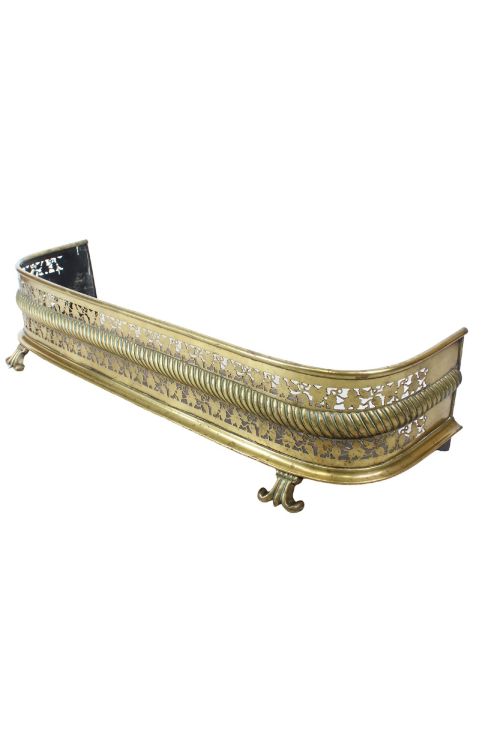
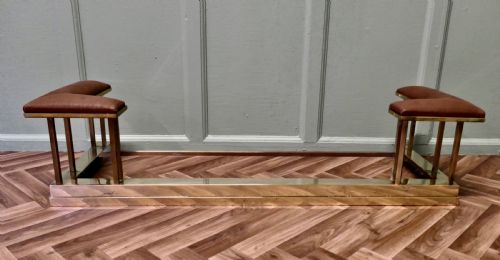
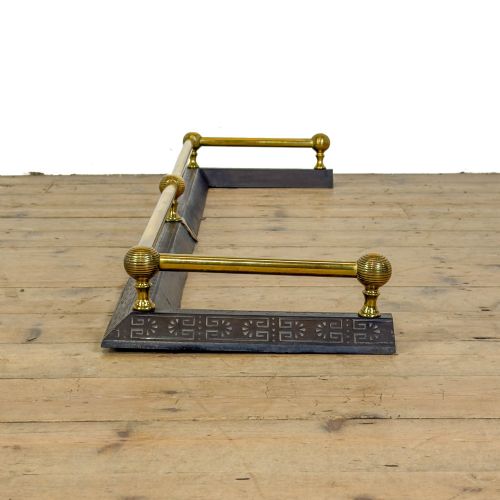
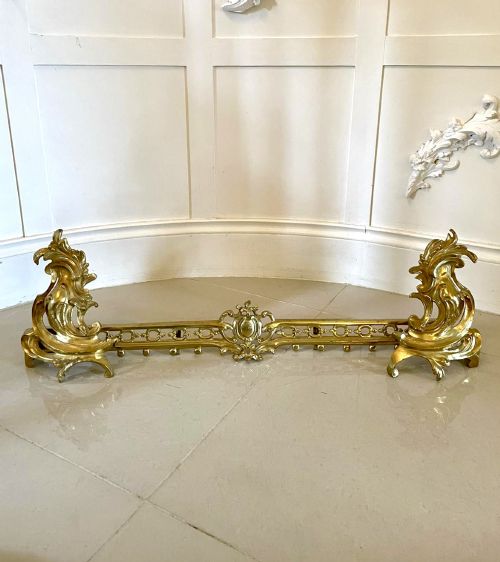
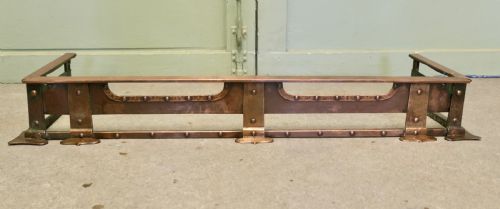
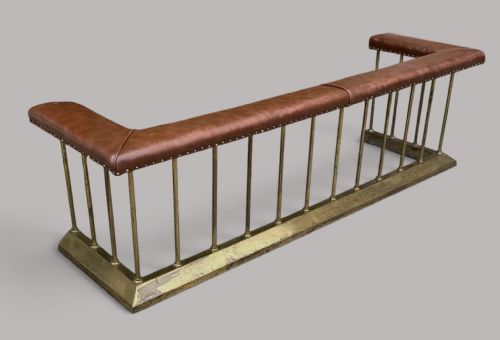
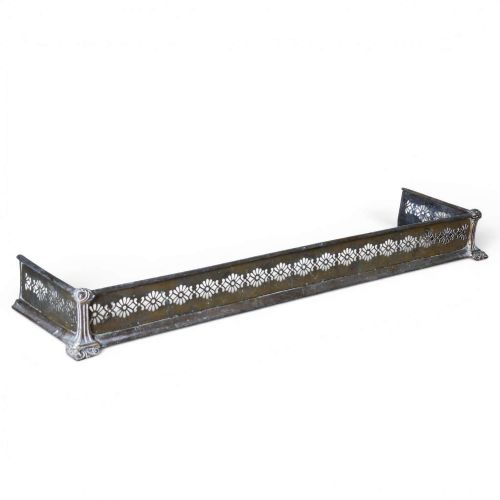
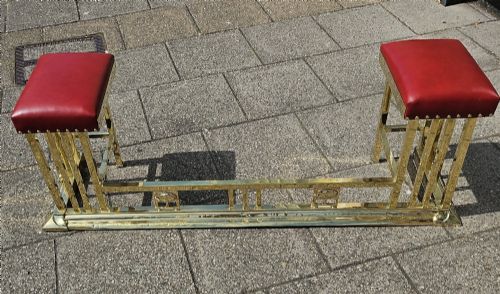
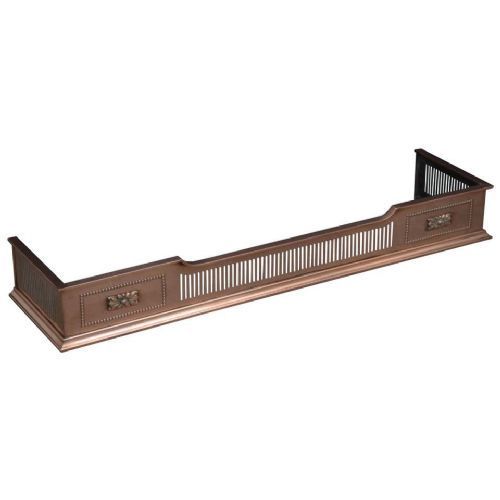
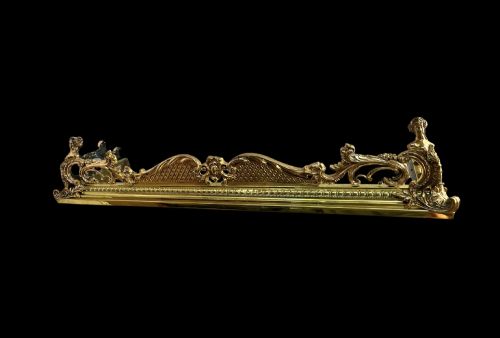
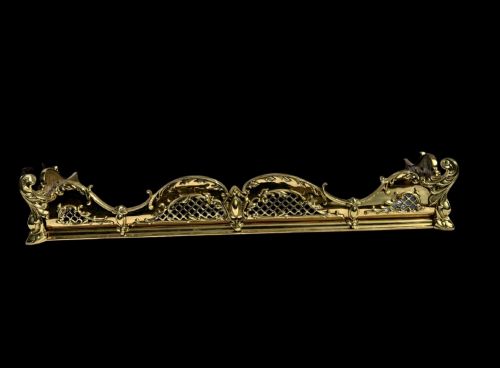
The most common examples on this page are Victorian and Edwardian brass and steel fenders, alongside club fenders topped with leather upholstery. Styles range from simple pierced brass channels to ornate French Rococo and Louis XV designs, as well as Arts and Crafts beaten copper.
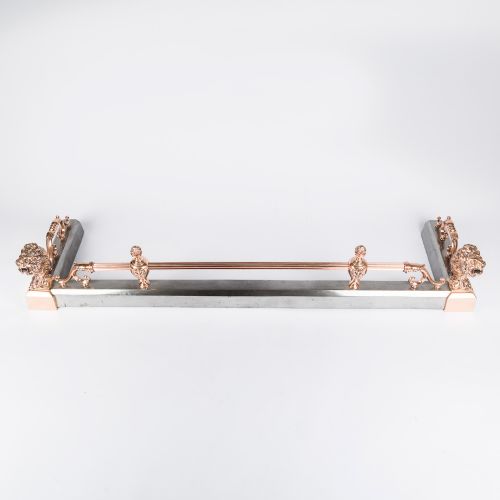
Makers produced both fixed-width hearth surrounds and extending versions designed to fit varying chimney openings. Buyers select these objects to anchor the fireplace within a period room scheme, combining hearth safety with fireside seating.
How they were made
Makers constructed these hearth surrounds primarily in brass, iron, steel, and copper, often combining materials such as a steel base with cast brass ornaments. Workshops cast iron and bronze components or hammered sheet copper into beaten Arts and Crafts textures and flower patera motifs.
Pierced brass channels relied on precise press-cutting to create intricate gallery patterns, while extending models used sliding internal rails to adjust the overall width. Upholstered club fenders incorporated seasoned leather pads fixed over internal frames, secured with brass riveting.
Finishes varied from polished brass and gilded surfaces to patinated iron and riveted copper. Blacksmiths and metalworkers utilised casting, riveting, and engraving to produce durable barriers capable of withstanding hearth heat.
Hearth surrounds appear in configurations ranging from simple pierced channels to leather-topped club seats.
What varies in quality
The standard of a vintage fireplace kerb rests upon the thickness of the metal gauge and the crispness of any cast or pierced ornamentation. Substantial weight indicates heavier brass, cast iron, or solid steel construction that resists warping near the grate.
Assembly methods also distinguish workshop output, with hand-riveted copper and dovetailed or screwed metal joints showing greater durability than lighter mass-produced alternatives. On club fenders, the grade of the leather and the firmness of the internal padding separate utilitarian seating from finer reception room pieces.
Design integration defines the upper tier of examples, where decorative elements like beaded decoration, scrolled corners, and patinated bronze exhibit balanced proportions and careful hand-finishing.
The Vintage Fireplace Kerb Glossary
- Kerb
- A low boundary or fender placed around a fireplace hearth to contain embers and ash. This term is frequently used interchangeably with fender.
- Club fender
- A low, metal-framed hearth surround featuring upholstered leather seats on either side. These allowed homeowners to sit close to the fire.
- Patera
- A circular ornamental bas-relief resembling a classical libation dish, often cast in brass or bronze. Makers applied these to the corners or front panels of Victorian fenders.
- Pierced brass
- Sheet brass that has been perforated with repetitive geometric or floral patterns. This technique lightened the visual weight of the metal surround.
- Brutalist
- A descriptor applied in listings to heavy, unadorned metalwork with exposed rivets and industrial textures. It appears primarily on Arts and Crafts copper and iron pieces.
Vintage Fireplace Kerb: Frequently Asked Questions
What is a club fender?
A club fender is a hearth surround fitted with cushioned leather seats on opposing sides. Victorian and Edwardian households used them to provide warm seating directly adjacent to the grate.
These pieces combine a rigid metal frame with upholstered pads, allowing family members to sit comfortably around the fire while keeping stray embers contained.
How do I measure for a fender?
Measure the width and depth of your fireplace hearth to ensure the internal dimensions of the kerb accommodate the opening. Allow sufficient clearance around the grate for safety and airflow.
Many period examples feature extending mechanisms that let you adjust the width to fit your specific hearth dimensions accurately.
How do I clean brass and copper?
Clean brass and copper gently using a mild metal cleaner applied with a soft cloth to remove dust and tarnish. Avoid abrasive pads that can strip historic patination.
Many collectors prefer to preserve the darkened, aged patina on 19th-century metal rather than polishing it to a bright shine.
Are these fenders adjustable?
Certain period pieces include extending rails that allow the metal channels to slide outward to fit wider hearths. These adjustable designs were common in the 19th and early 20th centuries.
Fixed-width fenders, by contrast, were custom-made for specific fireplace openings and cannot be altered without professional metalworking.