


Vintage Filigree Pendant
A vintage filigree pendant brings intricate wirework and precious stones together, offering delicate craftsmanship from Edwardian, Art Deco, and Victorian eras.
Vintage Filigree Pendant
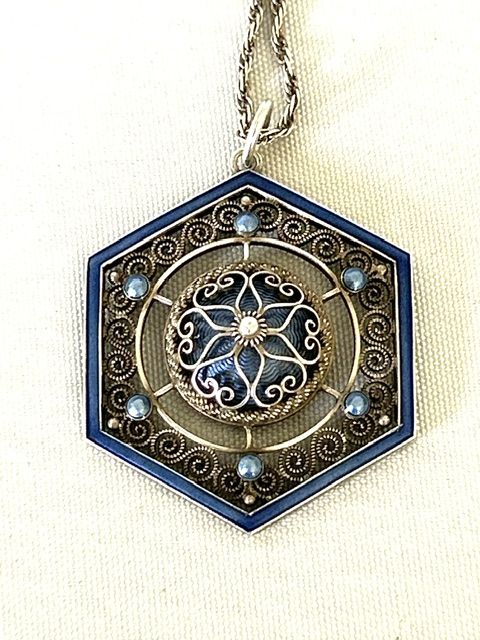
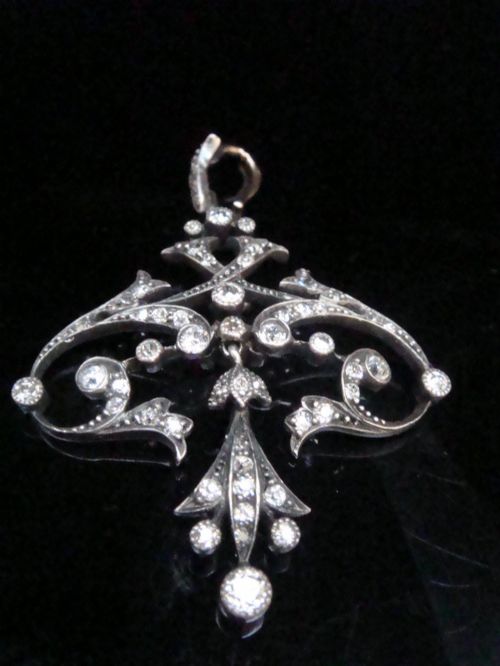
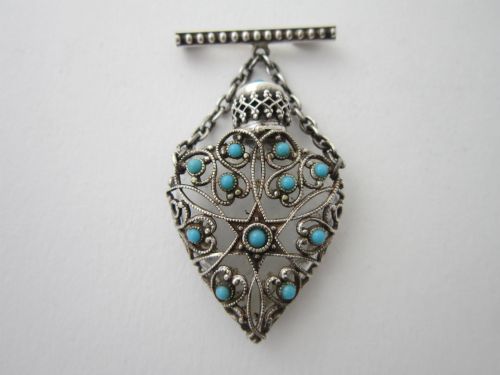
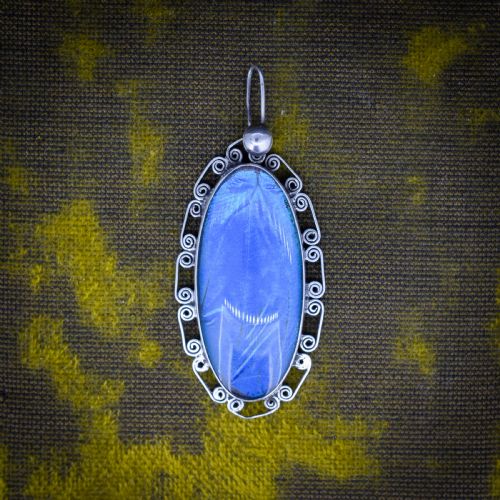
A vintage filigree pendant consists of fine, twisted metal threads soldered together to form openwork patterns, frequently housing central gemstones. These pieces span multiple historical periods including Victorian, Edwardian, Art Deco, and mid-century modern design movements.
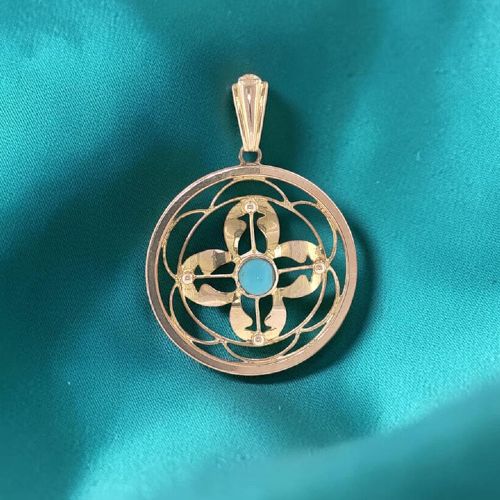
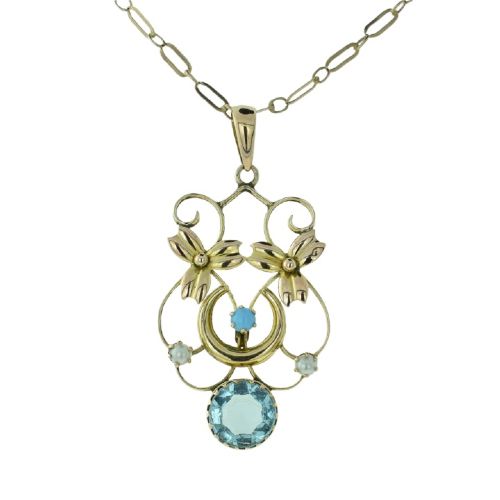
The selections on this page appear predominantly in gold and silver, often incorporating materials such as diamond, seed pearl, turquoise, amethyst, and platinum. Alongside standard pendants, buyers will find variations like lockets, lavalieres, and perfume bottles utilising the same delicate metalwork techniques.
Originating from diverse European workshops, these items reflect specific stylistic shifts from the flowing floral motifs of Art Nouveau to the geometric symmetry of the Art Deco period. Each piece carries the distinct hallmarks of its era through its choice of stones and metal purity.
Materials and construction methods
Goldsmiths and silversmiths constructed these items by drawing precious metals into fine wires, which were then manipulated into intricate scrolls, loops, and lace-like patterns. These delicate frameworks were soldered onto solid backing plates or held together structurally to support heavier set gems.
Makers frequently combined silver, platinum, and various karats of yellow and rose gold with polished gemstones such as opals, topazes, and sapphires. Settings ranged from minimal prong mounts integrated directly into the wirework to enclosed bezel settings for softer stones like turquoise and pearls.
The inventory spans the nineteenth century alongside Edwardian, Art Deco, and mid-century design periods.
Assessing quality in fine wirework
The standard of a filigree piece rests upon the precision of the soldered joints and the uniformity of the wire twists throughout the openwork. Superior examples display clean solder points without excess residue, maintaining structural rigidity despite the airy appearance of the metal.
Gemstone selection and secure setting techniques further distinguish finer items, where stones sit flush and undisturbed within their mounts. The complexity of the design, combined with the weight and purity of the precious metals utilised, determines the overall refinement of the construction.
Marius Hammer·Carl Bucherer
The Vintage Filigree Pendant Glossary
- Filigree
- Ornamental work consisting of fine wire, usually of gold or silver, formed into delicate openwork patterns. It requires considerable skill from the metalsmith to solder the intricate threads without blocking the light.
- Lavalier
- A pendant featuring a primary drop stone suspended from a smaller secondary motif or chain. This style gained immense popularity during the Edwardian period.
- Guilloche
- An ornamental technique in which a very precise, intricate pattern is mechanically engraved into an underlying metal surface. Enamel is frequently layered over this engraving to create a translucent coloured finish.
- Bezel setting
- A method of holding a gemstone in place using a narrow metal rim that wraps around the outer edge of the stone. This technique provides secure protection for softer or more delicate gems.
- Old cut diamond
- A precursor to the modern brilliant cut diamond, characterised by a smaller table, higher crown, and open culet. These stones were shaped by hand during the eighteenth, nineteenth, and early twentieth centuries.
Vintage Filigree Pendant: Frequently Asked Questions
What periods do these pendants come from?
The pieces span from the nineteenth century through the Victorian, Edwardian, and Art Deco eras, extending into mid-century modern designs. Each period introduces distinct stylistic traits, from romantic floral motifs to strict geometric lines.
Buyers encounter specific hallmarks and material combinations unique to these distinct eras, helping to identify the origin and approximate decade of manufacture.
How do I care for filigree jewellery?
Delicate wirework requires gentle cleaning using soft brushes and mild soapy water, avoiding harsh ultrasonic cleaners that can loosen fragile soldered joints. Storing each piece separately prevents the fine metal threads from tangling or bending under pressure.
Regular inspection by a jeweller ensures that gemstone settings remain secure within the intricate openwork framework.
What metals are typically used?
Makers predominantly utilised sterling silver, platinum, and various karats of yellow, white, and rose gold. The choice of metal often reflects the prevailing fashion of the manufacturing period.
White metals dominated Edwardian and Art Deco pieces, whereas yellow gold remains common in Victorian and earlier twentieth-century examples.
Are these pendants supplied with chains?
Some items arrive paired with matching antique or vintage chains, while others are sold as individual pendants ready to be hung on a preferred necklace. Descriptions specify whether a chain is included in the listing.
When a chain is present, it generally complements the metal type and period style of the pendant itself.