
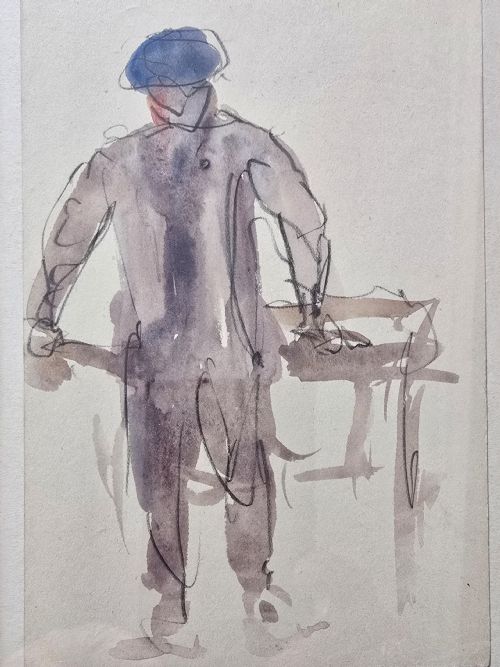


Vintage Figurative Watercolour Painting
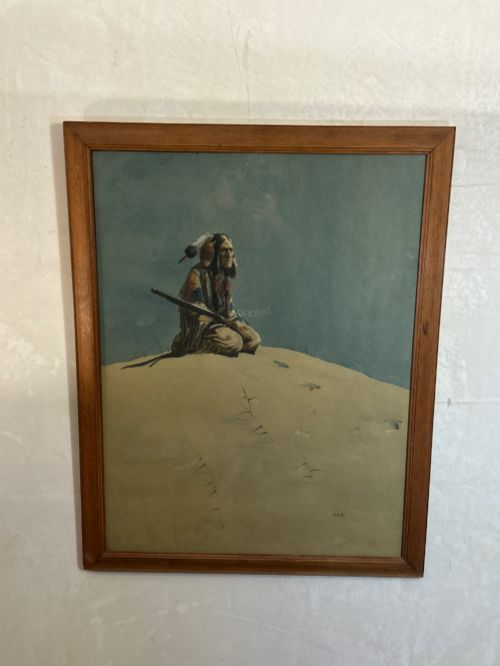
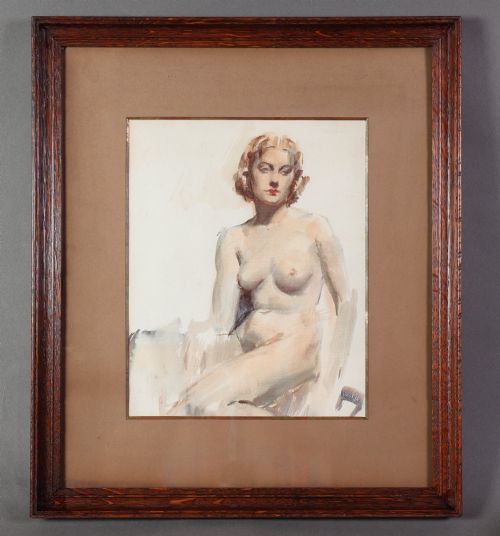
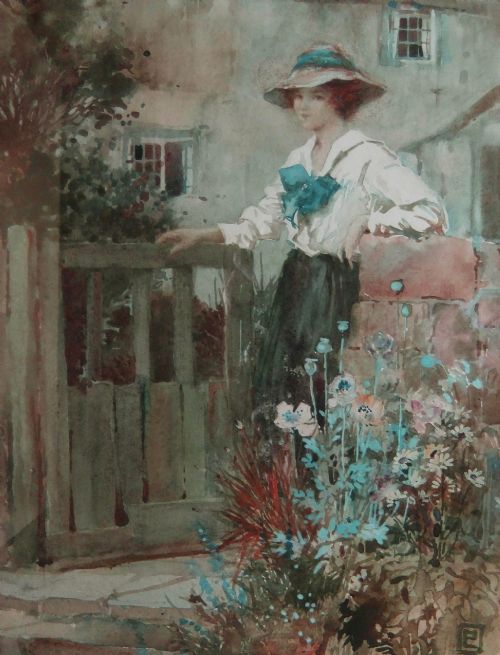
A vintage figurative watercolour painting brings human character directly onto the wall, captured through fluid pigment and delicate brushwork.
Vintage Figurative Watercolour Painting
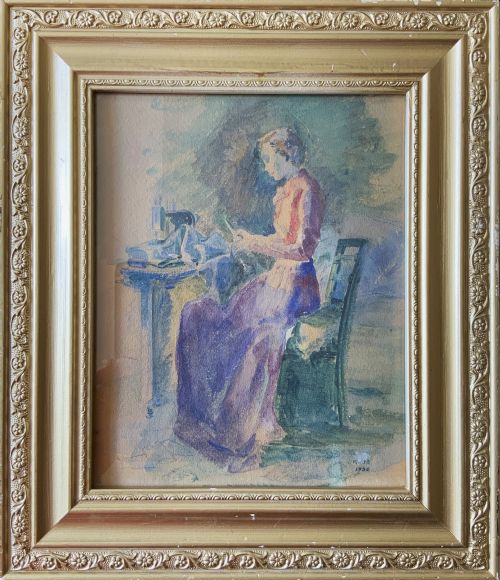
A vintage figurative watercolour painting focuses primarily on human subjects, ranging from detailed Victorian portraits and Edwardian illustrations to mid-century impressionist scenes. These works capture specific moments in time, depicting figures such as seamstress subjects, mothers with children, or performers in theatrical settings.
The selections span from the nineteenth century through the mid-twentieth century, drawing from British, Irish, Scottish, French, and Japanese schools. Buyers frequently encounter framed pieces executed on paper, showcasing both intimate character studies and larger interior compositions.
Materials and construction
Artists utilise watercolour pigment applied directly onto paper supports, often supported by secondary materials such as ink and coloured pencil for added definition. Many works incorporate gold leaf details or are presented beneath glass within period wooden frames.
The technique relies on the transparency of water-based pigments to build light and shadow across the human form. Skilled handling of the medium allows the white of the paper to serve as highlights, creating luminosity within the figures and their surroundings.
A mule shares the artistic spotlight alongside a girl and a squirrel in one spirited mid-century folk scene.
Elements of distinction
Quality rests heavily on the confidence of the brushwork and the expressive capability of the artist in capturing gesture and mood. Stronger examples demonstrate a sure command of anatomy and a dynamic composition that animates the human subject.
The degree of preservation and the harmony of the framing also influence the standing of a piece. Works that retain their original pigment vibrancy without excessive fading or paper degradation offer a clearer window into the creator's initial intent.
John Hassall·Percy Lancaster·Michael Healy·Robert Eadie·Raoul Millais·Sir William Russell Flint·Augustus Jules Bouvier·Usabal y Hernandez·Emil John Hess·George Kilburne·Roland Batchelor·William Lee Hankey·Takashi Nakayama·Irene Lagut·Kees van Dongen·Yves Brayer·Leon Girardet·Henry Silkstone Hopwood·Owen Bowen·K B Curtis
The Vintage Figurative Watercolour Painting Glossary
- Watercolour pigment
- Finely ground colour particles suspended in a water-soluble binder. This medium allows for translucent washes that dry quickly on paper.
- Figurative art
- Artwork that derives its inspiration from the human figure and real objects. In these pieces, people serve as the primary focus of the composition.
- British Impressionism
- A painting style that emerged in the late nineteenth and early twentieth centuries, focusing on light, everyday scenes, and loose brushwork rather than rigid academic finish.
- Triptych
- A set of three associated panels or pictures painted side by side. These works function as a single unified visual narrative.
- Mixed media
- An artwork combining several different materials on the same support. Artists occasionally supplement watercolour with ink and coloured pencil to enhance textural detail.
Vintage Figurative Watercolour Painting: Frequently Asked Questions
What is a figurative watercolour painting?
A figurative watercolour painting is an artwork created with water-based pigments on paper that depicts human subjects. These pieces range from intimate individual portraits to broader social and theatrical scenes.
They capture people engaged in everyday tasks, performances, or quiet domestic moments through fluid brushwork and transparent colour washes.
How do I date these watercolours?
Dating relies on stylistic clues, framing materials, and documentation associated with the artist or period. Victorian and Edwardian works often feature more academic precision, while mid-century pieces tend toward looser impressionistic handling.
Signatures, inscriptions on the reverse, and historical dress within the portrait also provide reliable chronological markers.
How should I frame and display them?
These works on paper require framing beneath glass to protect the delicate pigment from airborne dust and moisture. Archival mounts keep the paper from touching the glass directly.
Display them away from direct sunlight to prevent the watercolour pigments from fading over time.
What subjects appear most often?
Portraits of women and children dominate the selections, alongside depictions of workers such as seamstress figures, puppet makers, and fisherfolk. Theatrical performers and pastoral gatherings also feature prominently across the various regional schools.
These subjects reflect a deep nineteenth and twentieth-century interest in capturing both ordinary lives and dramatic character studies.
Are these paintings original works?
Yes, the listings comprise original painted artwork rather than printed reproductions. Each piece represents a unique application of pigment directly to the paper support by the artist's hand.
Brush textures, paper grain, and individual artist signatures confirm their unique status.