


Vintage Field Landscape Artwork
These vintage field landscape artwork pieces capture rural scenes in oils and watercolour, offering a quiet window into traditional countryside life.
Vintage Field Landscape Artwork
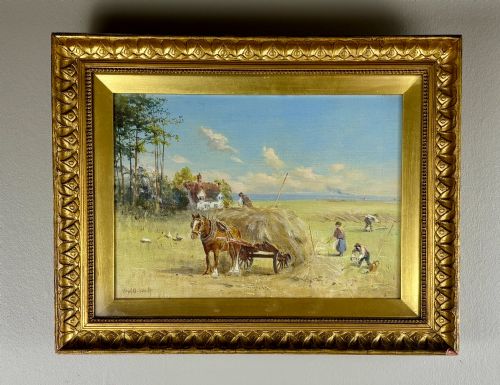
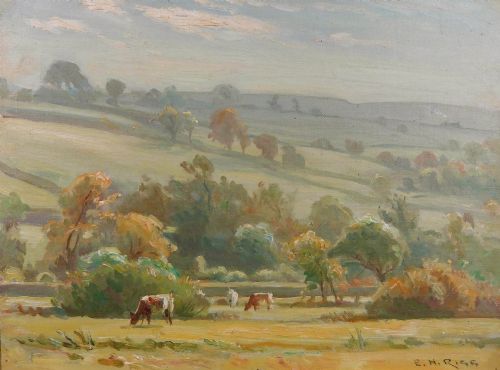
A vintage field landscape artwork captures rural scenes, harvest labours, and pastoral views across the British countryside and beyond. Buyers encounter original oil paintings, watercolours, and gouache pieces dating from the late nineteenth century through to the mid twentieth century. These works frequently depict farmers at work, grazing cattle, and wide open meadows under changing skies.
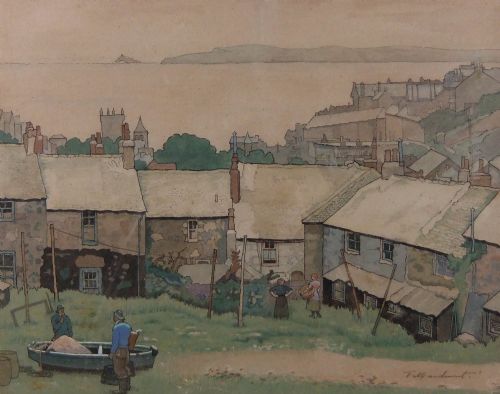
The selection on this page relies heavily on regional British scenes and traditional country settings. Pieces range from early Victorian compositions to mid-century depictions influenced by British and Scottish impressionism, alongside the St Ives School. Collectors find both intimate watercolours on paper and larger canvases housed in period wood or giltwood frames.
Materials and methods
Artists working on these scenes applied oil paint directly onto canvas, wood panels, or paper supports to build texture and depth. Watercolour and gouache techniques were used to create lighter, transparent atmospheric effects, often capturing the soft light of harvest time or sunset. Canvases are typically set within period wooden frames, including ebonised and giltwood mouldings.
The physical construction of these pieces reflects the traditional practices of their respective eras, from nineteenth-century stretched linen to twentieth-century board and panel supports. Wool work pictures also appear as a textured alternative to paint, utilising dyed threads to render classic pastoral subjects. Each medium dictates how the artist handled light, shadow, and the broad expanses of fields.
A wool work picture offers a fuzzy take on the harvest.
Assessing quality and execution
The distinction between standard decorative pieces and finer works lies in the artist's handling of light, atmosphere, and spatial depth. Superior compositions demonstrate a confident brushwork that brings movement to harvest fields and natural realism to equine or human figures. Stronger pieces reveal a deliberate choice of palette, capturing the specific quality of light at dusk or during summer months.
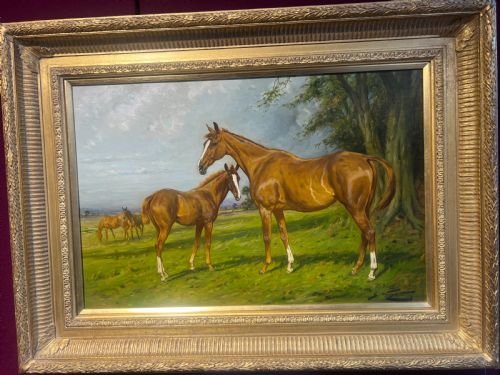
Framing and preservation significantly influence the overall standing of an artwork. Original ebonised or giltwood frames that complement the period of the painting enhance the piece, while well-maintained canvas and paper surfaces preserve the intended vibrancy of the pigments. The reputation of the named artist also elevates the standing of the work within traditional and impressionist schools.
Ernest Higgins Rigg·Thomas Maidment·George Wright·William Greaves·William Grant Murray·James William Booth·John Atkinson·Florence Hess·Helmut Reuter·Walter Williams·John D Walker·Herbert Royle·Frederick J Knowles·Joseph Paulman·Walter Duncan·Claude Muncaster·Rowland Henry Hill·Alastair Flatterly·Thomas E Francis·Reginald Mills
The Vintage Field Landscape Artwork Glossary
- Oil on Canvas
- A traditional painting method where oil-based pigments are applied to a woven fabric surface stretched across a wooden frame. This medium allows for rich colour blending and textured brushwork.
- Watercolour
- A painting technique using water-soluble pigments on paper to create luminous, translucent washes of colour. It is frequently employed for topographical and landscape scenes.
- Giltwood
- Timber framing treated with a thin layer of gold leaf or gold-coloured finishing. These frames are characteristic of nineteenth and early twentieth-century presentation.
- Gouache
- An opaque water-based medium similar to watercolour but modified with a white pigment to create solid, flat areas of colour. Artists use it to achieve strong tonal contrast in landscape works.
- St Ives School
- An art movement associated with the town of St Ives in Cornwall, known for its distinct approach to landscape and abstract painting. It represents a significant regional style within British art.
Vintage Field Landscape Artwork: Frequently Asked Questions
What subjects do these landscape artworks typically show?
These artworks predominantly feature rural scenes, including harvest fields, ploughing horses, riverbanks, and pastoral valleys.
Many pieces document specific British regions, capturing the countryside during different seasons and times of day.
Are these artworks original paintings or prints?
The selections consist entirely of original hand-painted works, including oil paintings, watercolours, and gouache studies.
Artists applied pigments directly to canvas, wood panels, or paper, ensuring each piece is a unique creation.
How should I care for a vintage oil painting?
Protect the canvas and wooden frame from direct sunlight and excessive moisture to prevent fading and warping.
Dust the surface gently with a soft, dry cloth and avoid using liquid cleaners on the paint or giltwood.
How can I identify the period of a landscape artwork?
Clues to the era are found in the framing materials, the style of the brushwork, and the artist's signature.
Mid-century pieces often reflect impressionistic tendencies, while nineteenth-century works lean towards traditional realism.