


Antique Agricultural Scene
An antique agricultural scene captures the heavy labour of the countryside in oil paint or watercolour, bringing quiet rural dignity straight to the wall.
Antique Agricultural Scene
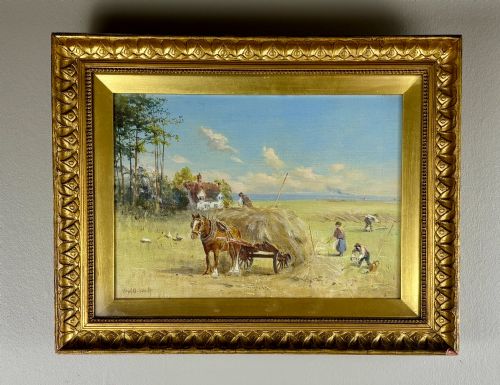
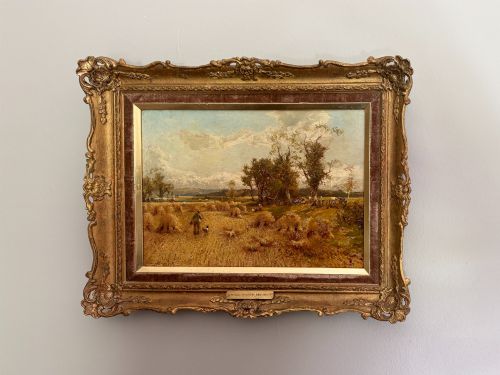
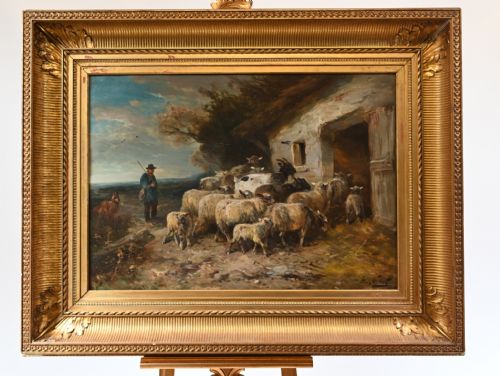
An antique agricultural scene focuses on rural life, depicting farmhands, plough teams, and harvest work across fields and farmyards. These works span the nineteenth century and the early decades of the twentieth century, emerging from British and continental European traditions.
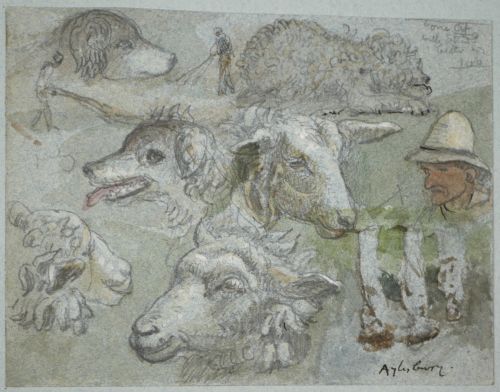
Buyers encounter oil paintings on canvas and panel alongside delicate watercolour paintings on paper. Framed wall art ranges from intimate watercolours to large scale canvases showing horses at troughs, hay carts, and cattle in stables.
The subjects reflect agrarian routines, capturing moments such as harvest time, hay cutting, and milking. Most examples date from the Victorian period up to the nineteen-thirties, aligning with British Impressionism, realism, and pastoral styles.
What Varies in Quality
Quality rests upon the artist's command of anatomy, light, and atmosphere, distinguishing hurried decorative work from the careful observation found in signed exhibition pieces. Strong compositions balance human figures and working horses naturally within the wider landscape.
Material preservation dictates longevity, separating canvases with stable, uncracked paint layers and watercolours retaining their original pigment strength from works suffering heavy fading or aggressive past restoration.
Listings feature works executed in oil and watercolour across British Impressionist, Victorian realism, and French provincial styles.
Henry Schouten·Raimond Louis Lecourt·James William Booth·Arthur Charles Dodd·George Cole
The Antique Agricultural Scene Glossary
- Oil on canvas
- A painting medium using pigments bound in a drying oil, applied to a woven fabric support stretched over a wooden frame. This combination allows for rich blending and textured brushwork.
- Watercolour
- A paint consisting of colour pigments suspended in a water soluble vehicle, traditionally applied to paper. It yields transparent washes and delicate tonal shifts.
- Pastoral style
- An artistic genre idealised around rural life and agricultural labour. It romanticises the simplicity of farming routines and country landscapes.
- British Impressionism
- A painting approach focusing on loose brushwork and natural light, adopted by British artists around the turn of the twentieth century. It often records open air agricultural scenes and coastal towns.
- Naïve art
- Work created by artists without formal academic training, prioritising direct expression and flat perspective over strict anatomical accuracy.
Antique Agricultural Scene: Frequently Asked Questions
What periods do these paintings cover?
The works span from the mid-nineteenth century through the Victorian and Edwardian eras into the nineteen-thirties. Most pieces cluster around the late nineteenth century and the early twentieth century.
This timeframe captures the transition from traditional horse-drawn farming methods to early twentieth-century rural life before widespread mechanisation altered the landscape.
How should I hang an antique watercolour?
Watercolours require protection from direct sunlight to prevent the pigments from fading permanently over time. Keep them away from damp walls and sources of direct heat.
Ensure the frame is properly sealed and uses glazing that filters ultraviolet light to preserve the paper and pigments safely.
How do I identify a pastoral painting?
Pastoral paintings focus on rural subjects such as farmhands, plough teams, haymaking, and livestock in natural settings. The mood is typically calm, celebrating the rhythm of agricultural labour.
Artists working in this tradition emphasise the harmony between workers, animals, and the open countryside.
What is the difference between oil and watercolour?
Oil paintings use slow drying pigments suspended in oil on canvas or wood, allowing for heavy texture and deep, reworkable layers of colour. They are generally robust and housed in heavy frames.
Watercolours use water-soluble pigments on paper, offering a luminous, lighter quality that requires glass protection to prevent moisture damage.