

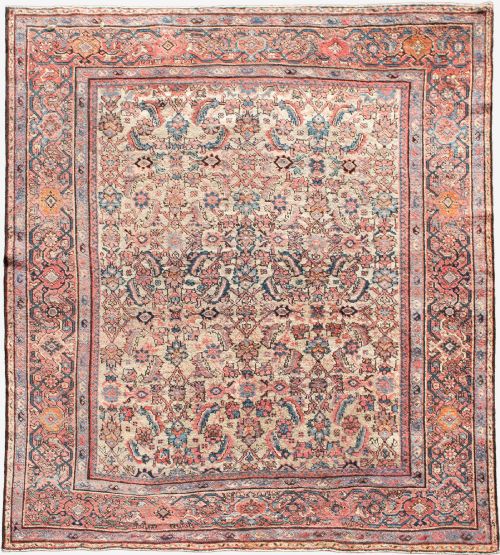
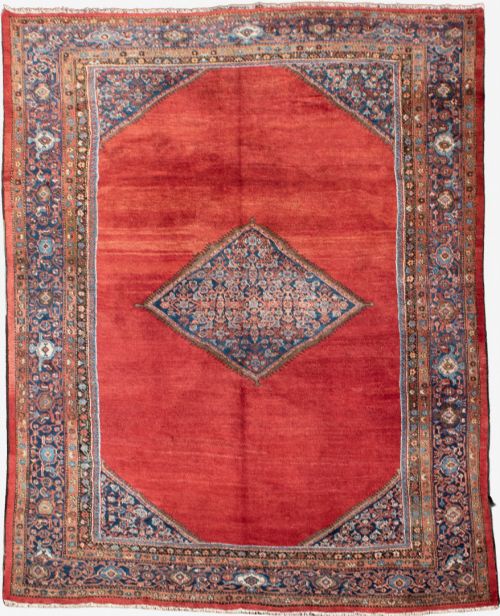


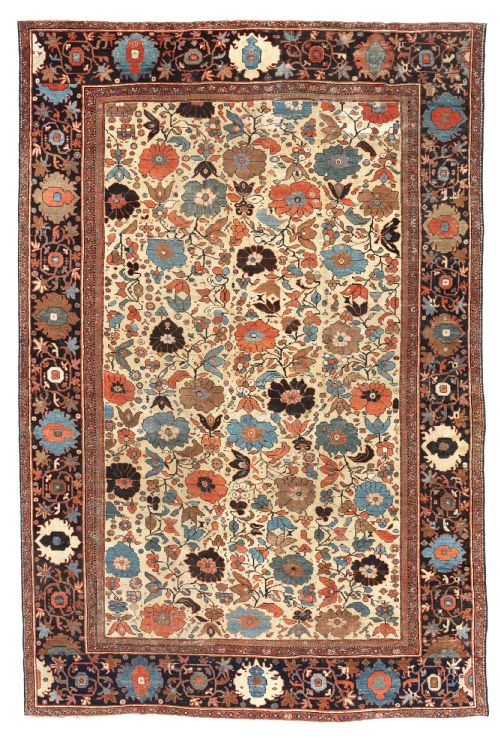


Vintage Ferahan Rug
A vintage ferahan rug brings dense Persian design and robust wool construction into a room, offering the durability that collectors seek.
Vintage Ferahan Rug
When you search for a vintage ferahan rug, you encounter hand-knotted floor coverings spanning the late nineteenth and early twentieth centuries. These pieces originate from Persian workshops and appear in various formats, from small area rugs to large room-size carpets and very narrow hallway runners.
The selections available here include traditional Persian styles labelled under spellings such as Ferahan, Fereghan, and Farahan. You are most likely to meet pieces dated across decades from eighteen seventy up to nineteen twenty, including golden field carpets and square formats.
How they were made
These floor coverings utilise wool and cotton as foundational materials, with wool forming the pile and cotton typically providing the structural foundation. Weavers knotted the wool pile by hand onto sturdy foundations to withstand generations of foot traffic in hallways and reception rooms.
The construction supports large formats up to over five metres in length, as well as specialised narrow runner proportions. Traditional techniques ensure each carpet maintains structural integrity across varied dimensions.
Vintage Ferahan Rug Retail Price Guide 2026
Typical asking prices for vintage ferahan rug among the pieces listed under this phrase on Sellingantiques today, from the lower quarter to the upper quarter. They describe what is for sale here now, not the wider market.
Formats on this page range from small area rugs and square room-size carpets to very narrow hallway runners.
What varies in quality
The distinction between standard examples and the finest pieces lies in the precision of the knotting and the complexity of the traditional Persian design execution. Sarouk Ferahan hybrids and pieces with distinctive golden fields demonstrate higher visual and technical ambition.
Proportion and scale also dictate the character of the textile, with exceptionally narrow runners or large square room-size formats representing specific weaving challenges resolved with varying degrees of symmetry.
The Vintage Ferahan Rug Glossary
- Ferahan rug
- A traditional Persian floor covering originating from the region, known for enduring wool construction and classic regional motifs. These pieces date from the nineteenth and early twentieth centuries.
- Golden field
- A background colour scheme dominated by rich golden tones, seen in specific nineteenth-century carpet examples. This backdrop highlights the surrounding pattern work.
- Runner
- A long, narrow carpet format designed specifically for hallways and corridors. These pieces measure significantly longer than they are wide.
- Pile
- The soft, upright wool surface of the rug formed by the knotted yarn. It provides the tactile texture and visual depth of the textile.
Vintage Ferahan Rug: Frequently Asked Questions
Where should I place a vintage ferahan rug?
These pieces suit high-traffic areas like hallways or spacious rooms depending on the format you choose. Narrow runners fit corridors naturally, while large carpets anchor sitting rooms.
Ensure you use an appropriate underlay to protect the cotton foundation and wool pile from sliding on hard floors. This simple step preserves the textile during daily use.
How do I date a ferahan rug?
Dating relies on stylistic markers, construction traits, and recorded production periods spanning from eighteen seventy to nineteen twenty. Comparing the knotting density and wool quality helps establish the era.
Consulting the specific details listed for each rug reveals its estimated decade of origin. The materials remain consistent across these years, relying on wool and cotton.
What is a Sarouk Ferahan carpet?
This designation links traditional Ferahan weaving artistry with the renowned production styles of Sarouk. Such pieces combine specific regional design characteristics with fine wool materials.
They represent a refined subset within traditional Persian carpet production. Collectors often look for these hybrid designations in older room-size formats.