




Vintage Farmhouse Bench
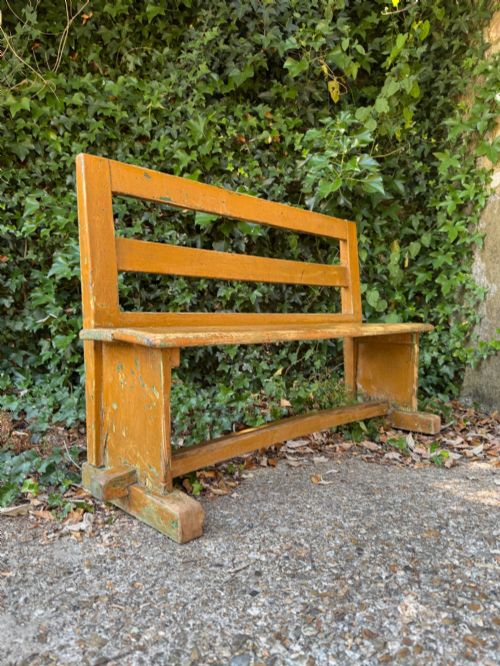
A vintage farmhouse bench brings honest utility and enduring character to a room, offering practical seating shaped by generations of domestic use.
Vintage Farmhouse Bench
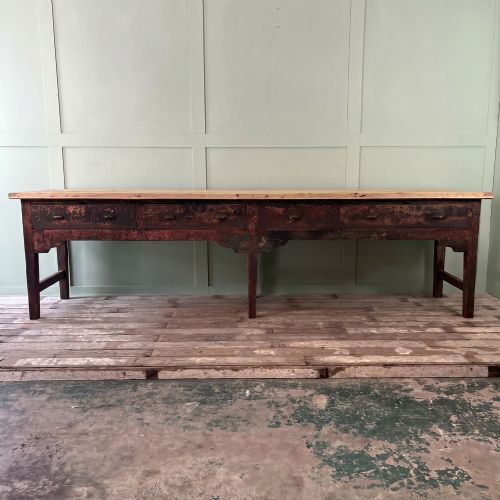
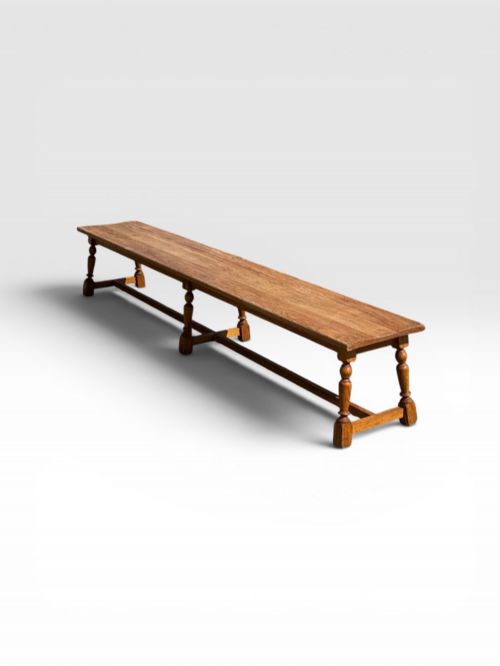
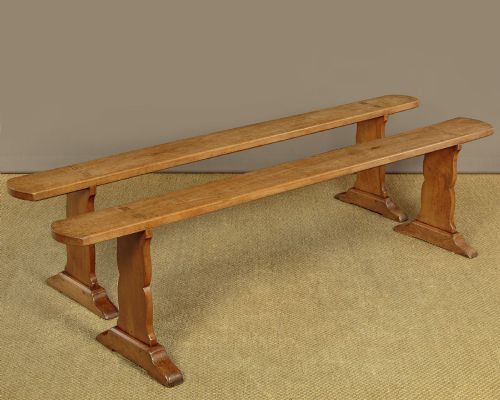
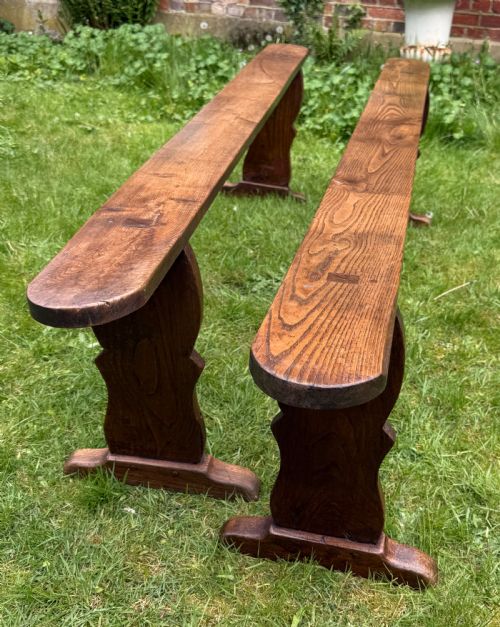
A vintage farmhouse bench provides long seating or surface space, appearing frequently in pine, oak, elm, and cherrywood across this selection. These pieces originate from regional workshops and rural domestic settings, reflecting utilitarian needs.
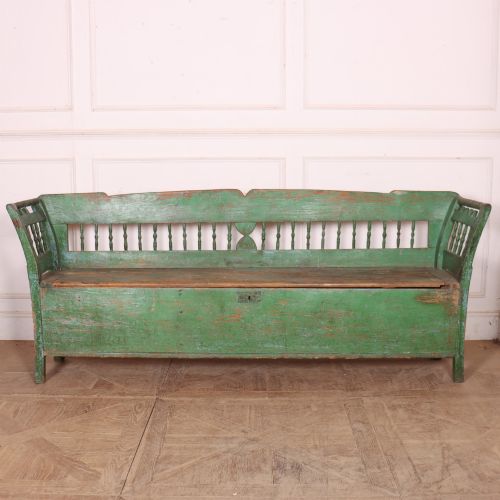
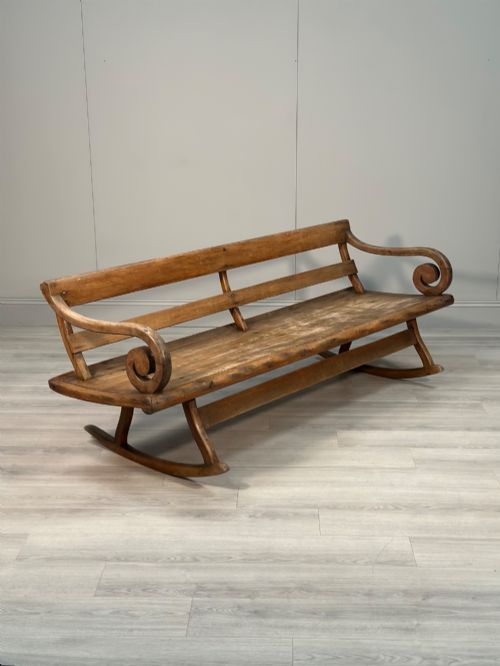
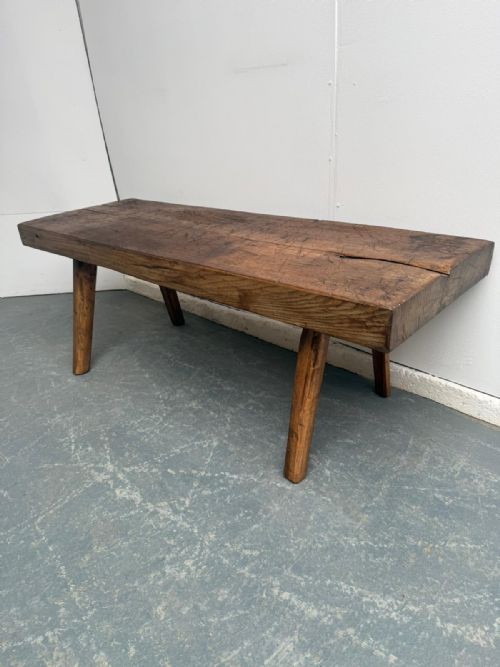
The most common forms on this page include long timber seating boards, narrow pig benches, and high back settles designed for warmth near a hearth. Examples span the nineteenth and early twentieth centuries, capturing various country house traditions.
Makers utilised local timbers suited to daily demands, creating sturdy structures intended for kitchens, halls, and dining rooms. Each piece carries the marks of its working history in provincial contexts.
How they were made
Construction relies on solid timbers such as pine, oak, elm, and fruitwood, joined with pegged mortise and tenon joints or scratch built techniques. Workshops selected native woods for their local availability and structural resilience under heavy loads.
Surfaces often show the evidence of scrubbing, bleaching, or historical painted finishes, reflecting decades of practical maintenance and domestic wear. Carpenters prioritised utility over ornamentation, resulting in robust frames designed to last.
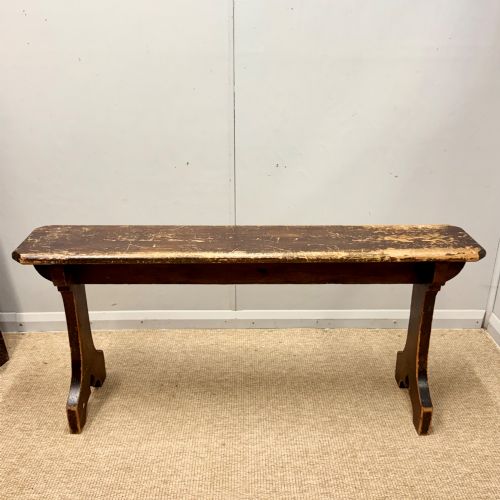
Some narrow nineteenth century pig benches now find peaceful retirement holding coffee cups instead of provisions.
What varies in quality
Quality rests in the proportion of the timber, the integrity of the structural joints, and the degree of original surface patination. Pieces retaining their uncompromised scrubbed finish or authentic historical paint show superior retention of character.
Proportion and length also dictate distinction, with exceptionally long dining benches or narrow pig benches exhibiting greater scarcity than standard formats. The harmony between the original timber and subsequent weathering defines the overall standard.
The Vintage Farmhouse Bench Glossary
- Pig bench
- A low, narrow wooden bench traditionally utilised in rural agricultural contexts for preparing meat. These pieces now function widely as coffee tables or low display surfaces.
- Settle
- A wooden bench featuring a high back and solid arms designed to block draughts in older homes. Many examples include enclosed storage compartments beneath the seat.
- Trestle
- A structural support system comprising horizontal beams held by pairs of angled legs. This framework provides stability for long dining benches and tavern tables.
- Scrubbed finish
- A surface repeatedly washed with water and sand to clean the wood, leaving a pale, smooth texture. This treatment is typical of utilitarian pine and sycamore kitchen furniture.
- Patina
- The surface sheen and colour developed by wood through age, handling, and polishing over many decades. It serves as a visual indicator of authenticity and historical depth.
Vintage Farmhouse Bench: Frequently Asked Questions
How do I style a farmhouse bench?
A vintage farmhouse bench works effectively placed along a dining table, positioned in a hallway as a seating option, or utilised as a low display surface. Pair the timber tones with simple textiles to maintain the utilitarian aesthetic.
Ensure adequate clearance beneath tables and allow sufficient floor space around longer seating formats to preserve balance in the room.
What woods were used for these benches?
Makers relied on accessible regional timbers, predominantly pine, oak, elm, cherrywood, and sycamore. Each wood type yields distinct grain patterns and weight characteristics depending on its origin.
Elm offers notable toughness for seats, while pine and oak provide dependable structural frames for daily domestic tasks.
How do I care for antique timber?
Maintain antique wooden surfaces by dusting with a dry cloth and avoiding excessive moisture or direct heat sources. Natural wax can be applied periodically to nourish dry timber without sealing the historic patina.
Protect the surface from sharp impacts and sudden temperature shifts to prevent wood movement.
Are these benches suitable for daily dining?
These benches were originally built for heavy daily use in kitchens, farmhouses, and taverns, making them exceptionally sturdy for modern dining rooms. Check the height in relation to your table to ensure comfortable leg clearance.
Longer formats easily accommodate multiple diners, offering a flexible alternative to individual chairs.