
Antique Wooden Trestle
These heavy timber surfaces bring the character of centuries past into modern dining spaces.
Antique Wooden Trestle
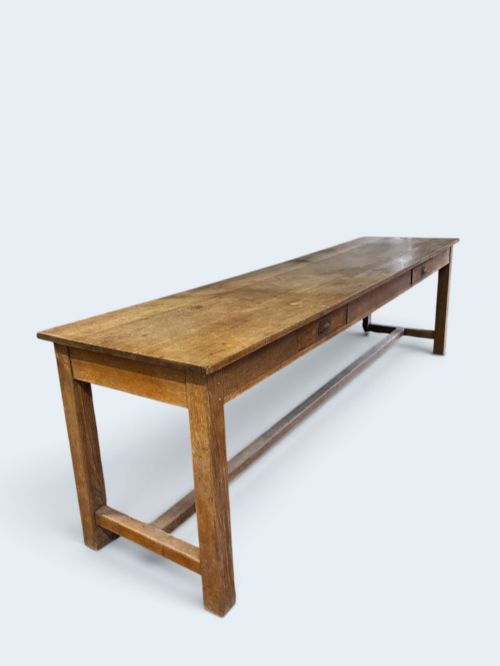
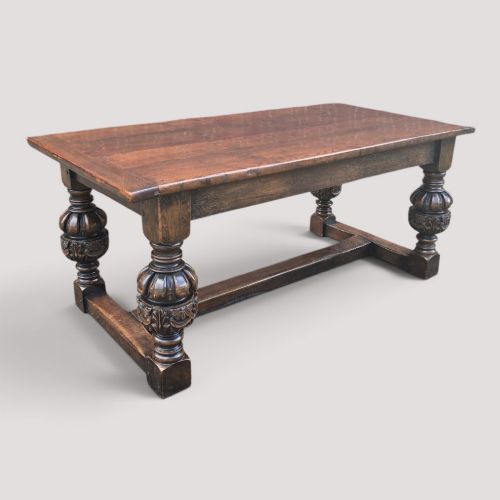
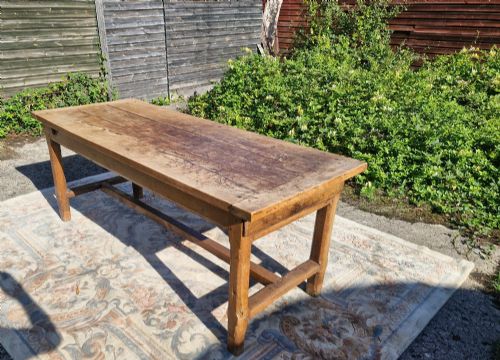
When you search for an antique wooden trestle, you encounter sturdy tables and benches built for communal dining and heavy daily use. The examples appearing here span from the 18th century through the Edwardian period and the early 20th century, drawing on regional traditions from England, France, and Sweden.
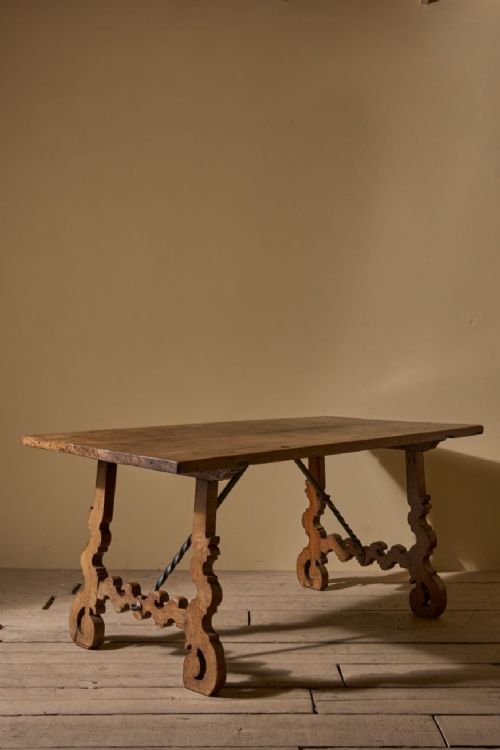
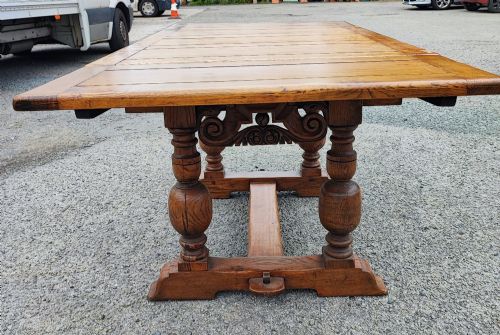
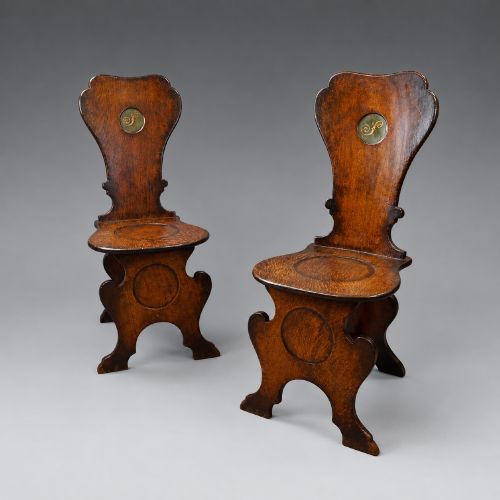
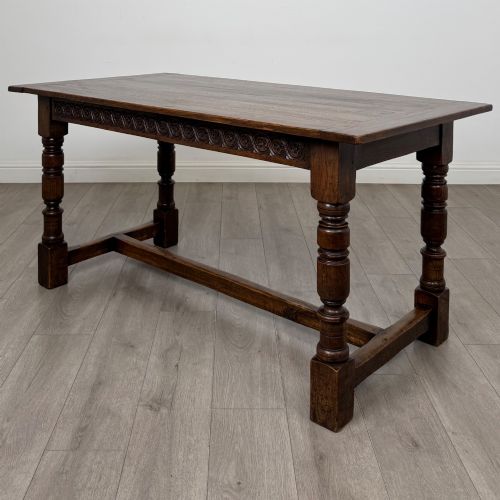
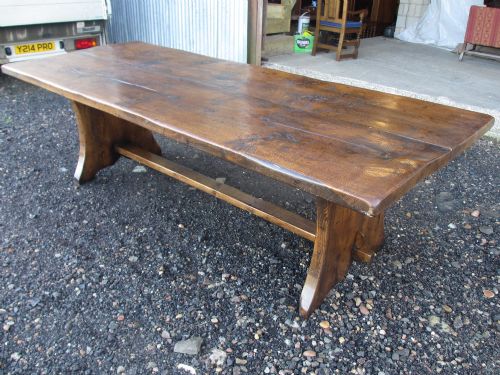
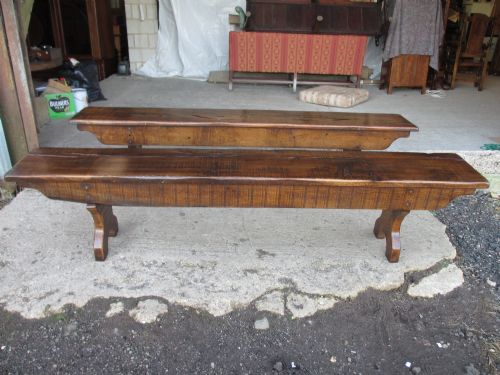
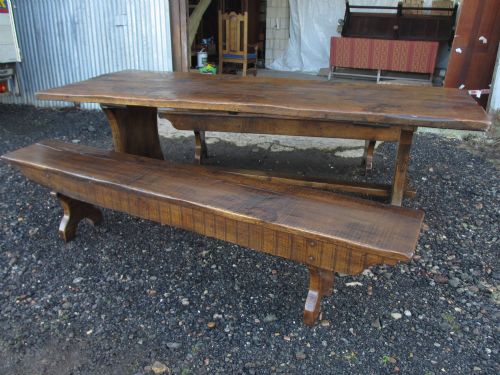
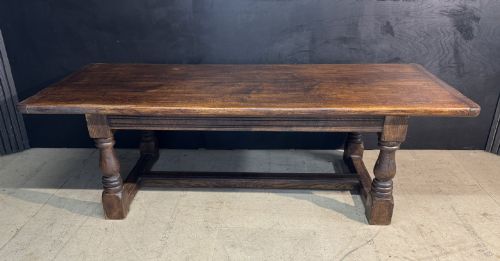
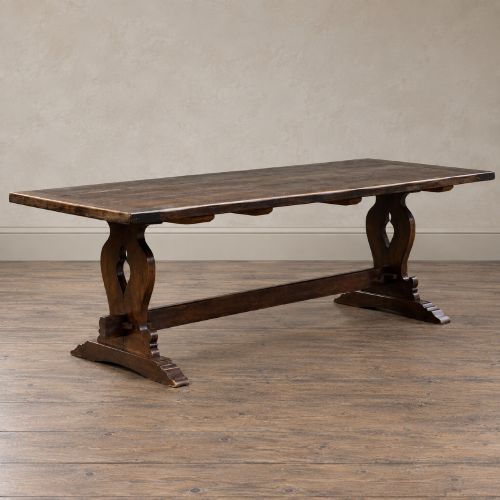
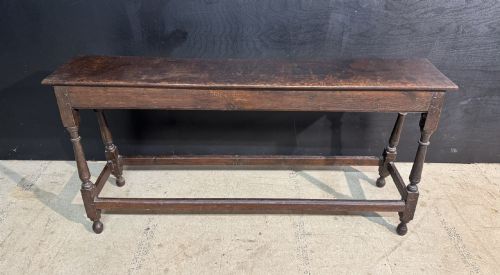
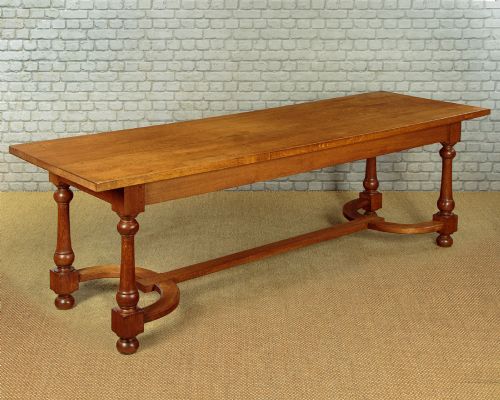
The most common forms on this page are heavy oak refectory tables and long benches featuring shaped trestle ends. Alongside large dining tables, the selection includes smaller coffee tables, serving tables, joint stools, and hall chairs.
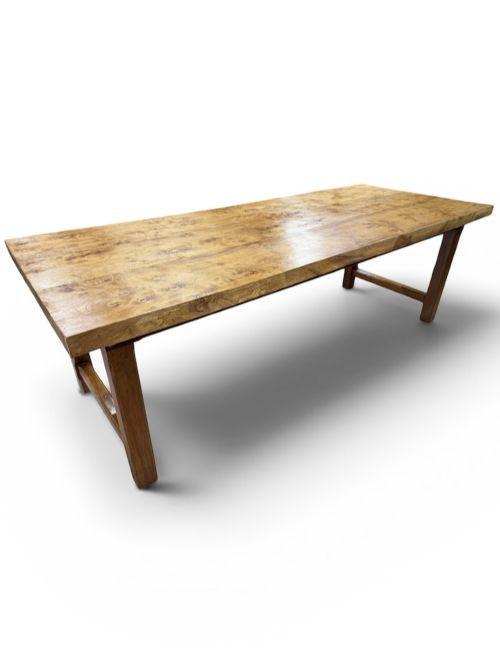
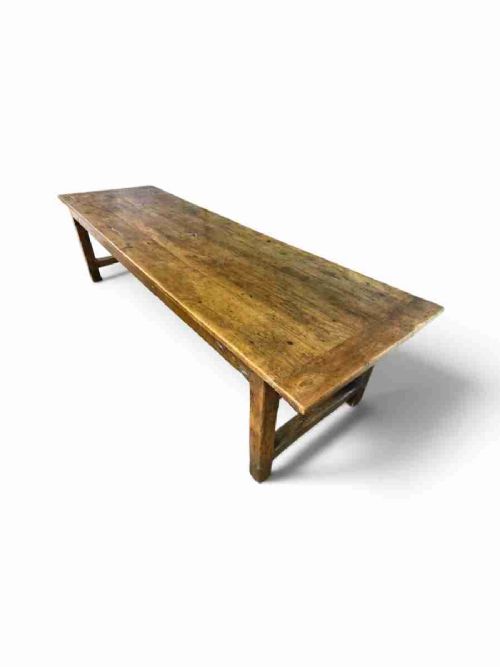
The styles range from plain rustic farmhouse and French provincial to Jacobean Revival, Arts and Crafts, and Gothic revival. These pieces suit large kitchens, dining rooms, and halls where substantial timber furniture anchors the room.
Materials and construction
Makers relied principally on solid oak, pine, elm, and walnut for these surfaces. Oak provides the dense structure seen in refectory tables and joint stools, while pine and elm appear frequently in farmhouse tables and benches.
Construction methods focus on durability, utilising thick timber boards for the tops and robust stretchers or trestle bases to support heavy loads. Iron hardware occasionally reinforces the wooden joints on utilitarian pieces like tavern tables and side tables.
Listings feature solid oak, pine, elm, and walnut across periods spanning from the 16th-century Renaissance to the 1940s Swedish style.
Assessing craftsmanship and condition
Quality rests in the selection of the timber and the integrity of the joinery rather than surface ornamentation. Solid boards showing natural grain variation and deep patination outrank boards with uniform modern milling.
The stability of the trestle ends and the tightness of the joints determine the structural merit of each table or bench. Pieces retaining their original surface finish and honest wear demonstrate greater integrity than heavily sanded examples.
The Antique Wooden Trestle Glossary
- Refectory table
- A long narrow dining table historically used in monasteries and large halls. These examples often feature heavy oak tops supported by shaped trestle ends.
- Joint stool
- A sturdy wooden stool constructed with mortise and tenon joints using pegs. They pre-date upholstered chairs and appear alongside early dining tables.
- Trestle ends
- The vertical supports joined by a horizontal stretcher that hold up the tabletop. Shaped versions provide both structural bracing and decorative silhouette.
- Draw leaf table
- A table equipped with sliding leaves tucked beneath the main top that pull out to extend the surface length. This mechanism accommodates larger gatherings.
- Elm
- A tough timber resistant to splitting, frequently selected for rustic farmhouse tabletops. It yields a distinctive interlocked grain pattern.
Antique Wooden Trestle: Frequently Asked Questions
How do I care for an antique wooden table?
Clean the surface using a soft, damp cloth and dry it immediately to protect the aged timber. Avoid harsh chemical polishes that can degrade the historic finish.
Maintain a stable indoor humidity level to prevent the solid wood boards from splitting or warping over time.
What is the difference between a refectory table and a farmhouse table?
Refectory tables typically feature linear trestle bases or heavy legs connected by low stretchers, originating from monastic dining halls. Farmhouse tables often display simpler four-leg configurations tailored for domestic kitchens.
Both styles prioritize robust wooden construction designed for daily communal use.
Are these tables suitable for everyday family dining?
Solid oak and elm tables tolerate regular daily use quite well because their thick timber tops withstand heavy activity. Many historical examples were built specifically for constant dining and domestic labour.
Using mats and coasters protects the historic surface while allowing you to enjoy the piece daily.
How can I date an antique wooden table?
Examine the underside and joints for hand-tool marks, peg construction, and the type of wood used. 18th-century pieces often show wide single-board tops and primitive joinery.
Revival styles from the Victorian and Edwardian eras typically exhibit machine sawing alongside traditional joinery techniques.