


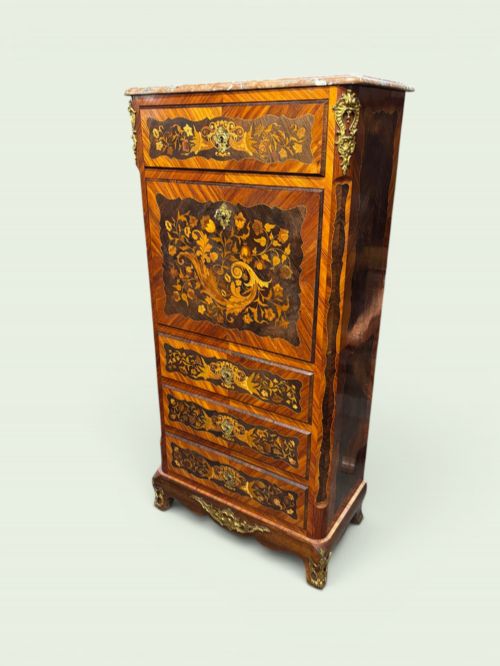


Vintage Fall Top Desk
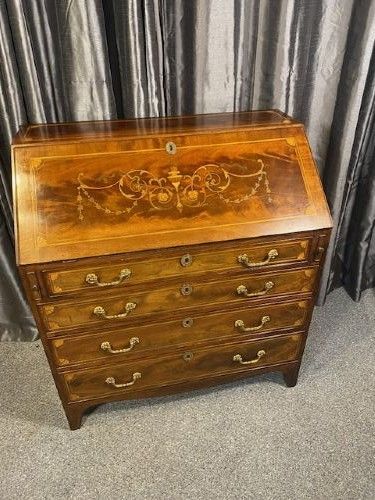
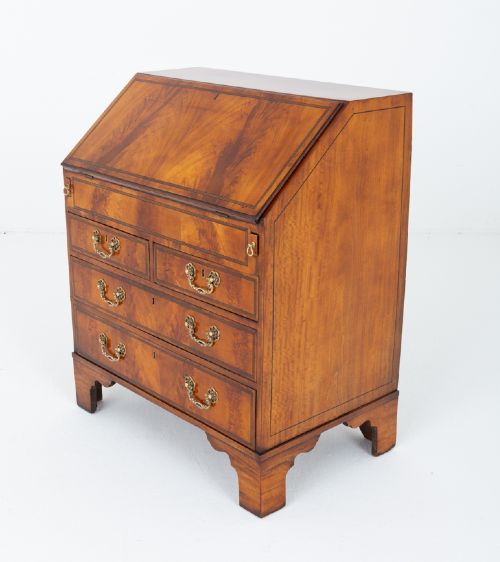
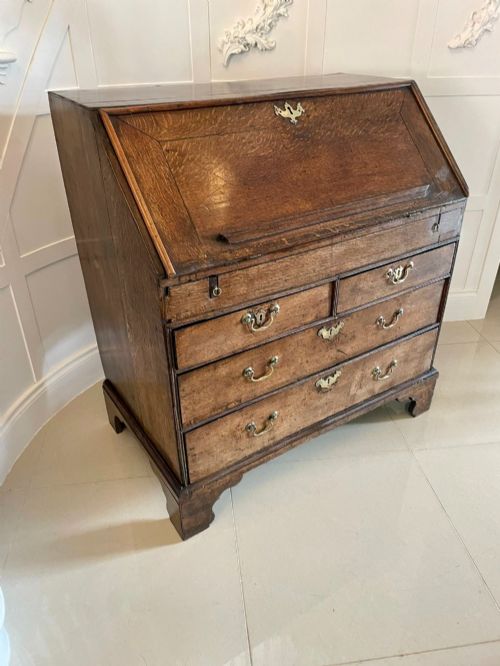
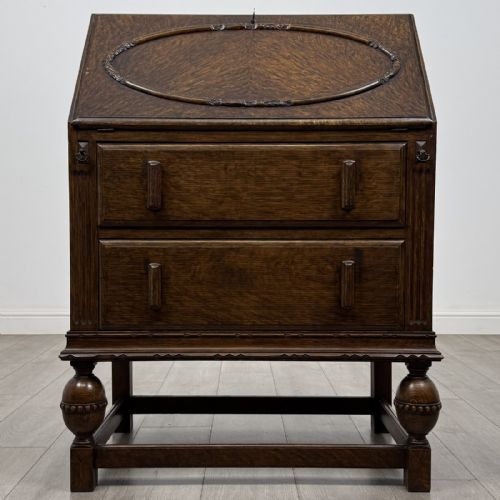
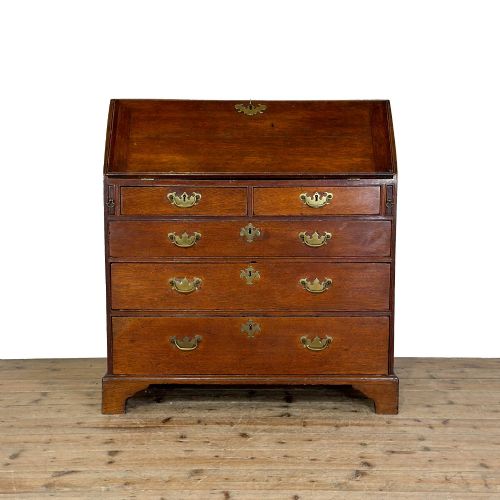
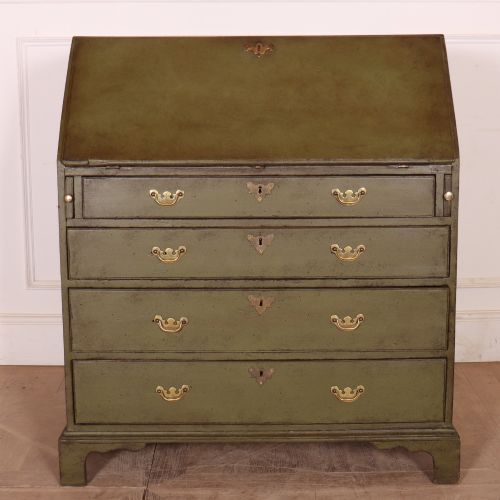
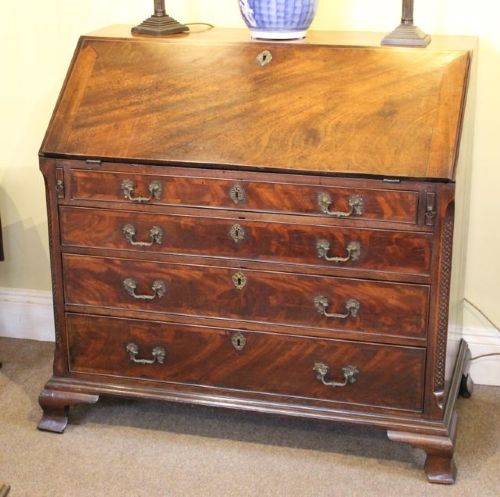
A vintage fall top desk offers a sloping writing flap that opens to reveal fitted drawers and pigeonholes.
Vintage Fall Top Desk
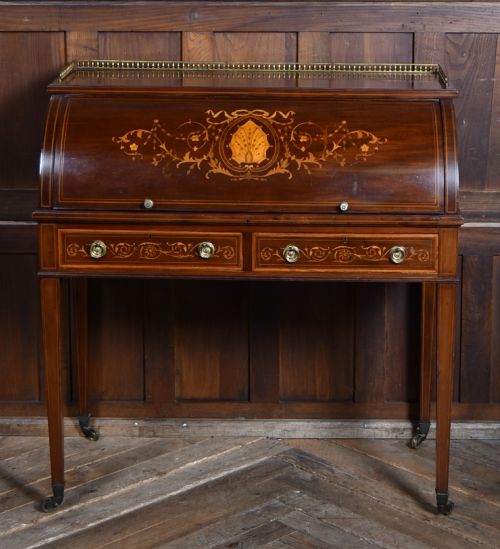
A vintage fall top desk encompasses writing furniture featuring a hinged writing surface that folds down for use. These pieces appear in forms such as compact bureaux, bureau bookcases, cylinder desks, and secretaire cabinets originating from the seventeenth century through to the early twentieth century.
The selections available range from sturdy solid oak examples of early English provincial make to refined walnut, mahogany, and marquetry inlaid continental escritoires. Buyers most frequently encounter nineteenth-century mahogany and Edwardian oak iterations equipped with fitted internal compartments and secret drawers.
How they were made
Cabinet makers utilised dense hardwoods including oak, mahogany, walnut, and exotic veneers like kingwood, satinwood, and burr mulberry applied to secondary framing. Surfaces frequently display intricate marquetry inlay, ormolu mounts, and polished leather writing inserts.
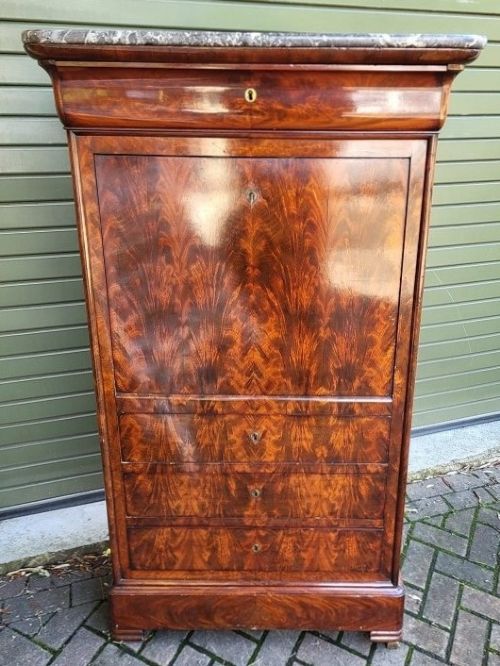
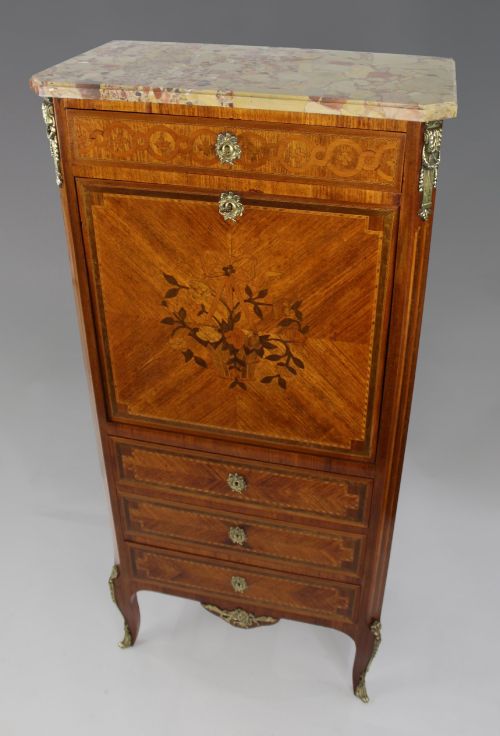
Structural integrity relies on traditional joinery methods such as dovetailing for drawer construction and panel-in-frame assembly for carcases. Marble slabs appear on the tops of specific French Empire and Louis XV style secretaire cabinets.
Vintage Fall Top Desk Retail Price Guide 2026
Typical asking prices for vintage fall top desk among the pieces listed under this phrase on Sellingantiques today, from the lower quarter to the upper quarter. They describe what is for sale here now, not the wider market.
The material palette extends beyond native timbers to include imported kingwood, satinwood, marble, and brass ormolu mounts.
What varies in quality
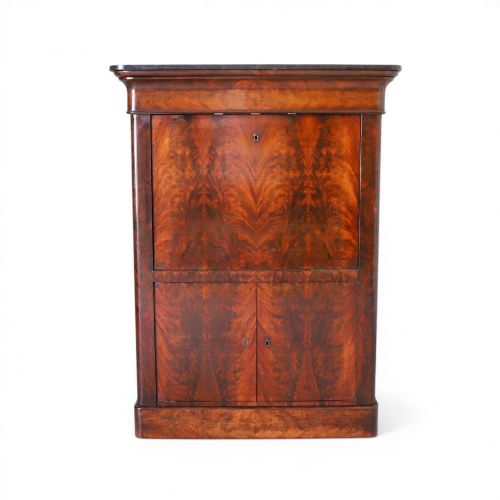
The standard of timber selection and veneer matching defines the visual hierarchy, with figured flame mahogany, burr walnut, and matched marquetry panels marking out finer examples. Internal architecture also dictates merit, distinguishing simple pigeonhole arrangements from complex tiered drawers and secret compartments.
Overall proportion and the retention of original brass or ormolu hardware distinguish master-built pieces from simpler provincial workshop output. The crispness of hand-cut dovetails and the survival of polished original surfaces govern desirability.
The Vintage Fall Top Desk Glossary
- Bureau
- A writing desk featuring a sloping fall front that conceals internal compartments. It rests either on a frame with legs or atop a chest of drawers.
- Secretaire à abattant
- A tall upright cabinet with a drop-front writing flap and internal drawers. This form frequently incorporates a marble top and gilt bronze mounts.
- Cylinder desk
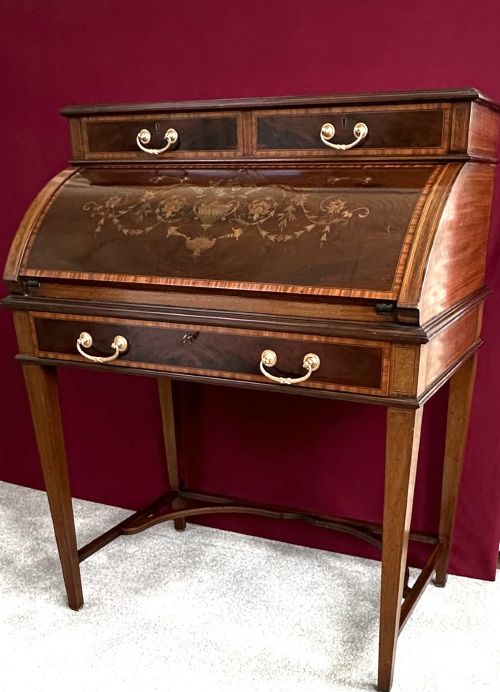
- A writing desk with a curved, rotating cylindrical shutter that rolls backward to reveal the writing surface and interior drawers.
- Marquetry
- Decorative veneer work formed by fitting pieces of various coloured woods and materials into a geometric or pictorial design. This technique decorates the exterior of many continental European pieces.
- Ormolu
- Gilded bronze ornamentation applied to the corners, feet, and friezes of fine cabinets. It provides contrast against dark exotic veneers.
Vintage Fall Top Desk: Frequently Asked Questions
How do I use a fall top desk?
Lower the hinged wooden flap to create a flat writing surface supported by automatic wooden slides or brackets. Inside, utilise the small drawers and pigeonholes for correspondence and stationery.
When writing is finished, lift the flap back into the vertical position and secure the lock to enclose the papers safely out of sight.
How do I tell oak pieces from mahogany ones?
Oak furniture tends to display a prominent open grain with visible medullary rays, appearing primarily in earlier pieces from the seventeenth and eighteenth centuries. It yields a heavier, paler brown appearance.
Mahogany exhibits a tighter, reddish-brown grain that deepens in colour over centuries. It gained widespread popularity during the Georgian and Victorian eras for formal furniture.
What is a bureau bookcase?
A bureau bookcase combines a fall front writing desk at the base with an enclosed shelving cabinet secured by glass or wooden doors above. This dual-purpose furniture piece served both storage and writing functions in domestic interiors.
Examples range from tall Georgian oak editions to inlaid Edwardian mahogany variations designed to display book collections.
Where should I place a cylinder desk?
Position a cylinder desk against a sturdy interior wall where natural light falls across the writing surface from the side. Avoid placing antique wood directly beside active heat sources or in prolonged direct sunlight.
Because many variations feature finished backs or freestanding marquetry designs, certain editions suit placement away from walls within a room.