
Vintage Etagere Table
A vintage etagere table is an open tiered display piece built for serving, storage, and ornament.
Vintage Etagere Table
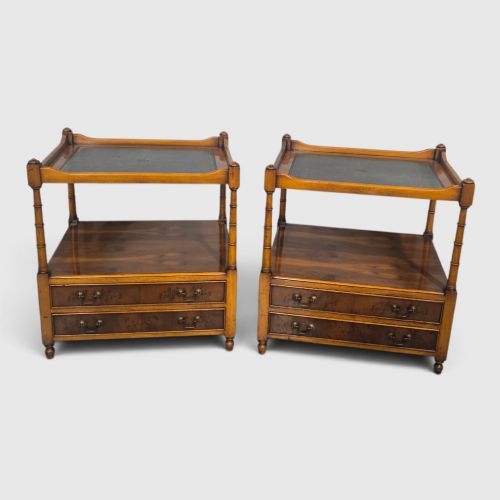
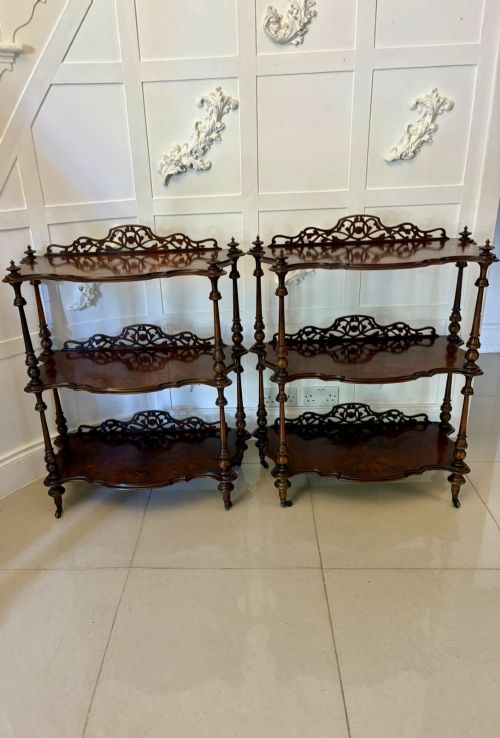
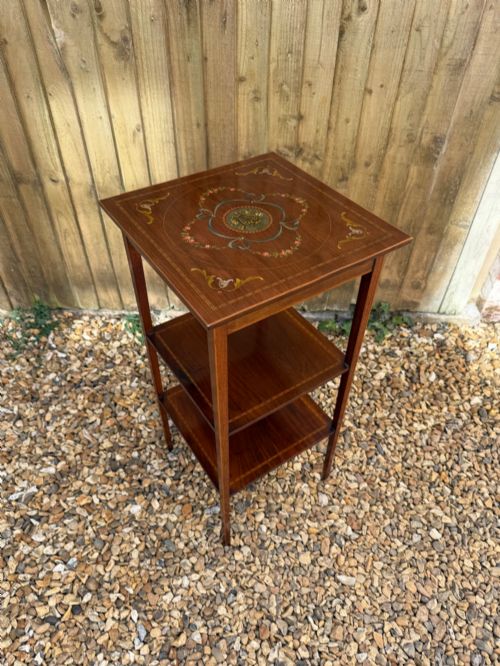
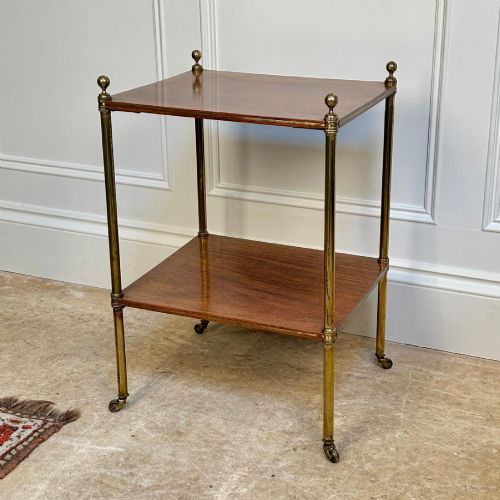
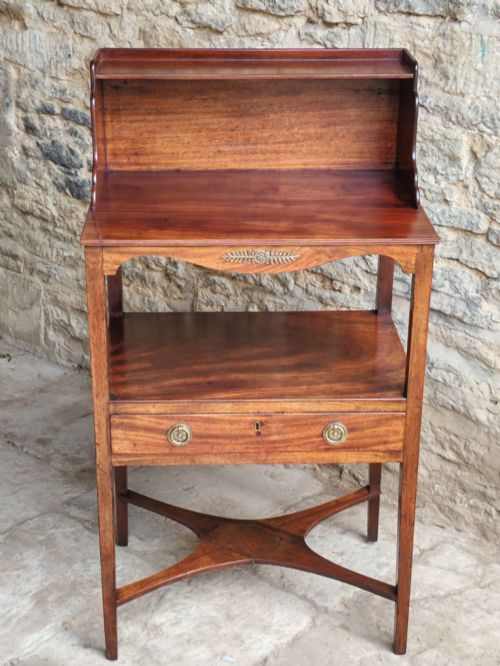
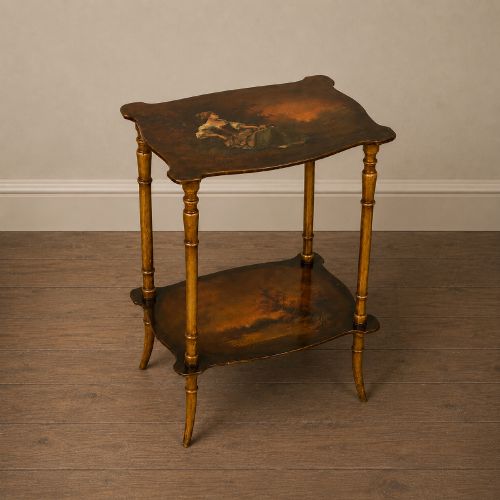
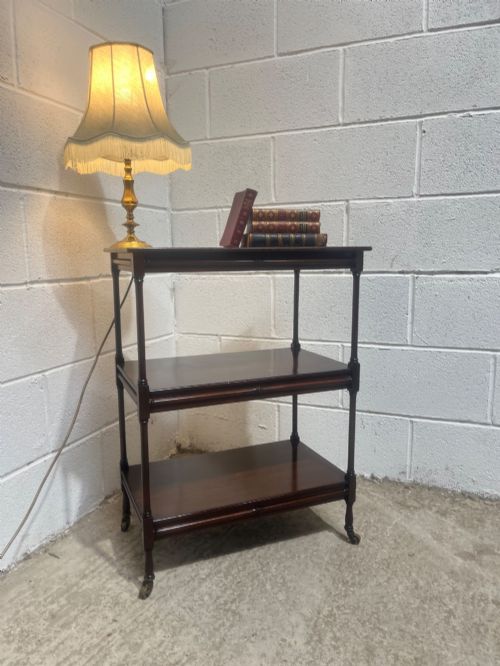
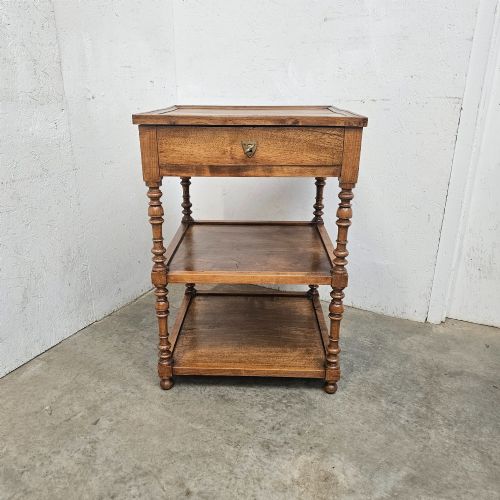
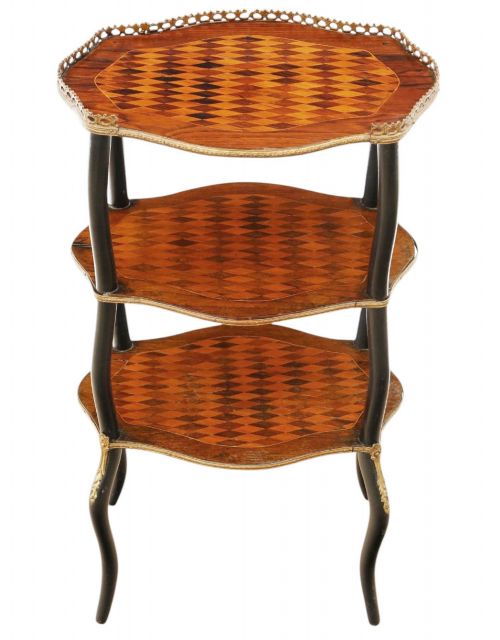
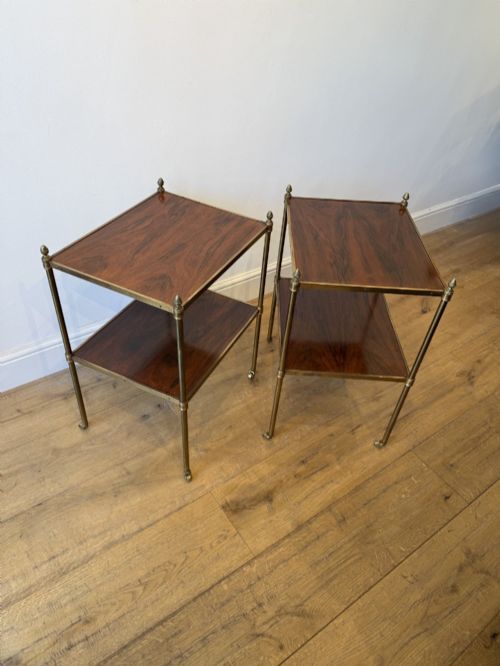
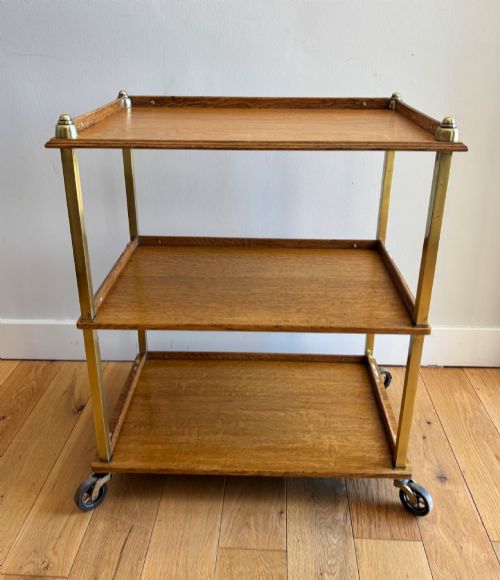
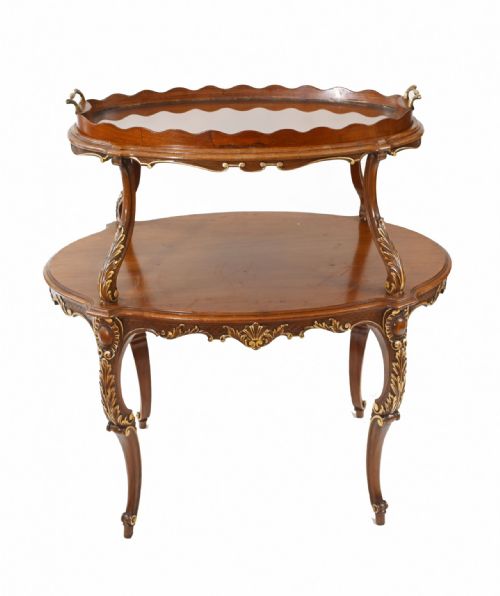
A vintage etagere table brings together multi-tiered display surfaces and open shelving in forms that span side tables, occasional tables, and traditional whatnots. When searching for a vintage etagere table, you will most frequently encounter two-tier and three-tier designs from the Victorian, Edwardian, and early twentieth-century periods. These pieces serve as practical display stands or bedside night stands while providing additional storage on ascending levels.
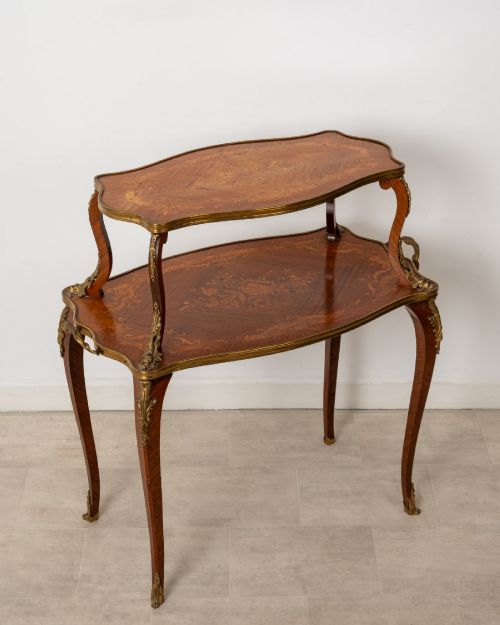
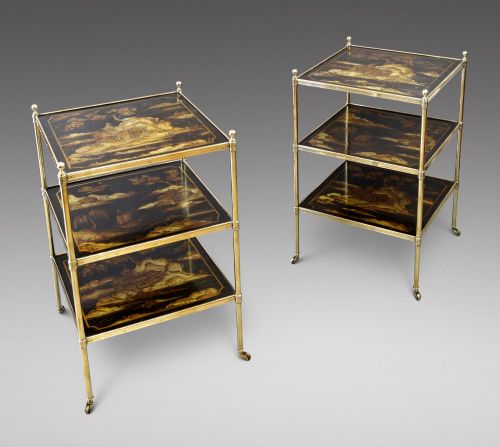
The materials and styles seen across these tiered tables reflect both English craftsmanship and Continental influence, ranging from French marquetry to Sheraton Revival mahogany. Makers utilised rich timbers alongside brass mounts, marble tops, and painted finishes to create functional furniture for the parlour, bedroom, and drawing room. Whether configured as an oval etagere, a tall display whatnot, or a low lamp table, each piece is defined by its stacked tiers.
How they were made
Cabinetmakers constructed these tiered tables using primary hardwoods such as mahogany, walnut, rosewood, and yew, often enhancing the surfaces with marquetry, parquetry, or satinwood inlay. Timber selection dictated the structural integrity of the open shelves, with denser woods supporting slender turned legs and delicate galleries.
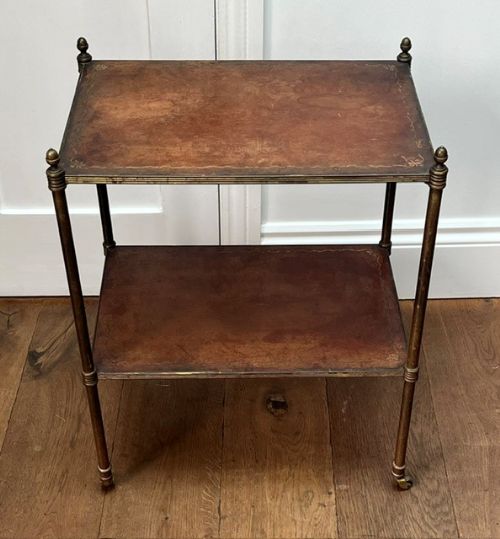
Metal and stone elements frequently complemented the woodwork, incorporating cast brass frames, ormolu mounts, tooled leather inserts, and inset marble slabs. Finished pieces relied on polished wood veneers or painted and ebonised surfaces to achieve their decorative character.
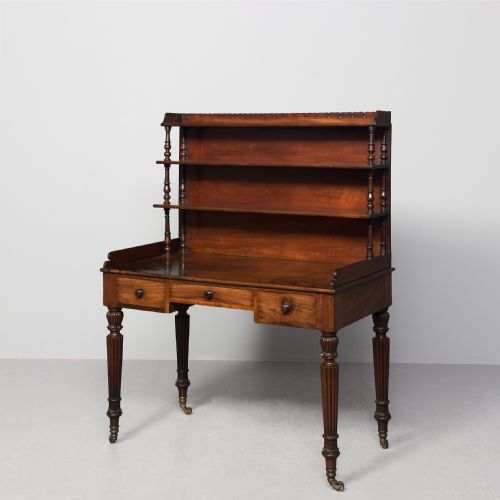
One exceptional piece pairs lacquered brass with tooled leather, proving that nineteenth-century desks were built to travel in high style.
What varies in quality
The calibre of a tiered table rests primarily on the depth of material selection and the precision of the joinery connecting the tiers to the supports. Finer examples display carefully matched grain patterns, intricate marquetry work, and substantial brass or ormolu mounts rather than surface-level ornamentation.
Structural refinement distinguishes standard utility pieces from high-workshop production, visible in the stability of multi-tiered uprights and the crispness of turned or carved details. The use of solid secondary timbers and high-grade veneers marks the upper tier of what is available.
James Mein of Kelso·Mallett of London
The Vintage Etagere Table Glossary
- Whatnot
- A nineteenth-century open shelving unit designed for displaying books, ornaments, or china. It shares close functional roots with the etagere.
- Marquetry
- Decorative veneer work formed by fitting together small pieces of wood, ivory, or shell to create pictorial or geometric patterns on furniture surfaces.
- Ormolu
- Gilded bronze mounts and decorative elements applied to furniture, particularly popular in French-influenced pieces of the nineteenth century.
- Parquetry
- A geometric mosaic of wood pieces used for floors and furniture surfaces, creating repetitive patterns across table tops and cabinet doors.
Vintage Etagere Table: Frequently Asked Questions
What is an etagere table used for?
These tiered tables were traditionally designed to hold decorative objects, books, or tea services within principal rooms. They function today as versatile display stands, bedside tables, or lamp tables.
The open shelving format allows items to be seen from multiple angles while occupying minimal floor space in domestic interiors.
How do I tell Victorian from Edwardian pieces?
Victorian examples tend to use dense timbers like burr walnut and rosewood, often featuring heavier turned supports and richer, darker finishes. Edwardian pieces frequently showcase lighter mahogany frames with satinwood inlay and Sheraton Revival influences.
The overall aesthetic shifted from heavier carved display stands in the mid nineteenth century to lighter, more delicate occasional tables by the early nineteen hundreds.
Are these tables sturdy enough for daily use?
Most tiered tables are surprisingly stable when placed on level flooring, provided the vertical supports and joints remain sound. They safely hold lamps, books, and everyday ornaments without difficulty.
Care should be taken not to overload the upper shelves, as multi-tiered pieces concentrate weight across slender uprights.
What distinguishes French styles from English ones?
French etagere tables often incorporate shaped or kidney-shaped tiers, intricate marquetry, ormolu mounts, and painted surfaces reflecting Louis XV or provincial designs. English iterations lean towards architectural mahogany or walnut frames with simpler banded inlays.
Continental pieces frequently combine alternative materials such as marble inserts and canework alongside traditional hardwoods.