



Vintage Entry Hall Bench
A vintage entry hall bench greets visitors with practical charm, offering a sturdy seat and storage for everyday comings and goings.
Vintage Entry Hall Bench
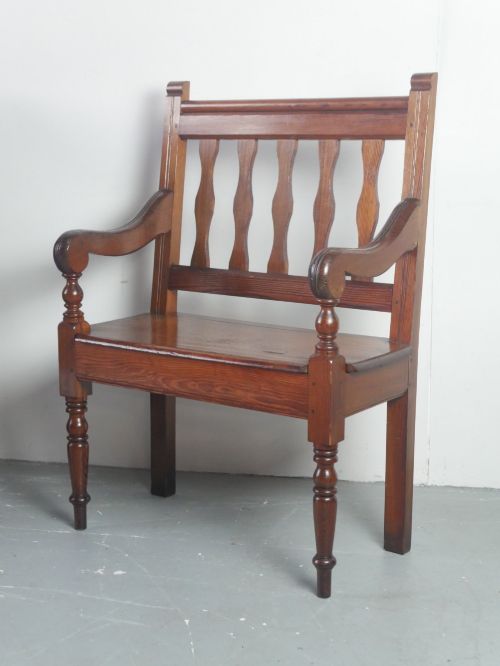
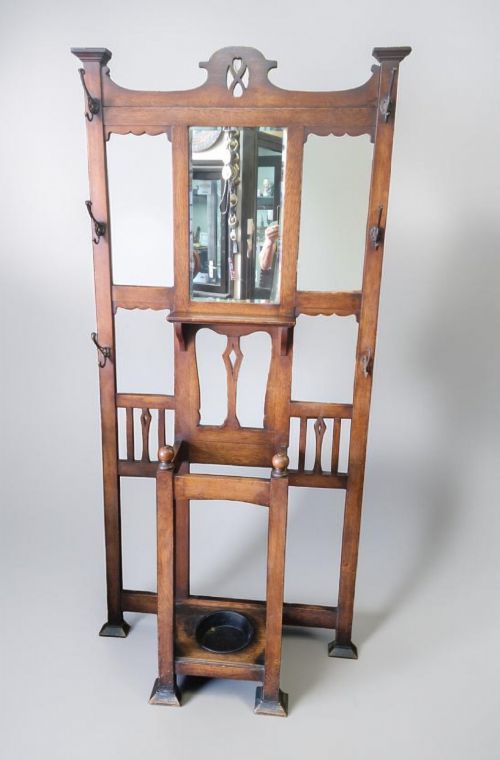
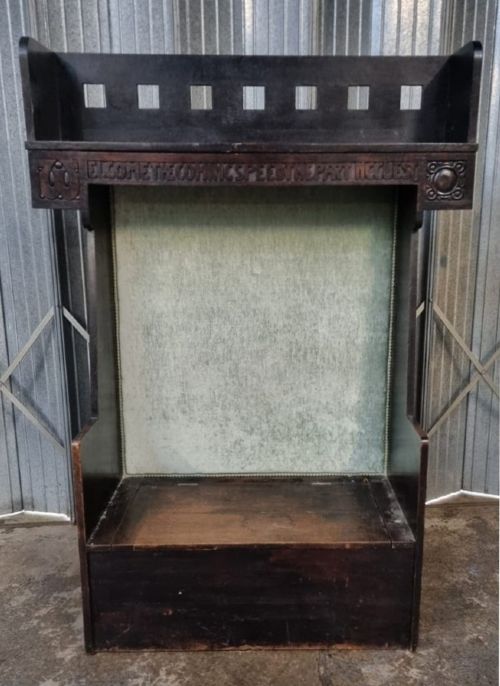
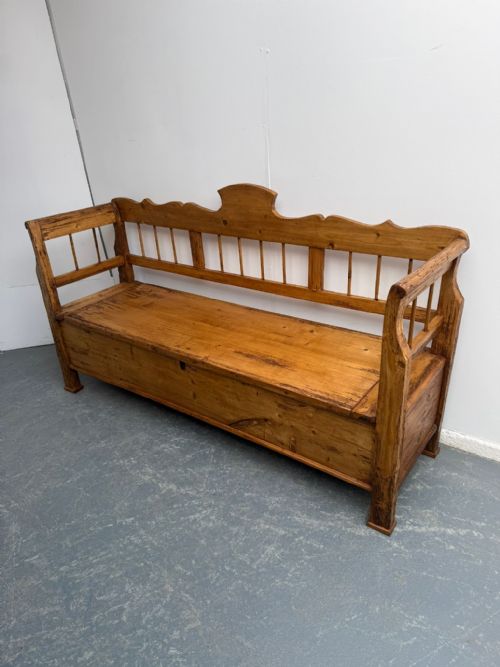
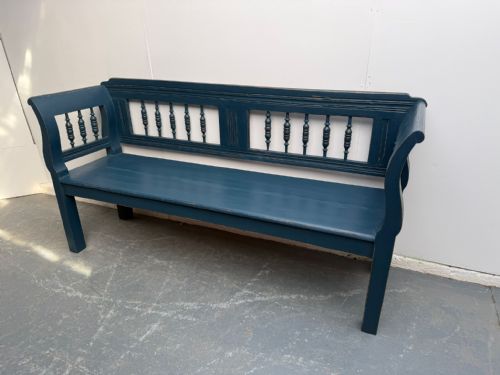
A vintage entry hall bench serves as a functional anchor for a hallway, providing a place to sit while pulling off boots alongside clever storage. When exploring this selection, buyers encounter forms ranging from simple plank settles to elaborate hall stands combining seats with hat and coat hooks.
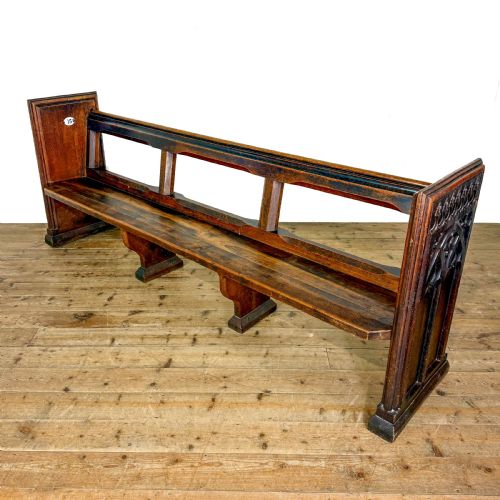
The pieces available span multiple eras, drawing heavily from the nineteenth century into the Edwardian period and the nineteen-twenties. Common vernacular forms include box settles, monks benches that double as tables, and church pews sourced from various European workshops.
Regional diversity shapes the selection, with English country pieces appearing alongside painted pine settlers originating from Hungary, Sweden, and Austria. Oak and pine dominate the structural vocabulary, finished either with waxed surfaces or original painted schemes.
Materials and construction
Carpenters relied primarily on solid oak and pine, selecting sturdy timber capable of withstanding heavy daily use in busy corridors. Pitch pine, mahogany, and walnut also appear in specific iterations, particularly within Edwardian and late Victorian examples.
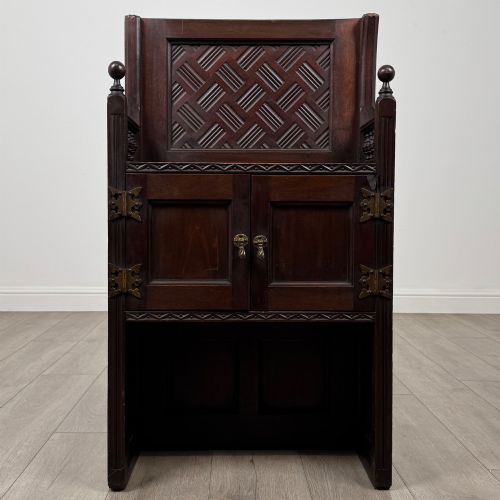
Construction techniques combine traditional joinery such as mortise and tenon frames with panelled box construction for integrated storage seats. Surfaces frequently display carved decorative motifs, particularly within Arts and Crafts, Jacobean Revival, and Gothic styles, or retain layers of historic paint.
Several pieces double as tables, proving that historical furniture makers truly understood the art of multi-tasking in tight spaces.
Assessing quality and character
Quality rests in the integrity of the timber and the honesty of the construction, where tighter joinery and well-balanced proportions distinguish finer pieces. Pieces retaining their original hardware, hinges, and authentic surface patination command stronger interest from collectors.
The presence of maker attribution or distinct stylistic movements, such as Arts and Crafts carving or Art Nouveau detailing, elevates a piece beyond standard utilitarian workshop production. Condition remains paramount, with well-preserved painted surfaces or deep waxed oak finishes marking the upper tier of available examples.
Shapland and Petter·Liberty
The Vintage Entry Hall Bench Glossary
- Settle
- A wooden bench with high backrest and enclosed box base designed to block draughts in hallways. These pieces often feature hinged seats lifting to reveal storage compartments.
- Monks bench
- A versatile convertible item featuring a hinged back that folds down to transform the seat into a table. This form gained popularity during revival periods.
- Hall stand
- A composite hallway furnishing combining a bench seat with a vertical backboard fitted with mirror panels, hat pegs, and umbrella stands. They organise entranceways efficiently.
- Box settle
- A heavy wooden bench incorporating a deep storage box beneath the seat squab. They were built for domestic and tavern settings alike.
- Arts and Crafts
- A design movement prioritising honest construction, visible joinery, and handcrafted ornamentation. Pieces from this tradition often feature stylized carved plant motifs.
- Jacobean Revival
- A nineteenth-century style emulating seventeenth-century English furniture through heavy proportions and geometric panel carving. Oak serves as the primary medium.
Vintage Entry Hall Bench: Frequently Asked Questions
What is a vintage entry hall bench?
A vintage entry hall bench is a functional seating unit designed for a corridor or porch, often combining storage compartments for shoes or accessories.
These pieces range from simple wooden settles to elaborate architectural hall stands incorporating coat hooks and mirrors.
How do I use a monks bench?
A monks bench serves as both a seating bench and a table by pivoting the wooden backrest forward over the armrests.
This dual-purpose design makes it useful in compact entryways where extra surface space is occasionally needed.
Are these benches comfortable to sit on?
Most antique hall benches were built for practicality and brief seating rather than long lounging, featuring solid wooden seats without upholstery.
Owners frequently add loose cushions or squabs upholstered in fabric to improve comfort during daily use.
How do I date an oak hall bench?
Dating relies on observing construction methods, tool marks, hardware types, and stylistic indicators such as Arts and Crafts carving or Victorian Gothic details.
Examining the underside and interior joints helps reveal whether the timber and assembly methods align with nineteenth or twentieth-century manufacturing practices.