
Vintage English Clock
A vintage english clock brings mechanical timekeeping into daily life, ranging from sturdy railway dial clocks to polished mahogany bracket pieces.
Vintage English Clock
A vintage english clock encompasses everything from grand tallcase pieces down to compact mantel timepieces and railway wall clocks. When searching this phrase, the forms appearing most frequently include dial wall clocks in timber cases alongside Edwardian and Georgian bracket models.
Makers span local provincial clockmakers to established London firms, housing mechanical movements inside mahogany, oak, rosewood or brass. Regional railway companies and schools utilised sturdy round dial clocks for precision tracking.
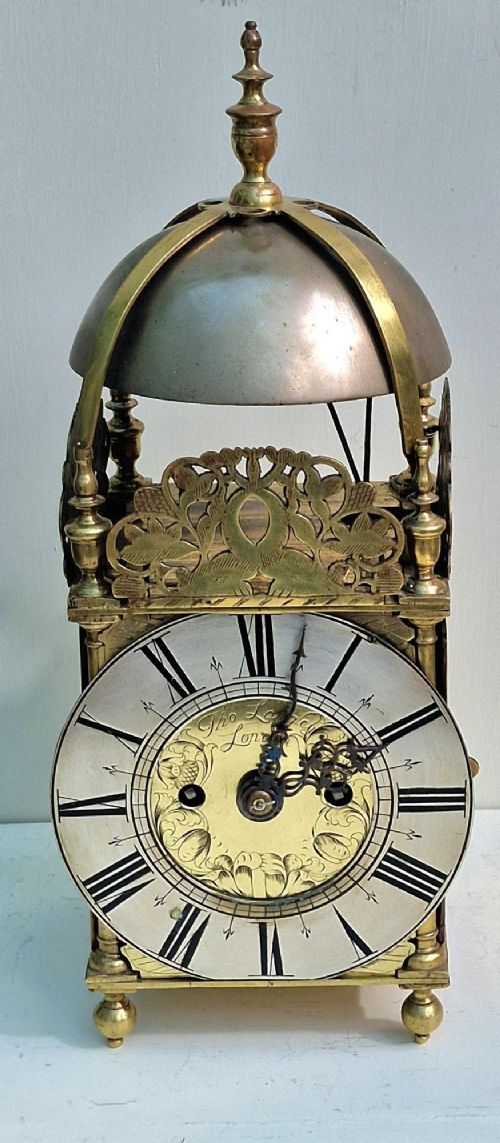
Periods represented stretch from the seventeenth century through Georgian, Victorian, and Edwardian eras into Art Deco designs of nineteen thirty. Grandfather clocks and smaller mantel pieces sit alongside specialist carriage clocks and skeleton designs.
Materials and construction
Cases utilise solid hardwoods including mahogany, oak, and walnut, frequently accented with brass bezels, painted dials, and glass viewing panels. Dial clocks often pair beech or oak frames with enamelled metal faces.
Movements rely on traditional mechanical engineering, employing fusee chains, lever escapements, and pendulum regulation to drive striking or chiming mechanisms. Craftsmen hand-built these movements to maintain accuracy over decades of daily winding.
Periods range from Georgian and Victorian eras through Edwardian designs to Art Deco items.
Distinctions in craftsmanship
Finer examples display meticulous cabinetwork with figured burr veneers, hand-engraved brass dials, and crisp inlay work that signals workshop expertise. Simpler utility clocks prioritise legible painted faces and robust timber frames built for daily use in public buildings.
The sophistication of the internal movement dictates the tier of the piece, where complex quarter-striking or fusee mechanisms separate standard timepieces from high-grade mantel and bracket clocks.
Gillett & Johnston of Croydon·Lee of Great Marlow·Thomas Langley·Richard Corless of Stockport·Smiths·William Gard·Goldsmiths Alliance Ltd·J Henry Cheltenham·George Clarke·Handley & Moore·Mappin & Webb·Barwise·Archibald Knox for Liberty & Co·Charles Pratt London·Richard Winter of Chieveley·Barber & North of York·Pickford of London·Thomas Jackson·George Hallifax Of Doncaster
The Vintage English Clock Glossary
- Fusee
- A conical pulley connected to a chain or cord that equalises the declining power of the mainspring as it unwinds. This mechanism ensures consistent torque is delivered to the gear train for greater accuracy.
- Bracket clock
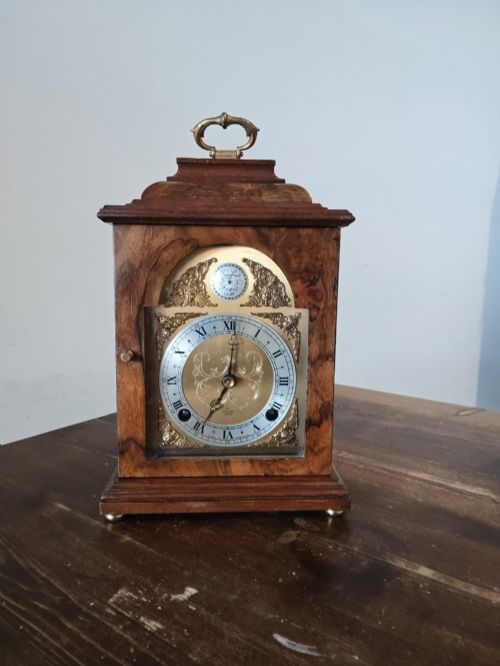
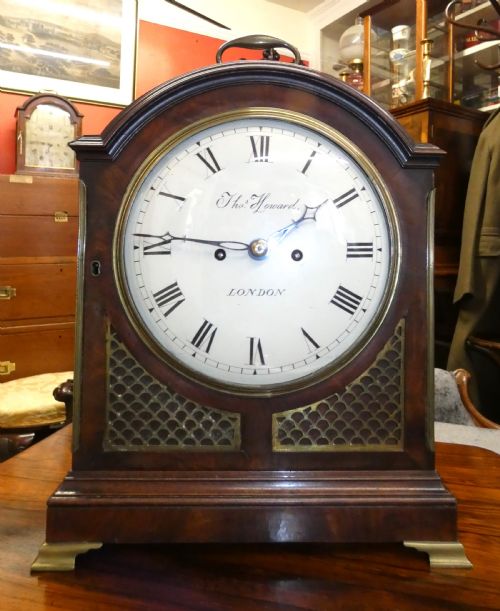
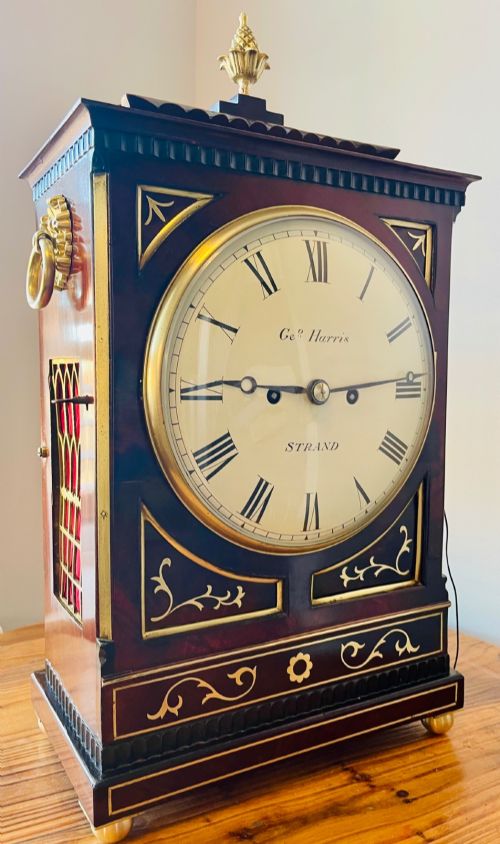
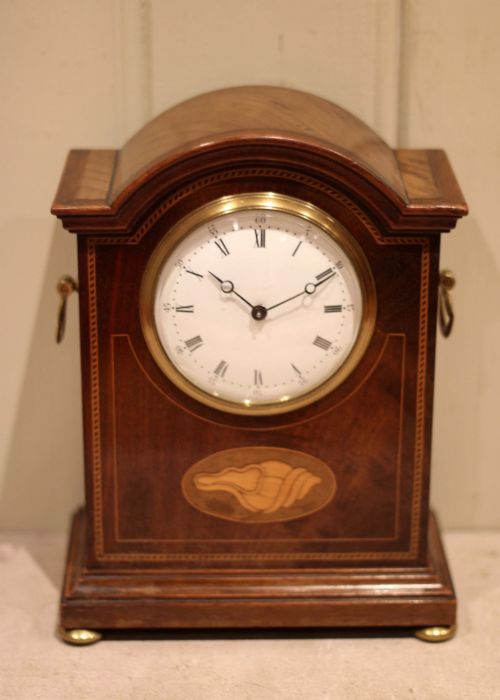
- A portable table or shelf clock historically placed upon a matching wall bracket. These pieces typically feature finely fitted wooden cases and striking mechanical movements.
- Longcase clock
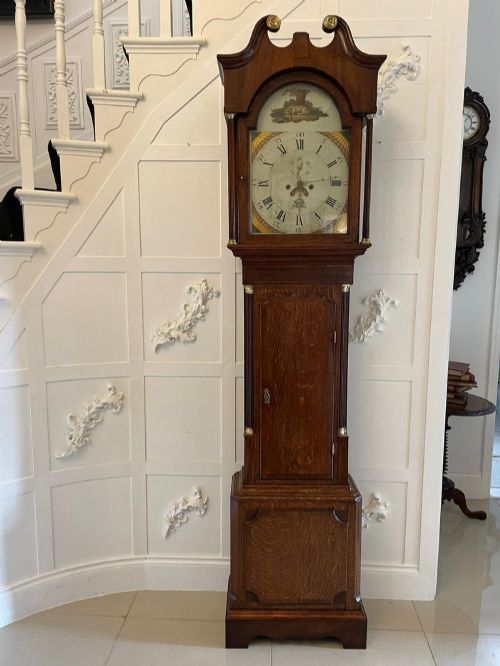
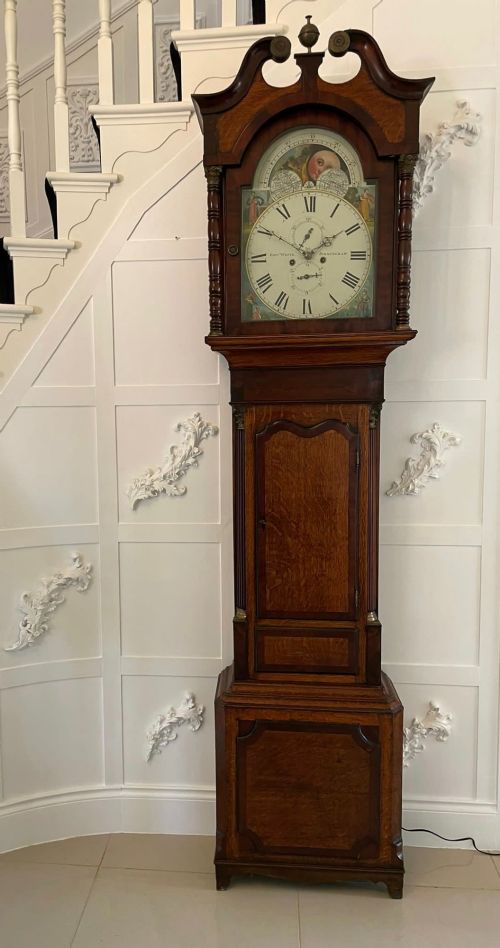
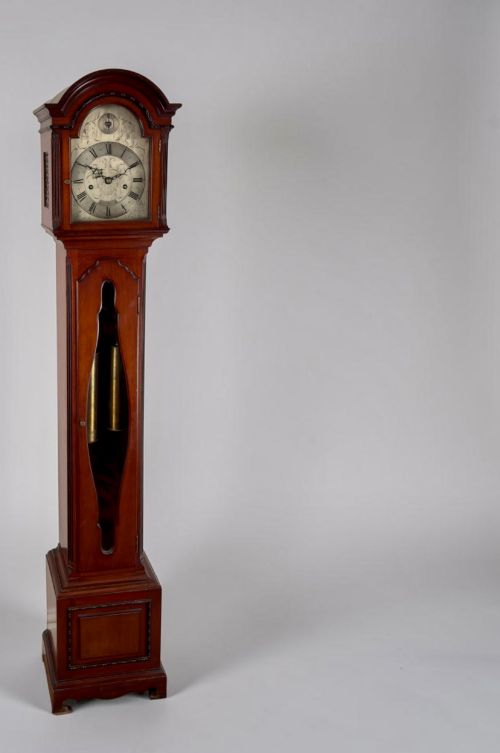
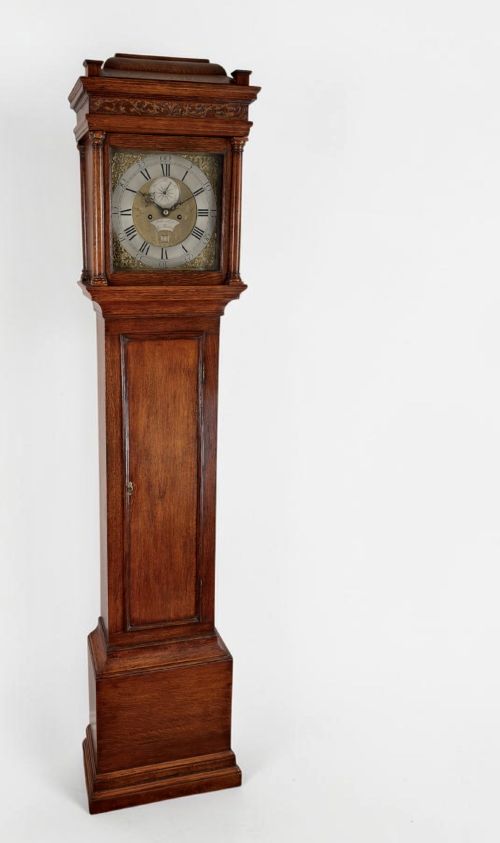
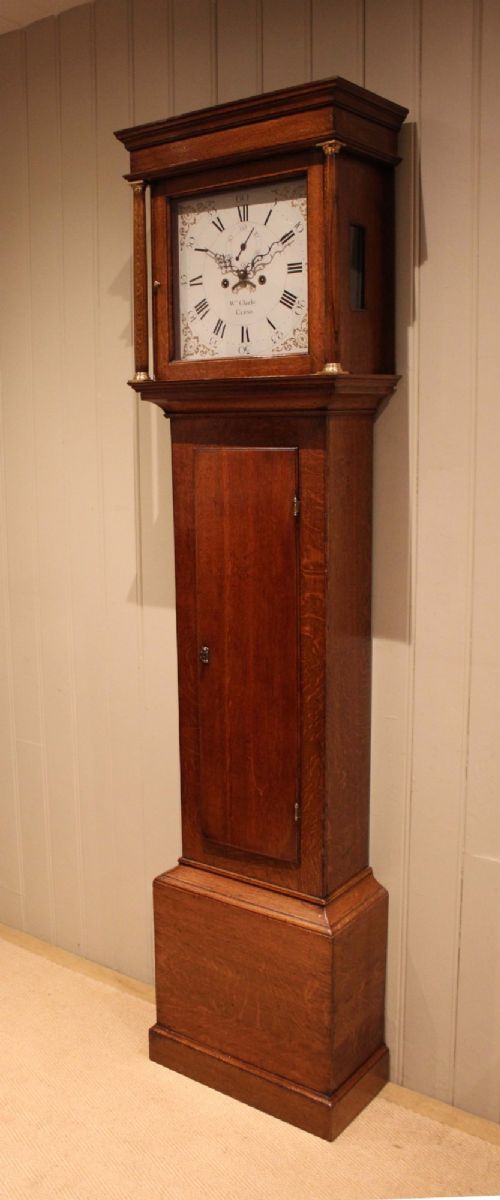
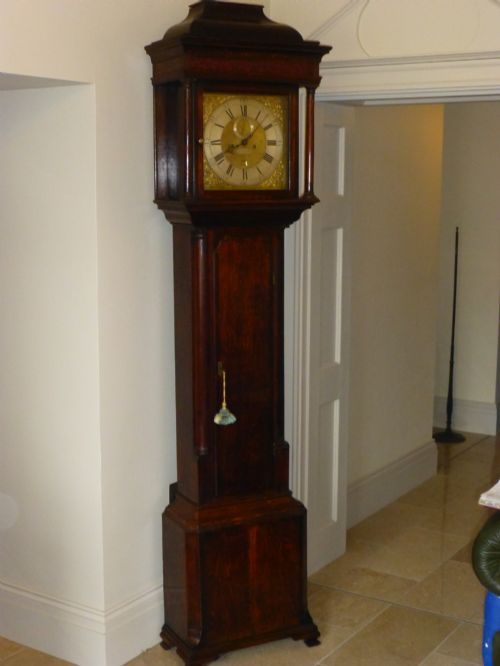
- A tall pendulum clock enclosed in a wooden case resting on the floor, commonly called a grandfather or grandmother clock. These tall housings accommodate suspended weights and long swinging pendulums.
- Dial clock
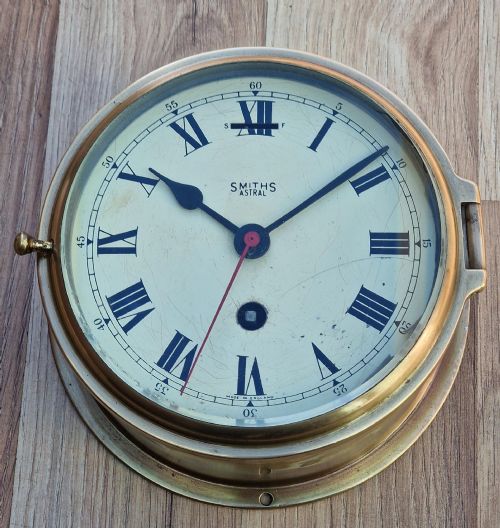
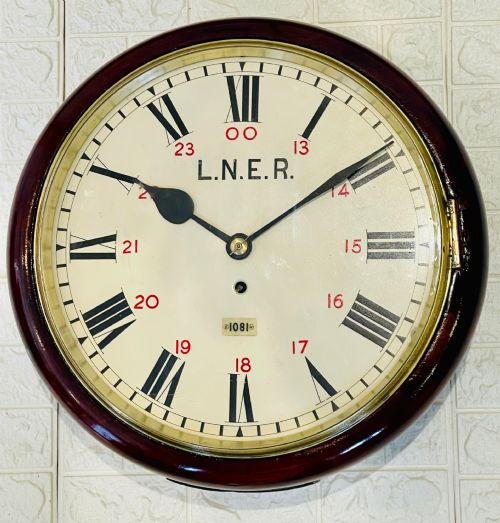
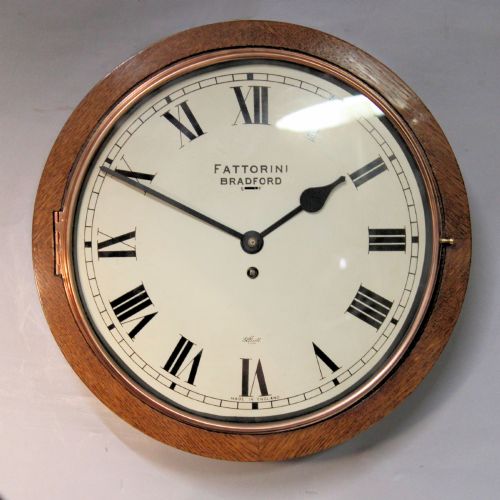
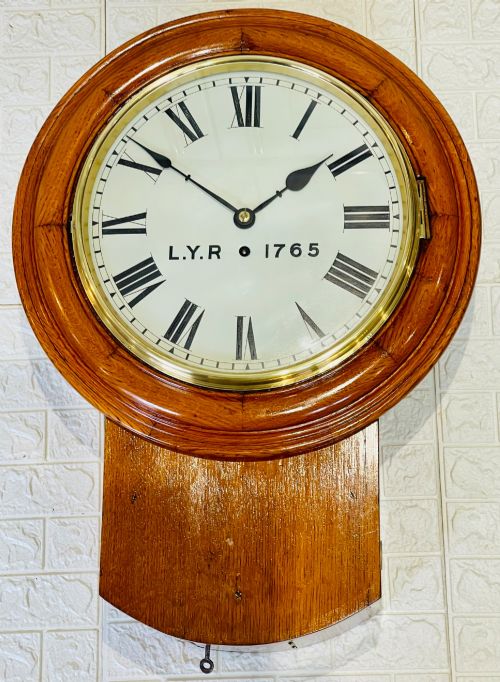
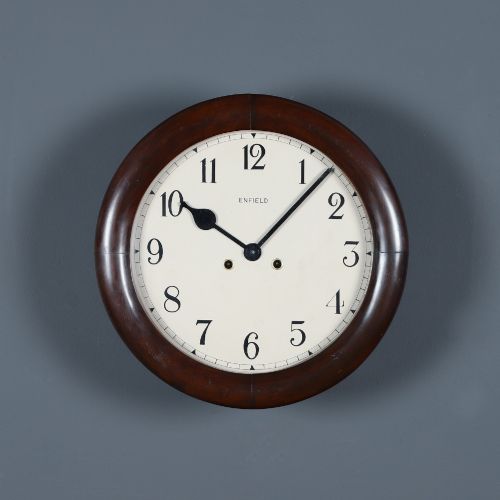
- A round-faced wall clock mounted directly to a wooden backboard or frame, frequently utilised in nineteenth-century railway stations and offices. The prominent face allows clear legibility from a distance.
- Escapement
- The mechanical linkage that restrains the gear train, converting rotational force into controlled impulses. This mechanism produces the characteristic ticking sound while regulating the descent of weights or spring power.
Vintage English Clock: Frequently Asked Questions
What is a fusee clock?
A fusee clock uses a cone-shaped pulley system with a chain to regulate the power delivered from the mainspring.
This clever mechanical design ensures the driving force remains even as the spring runs down, improving timekeeping precision.
How do I wind a mechanical clock?
Mechanical pieces require a specialised key inserted into the winding holes on the dial face to tension the internal springs or lift the driving weights.
Care must be taken not to overwind the movement, turning the key gently until firm resistance indicates the mechanism is fully powered.
Where were wall dial clocks used?
Wall dial clocks were heavily utilised in nineteenth-century railway stations, schools, and offices where reliable timekeeping was essential for daily operations.
Their robust oak or mahogany frames and clear round faces made them ideal for high-traffic public spaces.
What distinguishes a bracket clock?
Bracket clocks are portable table or shelf clocks housed in fine wooden cases, often featuring carrying handles and glazed side panels.
Originating in periods before wall hanging was common, they allowed owners to move timepieces easily between rooms.