

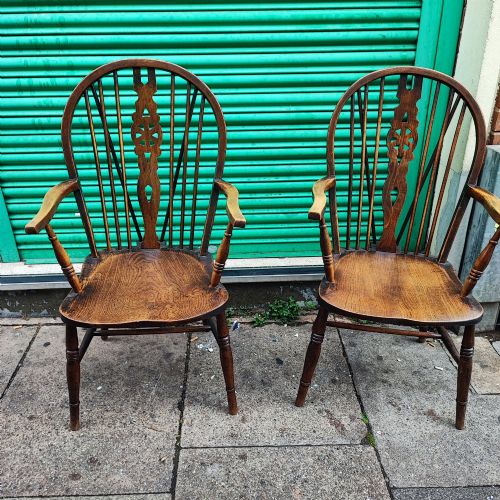
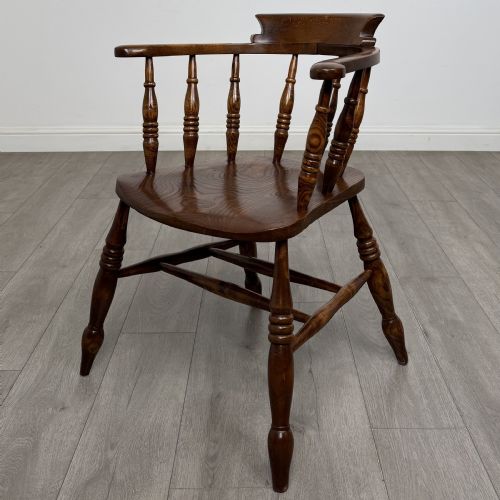
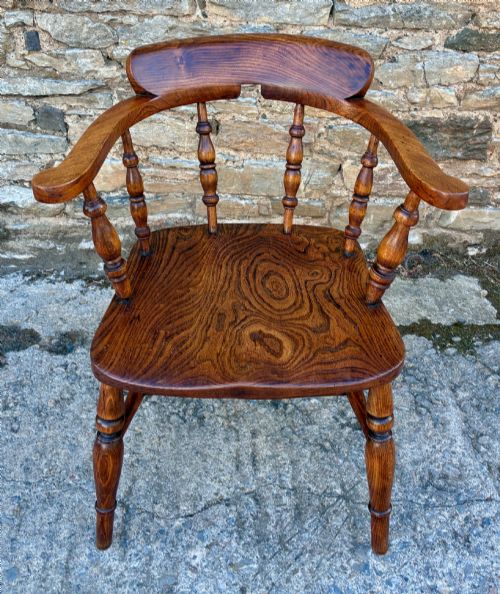
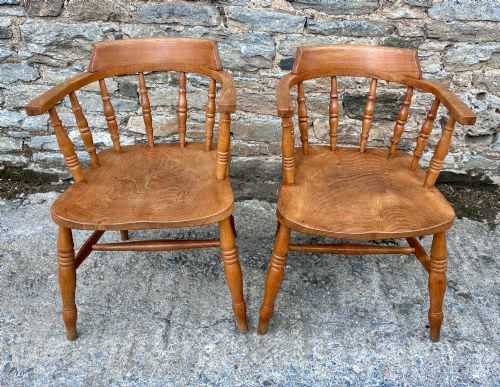
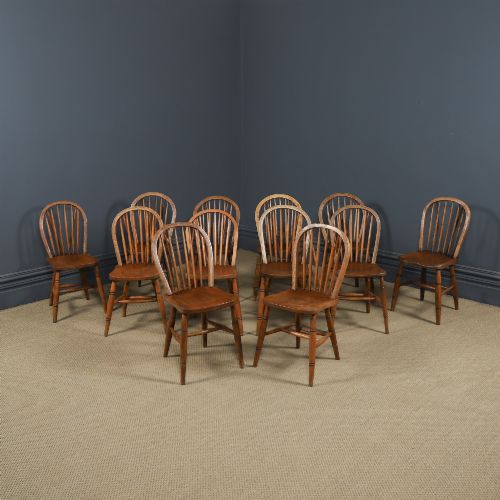
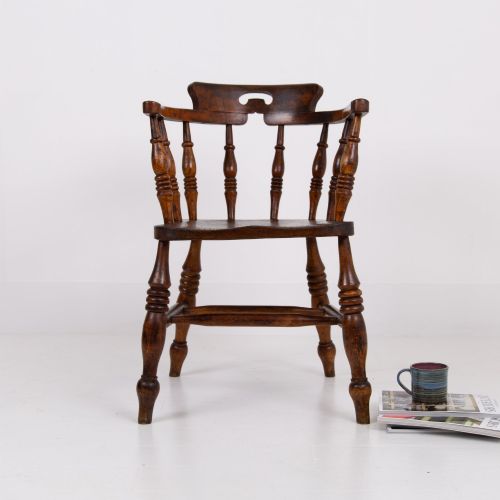


Vintage Elm Bow Chair
These vintage elm bow chairs bring sturdy vernacular comfort into a room through honest turned woodwork and deep patinated seats.
Vintage Elm Bow Chair
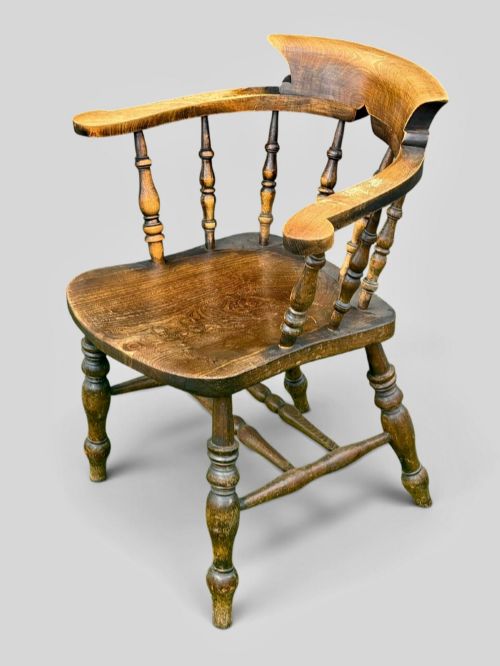
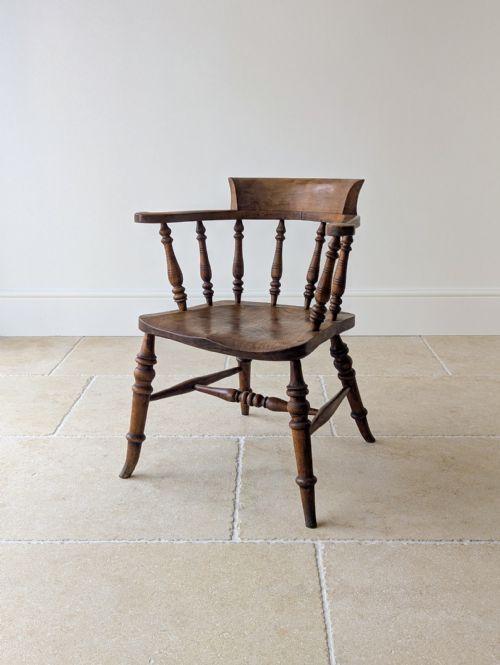
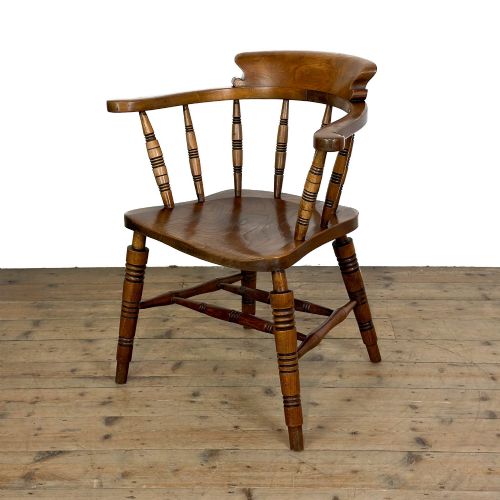
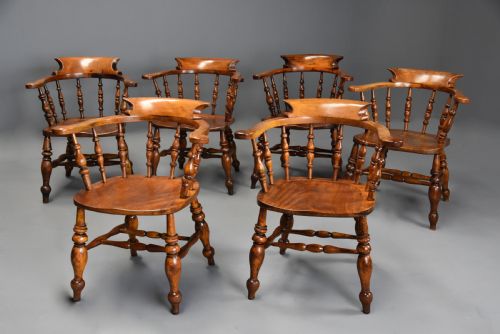
A vintage elm bow chair is a robust seating form typically encountered as a smoker's bow, captain's chair, or Windsor variant from the nineteenth and early twentieth centuries. These pieces encompass armchairs, desk chairs, dining chairs, rocking chairs, and child's chairs rooted in English country vernacular traditions.
The version most frequently met on this page is the Victorian smokers bow or captain's chair, often featuring a low hoop back and a thick solid timber seat. These heavy elbow chairs served utilitarian roles in kitchens, farmhouses, and offices before finding favour in modern domestic settings.
Makers working during the Victorian and Edwardian periods drew upon regional English furniture-making habits, combining bentwood bows with turned spindles. The resulting forms range from simple low-back designs to expansive broad-arm Windsor armchairs.
How they were made
Construction relies upon a marriage of contrasting timber species selected for specific structural properties, predominantly pairing elm seats with beech, ash, or oak for spindles, legs, and steam-bent bows. Elm provides a dense, interlocking grain for the saddle seat that resists splitting under heavy use.
Makers utilised steam-bending techniques to shape green timber into the continuous bow rail that forms the arms and backrest. Turned components, including spindles and splayed legs, were shaped on lathes before being pegged and wedged into bored mortise joints.
Vintage Elm Bow Chair Retail Price Guide 2026
Typical asking prices for vintage elm bow chair among the pieces listed under this phrase on Sellingantiques today, from the lower quarter to the upper quarter. They describe what is for sale here now, not the wider market.
Listings span the Victorian and Edwardian eras, predominantly featuring elm, ash, and beech combined in traditional Windsor forms.
What varies in quality
Quality rests in the harmony of timber selection and the retention of original surface patination across the seat and turnings. Chairs built with richly figured elm seats and well-balanced ash or beech undercarriages display superior structural integrity and visual depth.
The definition of the turned spindle work and the crispness of the steam-bent bow separate standard utility seating from finer vernacular examples. Heavy wear or poorly executed historic repairs to the arm joints alter the original stance and tactile character of the piece.
The Vintage Elm Bow Chair Glossary
- Smoker's bow
- A low-backed Windsor-style armchair with a continuous curved arm rail, popular in public houses and farmhouses throughout the nineteenth century. These chairs offer a compact footprint while maintaining a supportive elbow height.
- Captains chair
- A robust armchair featuring a rounded back rail supported by numerous vertical spindles above a saddle seat. They were frequently utilised in offices, studies, and dining rooms.
- Windsor chair
- A chair constructed with a solid wooden seat into which the legs and back sticks are independently inserted rather than held by a frame. This traditional method creates a durable, unified piece of furniture.
- Saddle seat
- A thick wooden seat base scooped and carved into a concave shape for ergonomic comfort. In these chairs, it is typically formed from a single plank of elm.
- Stick back
- A chair back composed of simple turned vertical wooden rods connecting the seat to the top rail. This construction provides resilient support without heavy upholstery.
Vintage Elm Bow Chair: Frequently Asked Questions
What is a smoker's bow chair?
A smoker's bow is a sturdy vernacular armchair characterised by a low, continuous bentwood rail that forms both the back and the arms. These pieces typically feature turned spindles and a thick saddle seat.
Originally designed for heavy daily use in domestic and public spaces, they provide a comfortable elbow rest within a compact frame.
How do I date an antique elm chair?
Dating relies on observing construction marks, timber selection, and the profile of the turned undercarriage. Victorian and Edwardian examples often show hand-turned leg details and distinct patination on the elm seat.
Tool marks, peg construction, and the degree of timber shrinkage offer further clues to a piece's age and regional origin.
Were these chairs used at desks?
Many captain's chairs and low-back armchairs were adapted for use at desks and writing tables due to their supportive curved arm rails. Their compact proportions allowed them to fit neatly beneath nineteenth-century workspaces.
Their solid elm seats and stable splayed legs made them practical for prolonged daily seating.
How should I care for an elm seat?
Elm responds well to occasional applications of beeswax or nourishing furniture polish to maintain the moisture and depth of the timber. Avoiding direct sunlight and sudden temperature changes protects the wood from splitting.
Gentle dusting with a dry cloth preserves the historic patination accumulated over generations.