


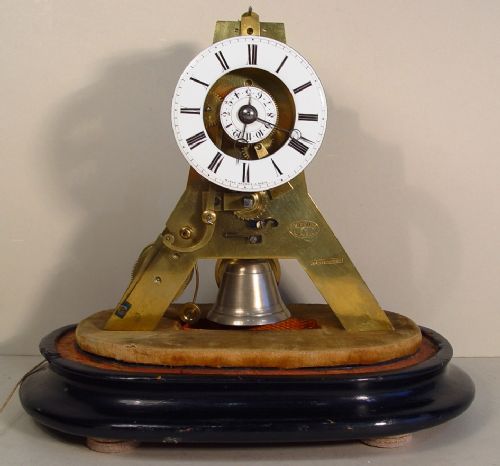
Vintage Ebonised Table Clock
A vintage ebonised table clock brings a striking dark finish and precision timing to a mantel, desk or bracket.
Vintage Ebonised Table Clock
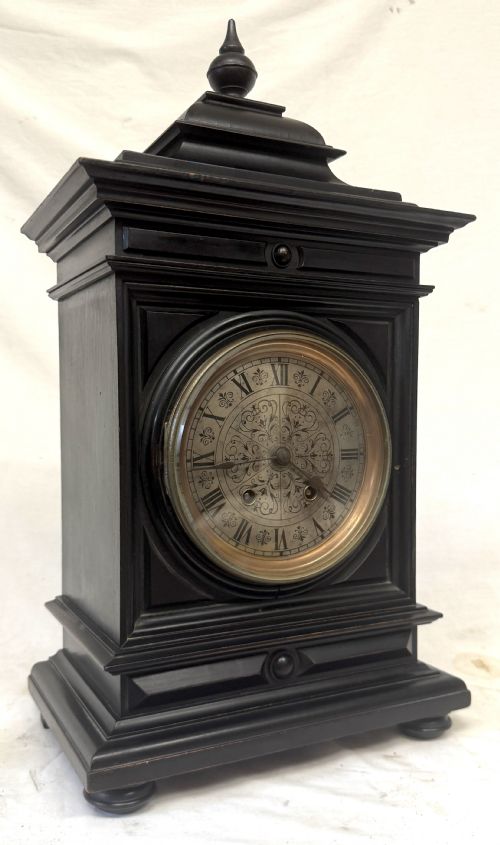
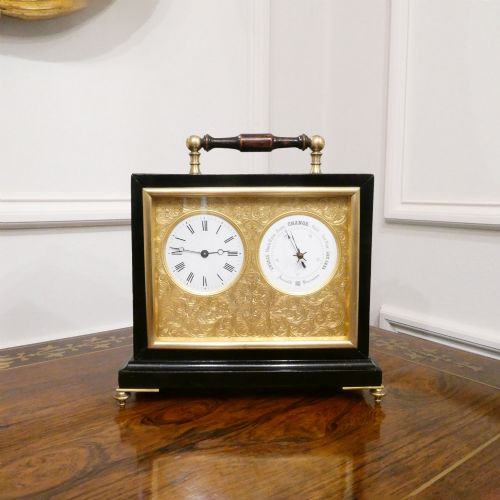
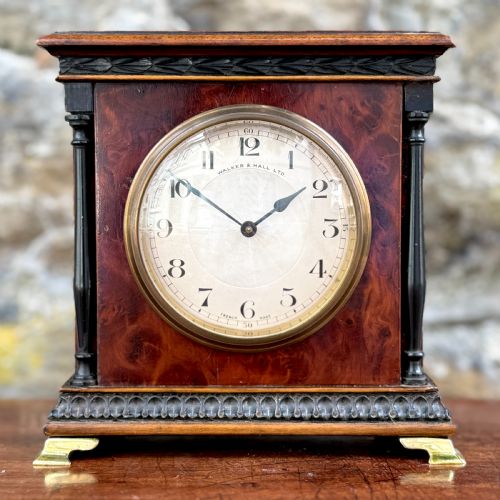
A vintage ebonised table clock is a timepiece designed for domestic placement on mantels, desks and brackets, distinguished by its dark, blackened wood finish. The examples available here span the eighteenth century, the nineteenth century and the Edwardian era, incorporating various domestic forms including bracket clocks, mantel clocks and desk clocks.
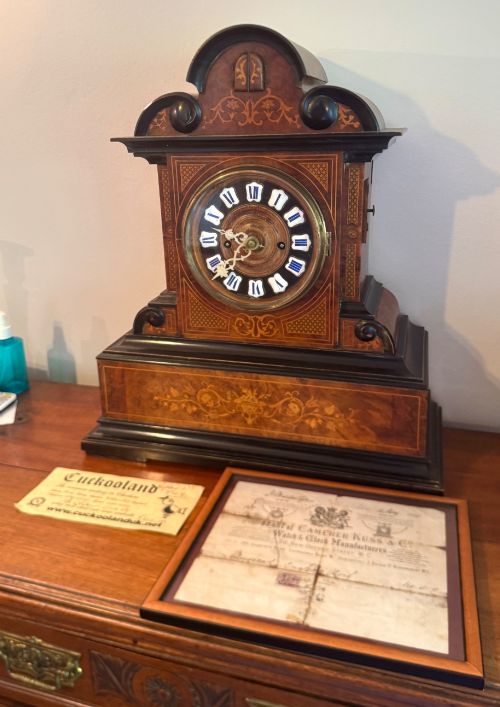
Makers utilised ebonisation to give timber the appearance of expensive ebony, creating a formal aesthetic seen across British and continental European pieces. Buyers encounter variations ranging from simple architectural cases to elaborate models featuring bell tops, marquetry details and visible skeletal movements.
The assortment includes regional British makers alongside French models, offering different movement types such as Westminster chimes, striking mechanisms and alarm functions. These timepieces served both practical and decorative functions in period interiors, housed in cases combining timber with brass, glass, enamel and ormolu.
How they were made
Craftsmen built these cases using timbers such as walnut, mahogany and burr walnut, applying a dark ebonisation treatment to simulate solid ebony. This blackened finish provided a stark contrast for applied brass mounts, silvered dials and gilt ormolu details.
Interiors housed mechanical brass gear trains driven by springs or weights, often regulated by pendulums or balance wheels. Dials typically featured enamel or engraved silvered chapter rings protected behind glazed bezels.
Several clocks include mechanical surprises like pull alarms and passing strikes to ensure households stayed awake.
What varies in quality
Quality in a vintage ebonised table clock rests on the sophistication of the movement and the integrity of the case construction. Finer examples feature signed mechanical movements by established makers, intricate bell top designs and well-preserved marquetry or ormolu mounts.
The depth and durability of the ebonised finish on the underlying walnut or mahogany also distinguish higher-grade pieces from simpler commercial production. Preservation of original dials, hands and glass components determines the overall historical integrity of the clock.
Walker and Hall·Barraud and Lunds·James Evans·Joseph Lum·D Robertson of Perth·Baldwin of Loughborough
The Vintage Ebonised Table Clock Glossary
- Ebonised
- Wood treated with a chemical stain, dye or paint to achieve the deep black appearance of ebony. This technique was common in period cabinetmaking to create formal contrast.
- Bracket clock
- A portable table clock originally designed to sit on a wall bracket to project sound more effectively. Many later examples sat directly on furniture surfaces while retaining the traditional name.
- Bell top
- A case design featuring a stepped or domed upper section shaped like a bell. This silhouette is frequently found on eighteenth-century and nineteenth-century bracket clocks.
- Skeleton clock
- A timepiece with an open framework case that exposes the gear train and escapement to view. These models often operate under a glass dome.
- Silvered dial
- A metal clock face treated with a silver solution to produce a matte finish for engraved numerals. It provides high contrast against dark cases.
Vintage Ebonised Table Clock: Frequently Asked Questions
How do I wind a mechanical table clock?
Most mechanical clocks use a key inserted into winding holes on the dial to tension the internal springs.
Care must be taken not to over-wind the movement, stopping as soon as resistance is felt.
What is the difference between a mantel clock and a bracket clock?
Bracket clocks originated with a wall shelf for sound propagation, whereas mantel clocks were built specifically for shelf placement.
Over time, the terms became largely interchangeable for portable table timepieces.
How do I date an ebonised table clock?
Dating relies on stylistic clues in the case architecture, dial materials and signature inscriptions.
Periods represented in these pieces range from Georgian bell tops to Edwardian combination clock barometers.
Where should I place a vintage table clock?
These clocks suit stable horizontal surfaces such as mantelpieces, sideboards and desks away from direct heat and moisture.
Placement should ensure the case remains level so the pendulum or balance wheel beats evenly.