




Vintage Duplex Paraffin Lamp
A vintage duplex paraffin lamp brings a warm, steady glow to a room through its twin-wick burner.
Vintage Duplex Paraffin Lamp
A vintage duplex paraffin lamp uses a double-wick burner system designed to draw fuel from a central reservoir and produce a brighter flame than single-wick predecessors. These domestic light sources date primarily from the Victorian and Edwardian eras, spanning the nineteenth and early twentieth centuries.
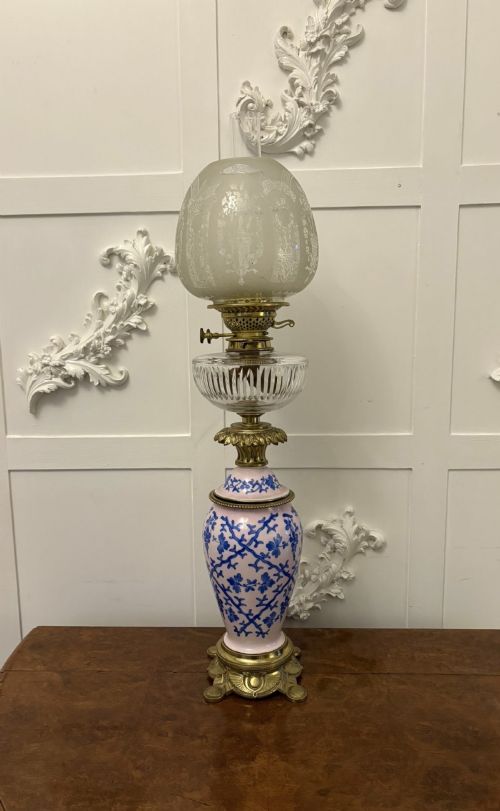
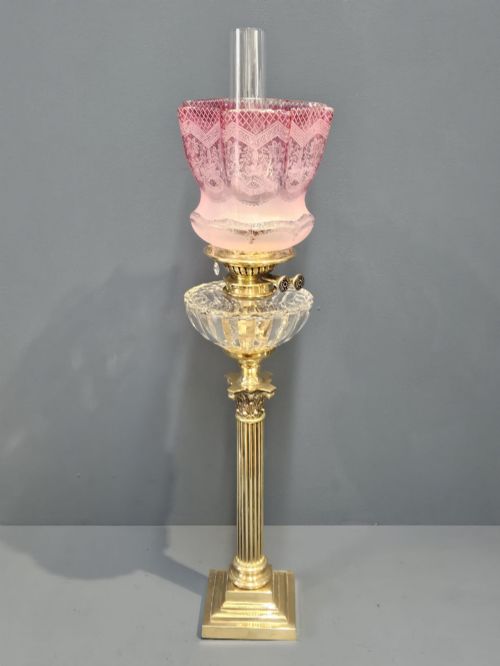
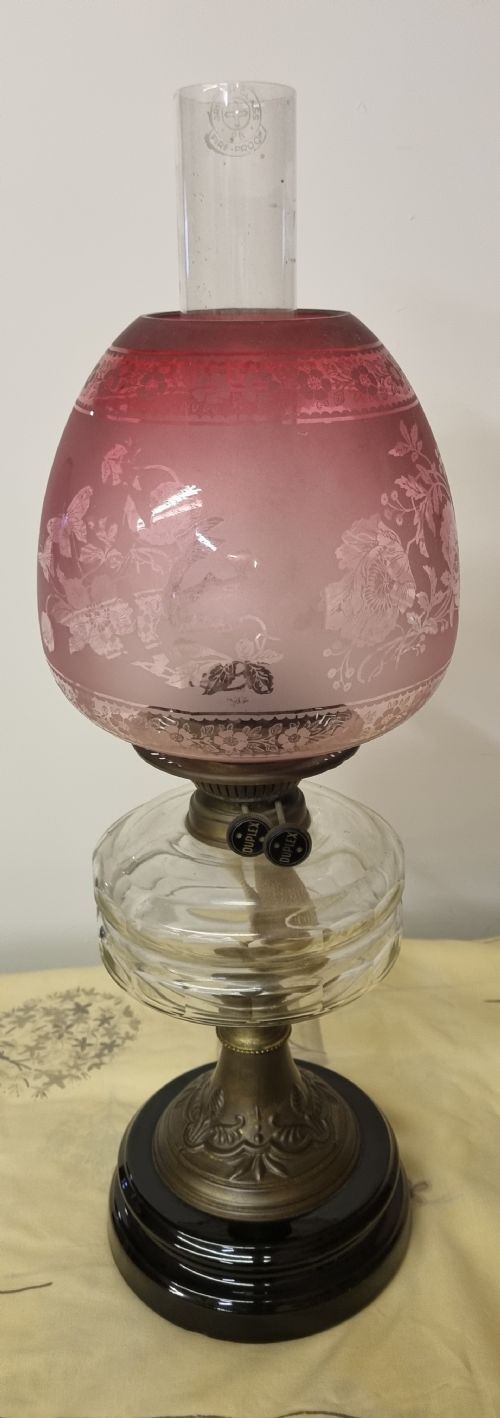
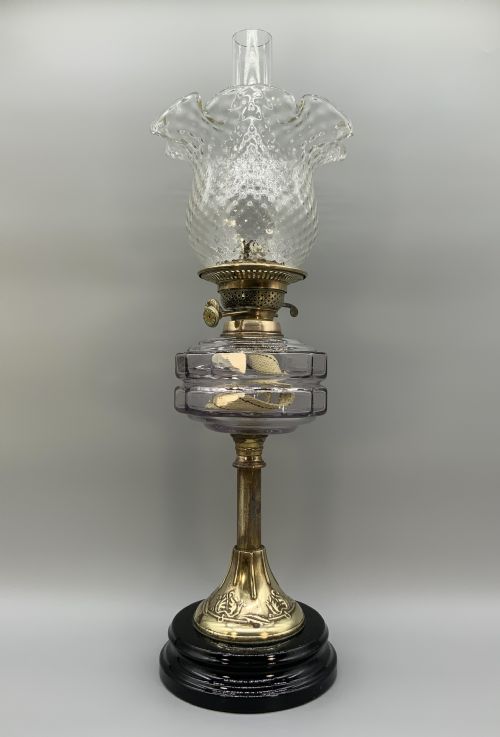
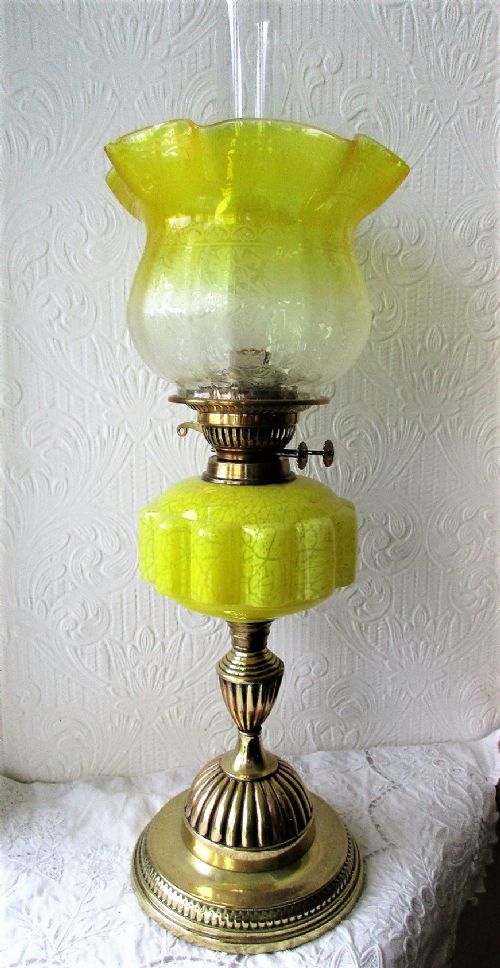
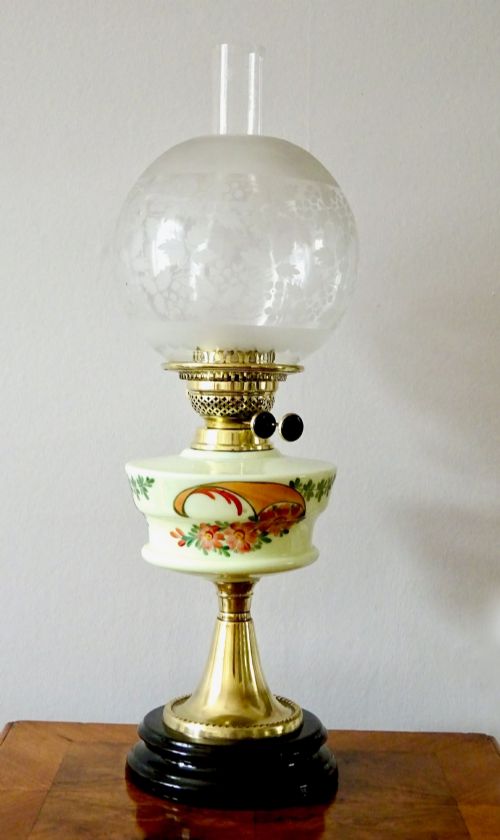
The most common versions on this page combine a heavy metal base with a glass font and a decorative shade. Collectors encounter forms ranging from Corinthian column standards to telescopic brass pillars and slender ceramic bodies.
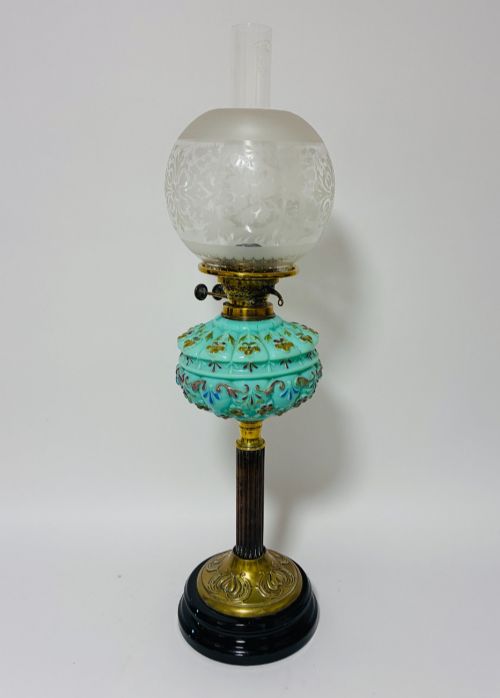
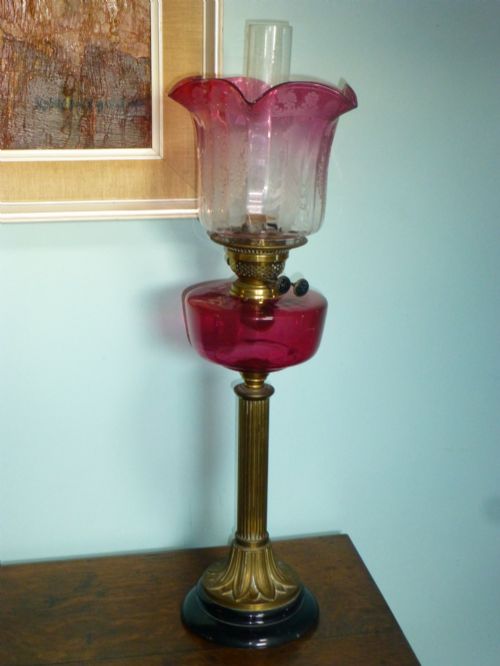
Makers such as Messenger and Young produced standard domestic models alongside taller, decorative salon pieces. Surviving examples often retain their original etched or coloured glass shades in pink, green, and cranberry hues.
Materials and construction methods
Brass forms the structural backbone for many stands and columns, often cast in classical or Corinthian orders and paired with heavy weighted iron bases for stability. Silver plate and ormolu also appear on finer examples from the period.
Fonts and shades showcase glassmaking techniques of the era, including hand-blown cranberry glass, opaline glass, frosted finishes, and cut crystal. Some designs incorporate ceramic bodies decorated with botanical motifs alongside metal mounts.
Listings feature brass, silver plate, and ormolu combined with cranberry, opaline, cut, and frosted glass across the Victorian and Edwardian periods.
Distinguishing quality in lighting
The distinction between standard domestic lighting and top-tier examples lies in the weight of the metal castings and the crispness of the chasing on brass columns. Telescopic mechanisms and heavy gauge brass signify superior manufacturing ambition.
Shades contribute heavily to overall quality, with hand-blown and deeply etched tulip globes commanding greater attention than plain pressed glass. Matching original fonts and shades demonstrate a higher degree of preservation.
Messenger·Young's
The Vintage Duplex Paraffin Lamp Glossary
- Duplex burner
- A double-wick mechanism that increases light output by burning two flat wicks side by side. This system requires a dedicated twin-slot gallery.
- Font
- The oil reservoir sitting atop the lamp column or base. These containers are frequently made from coloured glass, porcelain, or brass.
- Telescopic
- A stem construction allowing the height of the lamp to be adjusted. This engineering feature appears on taller reading and floor-standing models.
Vintage Duplex Paraffin Lamp: Frequently Asked Questions
How do duplex paraffin lamps work?
These lamps draw paraffin through two flat cotton wicks adjusted simultaneously by twin thumbwheels. The paired flames sit beneath a glass chimney that creates the draft necessary for a bright, steady burn.
Air enters through the burner gallery to oxygenate the flame, while the shade diffuses the light outward into the room. Extinguishing the flame involves turning the wheels down until the wicks drop below the metal comb.
Are these lamps safe to use today?
While many vintage lamps remain mechanically sound, modern safety standards advise treating them primarily as decorative objects. Using them requires checking the integrity of the fuel reservoir and the smooth operation of the wick raisers.
Original glass fonts should be inspected for hairline fractures before any fuel is introduced. Most collectors choose to display them unlit or convert them for electrical illumination without altering the exterior.
How do I date a Victorian oil lamp?
Dating relies on stylistic clues, burner patents, and manufacturing materials recorded across the nineteenth century. Gothic and classical revival brass columns typically point to the mid-Victorian decades, whilst slender ceramic bodies often indicate later Edwardian production.
Maker names stamped onto the brass thumbwheels provide definitive chronological markers. Shade styles also shift from simple frosted globes toward elaborate cranberry and opaline tulip designs by the end of the century.
What is the difference between an oil and paraffin lamp?
The terms are frequently used interchangeably in antique lighting, though paraffin refers specifically to refined petroleum oil introduced in the mid-nineteenth century. Earlier lamps burned vegetable or animal oils before mineral paraffin became the dominant fuel.
Duplex burners were engineered specifically to handle the cleaner-burning properties of paraffin. Consequently, most Victorian lamps encountered today were designed to run on this specific petroleum distillate.