
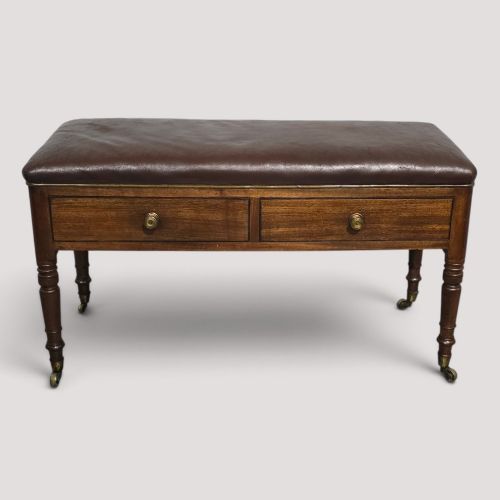
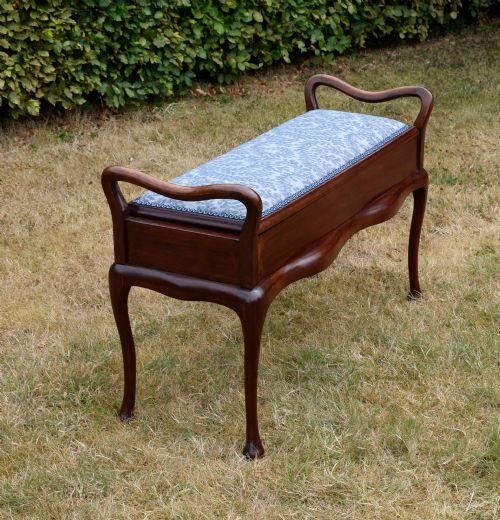


Vintage Duet Piano Seat
A vintage duet piano seat provides generous seating for two players, combining period charm with practical utility at the keyboard.
Vintage Duet Piano Seat
A vintage duet piano seat is primarily found from the Edwardian era and around nineteen hundred, alongside pieces dated to eighteen ninety, eighteen sixty, and nineteen twenty. These items appear as piano stools, duet stools, benches, and window seats.
The styles recorded in the evidence range from Edwardian and Art Deco to Queen Anne Revival, Georgian Revival, and Louis XVI. Mahogany is the predominant wood, accompanied by walnut and giltwood variants.
How they were made
Upholstery materials recorded in the evidence include fabric, velvet, and leather, complemented by metal and brass components that finish the structural design.
Listings for a vintage duet piano seat span periods from eighteen sixty up to nineteen twenty, featuring mahogany, walnut, and giltwood.
What varies in quality
Quality differences emerge in the refinement of the timber work, particularly where intricate inlay or specific revival styles like Queen Anne and Georgian are applied to the frame. The choice between standard mahogany and specialised woods such as walnut or giltwood shifts the character of the piece.
The selection of covering materials, ranging from basic fabric to leather and velvet, alters the tactile presence of the seat. Structural execution across the various periods from eighteen sixty to nineteen twenty determines how solidly the form holds together.
The Vintage Duet Piano Seat Glossary
- Edwardian
- A stylistic period spanning the early twentieth century defined by lighter proportions and refined classical revivals. Pieces from this era often feature subtle mahogany framing.
- Duet stool
- An elongated seating form designed to accommodate two people simultaneously at a keyboard or in a window bay. These items provide broader proportions than standard single piano stools.
- Inlay
- A decorative technique where contrasting materials are inserted into the wood surface to form patterns. Edwardian examples frequently utilise this method on mahogany panels.
- Giltwood
- Timber treated with gold leaf or a gold-coloured finish to simulate solid gold ornamentation. This treatment appears on French-influenced mid nineteenth century pieces.
Vintage Duet Piano Seat: Frequently Asked Questions
What is a vintage duet piano seat?
A vintage duet piano seat is an extended bench designed for two musicians to share while playing a keyboard instrument together.
These pieces originate from periods such as the Edwardian era and the late nineteenth to early twentieth centuries, appearing in woods like mahogany and walnut.
Where were duet piano seats used?
These seats were placed beside upright or grand pianos in domestic parlours and music rooms where two people practiced duets.
Their generous proportions also allowed them to function as window seats or freestanding benches in reception rooms.
Which woods are common?
Mahogany is the primary timber seen in these listings, frequently accompanied by walnut and occasional giltwood frames.
Inlayers often added decorative details to the mahogany surfaces during the Edwardian period.
What upholstery materials appear?
Original and replacement coverings include fabric, velvet, and leather surfaces that cushion the bench top.
These materials work alongside brass and metal hardware elements found on the frames.
How do revival styles show?
Revival styles draw on historical design idioms such as Queen Anne, Georgian, and Louis XVI aesthetics.
Cabinet makers adapted these traditional forms to suit the proportions required for nineteenth and twentieth century music seating.