
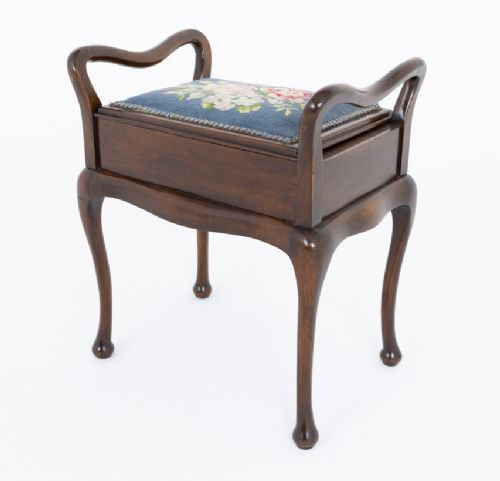


Antique Sheet Music Bench
An antique sheet music bench provides practical seating alongside period keyboards while concealing scores within.
Antique Sheet Music Bench
An antique sheet music bench is a specialised form of seating designed for musicians playing the piano or organ. These pieces generally take the form of piano stools or duet stools, originating across the Victorian, Edwardian, and later periods up to the nineteen-twenties.
Buyers browsing this selection will most frequently encounter Edwardian mahogany examples. These often feature inlaid boxwood details and lift-up upholstered seats, alongside occasional walnut and oak variants from the late nineteenth and early twentieth centuries.
Materials and construction
Cabinetmakers constructed these benches principally from mahogany and walnut, frequently incorporating contrasting boxwood inlay for decorative effect. Oak also appears among the later pieces from the nineteen-twenties.
The seating portions utilise traditional upholstery techniques, often finished in fabric, velvet, or tapestry. Fall-front mechanisms and lift-up compartments allow internal storage for musical scores.
Assessing quality
The standard of timber selection and the crispness of boxwood inlay distinguish finer examples from simpler workshops. Refined turning on the legs and harmonious proportions also mark out better pieces.
The mechanical integrity of the lift-up seat or fall-front mechanism indicates the original grade of manufacture. Superior internal joinery ensures smooth daily operation for storing sheet music.
The Antique Sheet Music Bench Glossary
- Duet stool
- A wider seating bench designed to accommodate two musicians side by side at the keyboard. These pieces provide extended internal storage compared to single stools.
- Fall-front
- A hinged front panel that drops forward to reveal interior compartments for storing sheet music. This mechanism allows access to scores without lifting the upholstered seat.
- Boxwood inlay
- Contrasting pale wood inserted into the darker mahogany surface in geometric or floral patterns. This decorative technique characterises Edwardian Sheraton Revival pieces.
- Upholstery
- The padded textile covering on the seat top, utilising materials such as velvet, tapestry, or standard fabric. Original textiles contribute to the historical character of the bench.
Antique Sheet Music Bench: Frequently Asked Questions
What is an antique sheet music bench used for?
These benches provide functional seating at a piano while incorporating internal compartments to store sheet music and songbooks.
Musicians keep their working library close at hand beneath the hinged or lift-up upholstered seat.
How do I date an antique sheet music bench?
Dating relies on stylistic clues, timber choices, and construction methods recorded across the Victorian and Edwardian eras.
Mahogany with boxwood inlay typically points to the Edwardian period, whilst walnut and heavier turnings often indicate Victorian origin.
What is the difference between a piano stool and a duet stool?
A standard piano stool accommodates a single player, whereas a duet stool offers a wider seat designed for two people.
Duet versions provide greater internal storage capacity to hold larger collections of shared sheet music.
How do I care for the upholstery on my music bench?
Protect the fabric or velvet seat by keeping the bench away from direct sunlight and maintaining stable room humidity.
Gentle surface brushing preserves the pile of velvet and tapestry coverings without damaging the underlying historic textiles.