

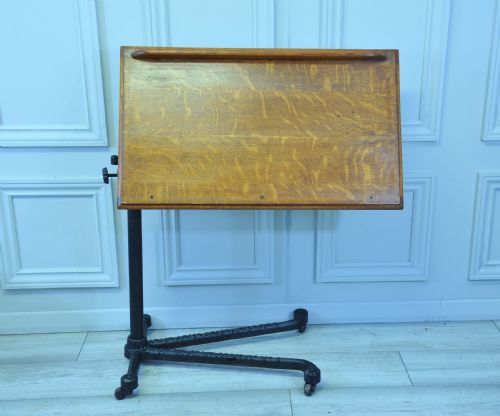


Vintage Drafting Table
A vintage drafting table combines mechanical ingenuity with architectural purpose, offering adjustable surfaces and rich timber character for the modern workspace.
Vintage Drafting Table
When you search for a vintage drafting table, you encounter practical workspaces built for architects, cartographers, and readers across multiple centuries. These pieces encompass functional desks, reading tables, lecterns, and folio tables that serve as striking centrepieces in contemporary rooms.
The selections available here span significant historical periods, running from the Georgian and Regency eras through the 19th century and into the early 20th century. Mahogany, oak, and pine appear frequently across these listings, often paired with mechanical adjustments and specialised surfaces.
You meet various specific forms in this inventory, including metamorphic risers, adjustable reading stands, and library tables. French examples and English workshops both contribute to the diverse types found within these pages.
How they were made
Cabinet makers utilised solid timbers like mahogany, oak, and pine to construct the primary frames and surfaces of these tables. Figured grains receive careful placement on major display areas to highlight the natural beauty of the wood.
Functional hardware incorporates brass adjustments, leather writing inserts, and robust cast iron components to facilitate movement and stability. Boxwood details and metamorphic lifting mechanisms demonstrate the sophisticated engineering applied by period makers.
Vintage Drafting Table Retail Price Guide 2026
Typical asking prices for vintage drafting table among the pieces listed under this phrase on Sellingantiques today, from the lower quarter to the upper quarter. They describe what is for sale here now, not the wider market.
Heavy cast iron bases ensure these tables remain firmly planted, even when cranked to their most eccentric working angles.
What varies in quality
The sophistication of the mechanical adjustments dictates much of the distinction between standard items and superior examples. Complex rising mechanisms, smooth pivoting surfaces, and integrated brass fittings separate simpler reading stands from fully articulated architect's desks.
Timber selection and surface finish also govern the standing of each piece. Superior items feature highly figured mahogany, intact leather inserts, and maker signatures, whereas utilitarian pieces rely on simpler pine or plain oak construction.
Carters Of London·Gillows
The Vintage Drafting Table Glossary
- Metamorphic
- Describing furniture designed to transform from one form or height into another through mechanical levers and hinges.
- Lectern
- A slanted reading stand designed to hold books or folios at a comfortable angle for standing or seated study.
- Folio Table
- A wide surface intended for storing and examining large paper sheets, maps, and unbound documents.
- Riser Desk
- A workspace featuring an elevating mechanism to raise the writing or drawing surface to various heights.
- Boxwood
- A dense, pale wood utilised for fine stringing, inlay work, and small decorative details on period furniture.
Vintage Drafting Table: Frequently Asked Questions
What is a vintage drafting table?
A vintage drafting table is a period workspace built with adjustable mechanisms, sloping surfaces, and specialised compartments for drawing and reading.
These pieces originate from eras such as the Georgian, Regency, and Edwardian periods, constructed in timber like mahogany, oak, and pine.
How were these tables used originally?
Drafting tables served architects, cartographers, and scholars who required variable angles and heights for drawing plans and reading large folios.
Their mechanical risers and lift-over tops allowed users to alternate between sitting and standing while working on detailed documents.
How do I style a drafting table at home?
You can integrate a drafting table into a modern study, library, or living space as a functional desk or display surface.
Leaving the surface at a slight angle or pairing it with a comfortable chair highlights its mechanical heritage.
How do I identify a Georgian drafting table?
Georgian examples often feature solid mahogany construction, finely turned legs, and brass adjustments characteristic of 18th-century cabinet making.
Details such as leather inserts and specific desk box configurations help distinguish these pieces from later industrial variants.