




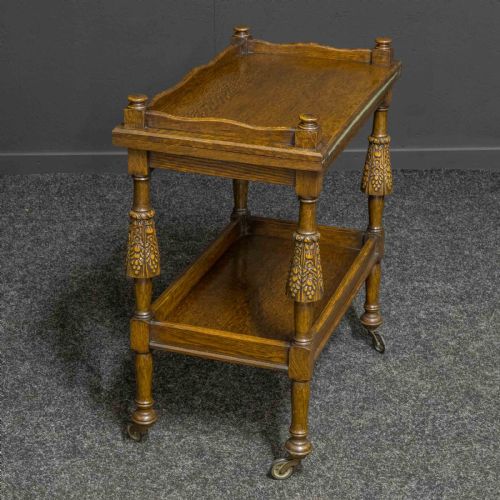
Oak Side Table Castors
Oak side table castors combine solid timber utility with rolling mobility, offering a practical piece of period furniture for everyday living.
Oak Side Table Castors
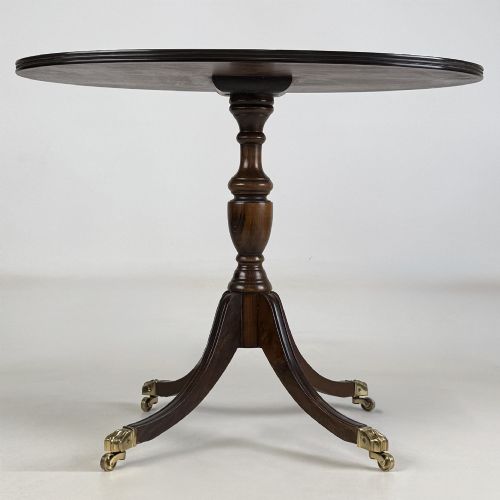
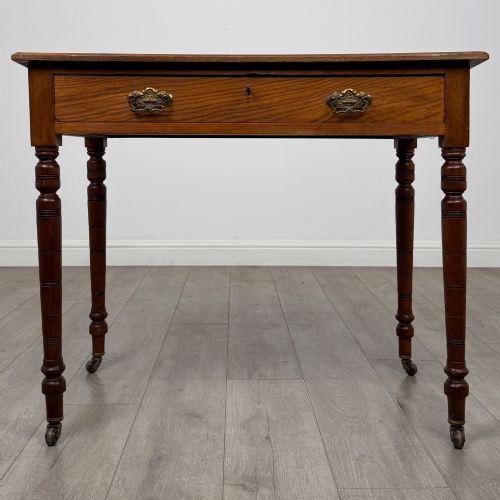
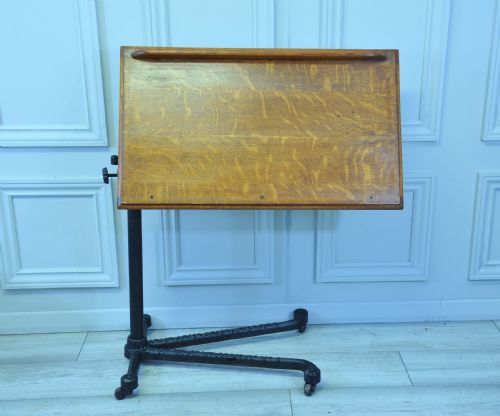
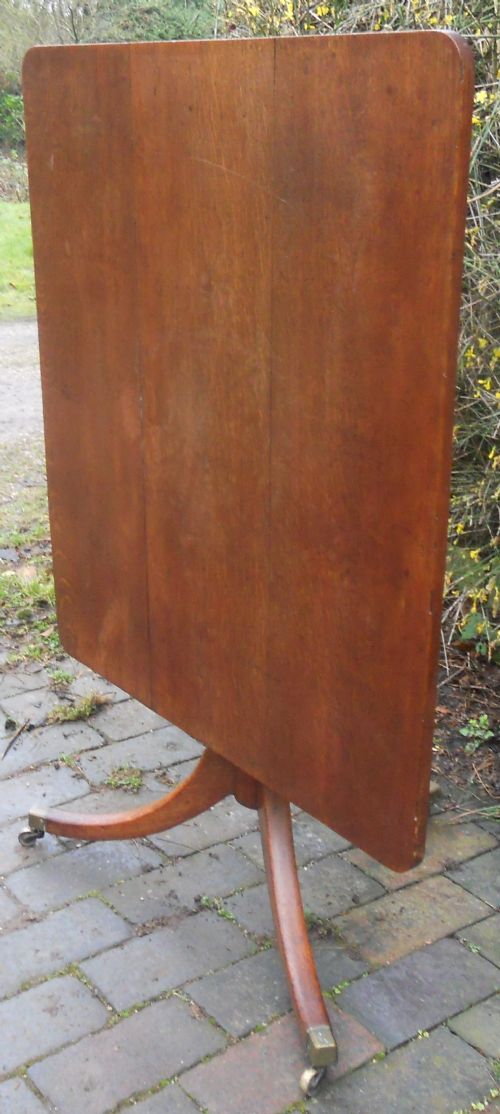
When you search for oak side table castors, you are looking at nineteenth and early twentieth-century wooden tables fitted with wheel mechanisms. These pieces range from writing desks and small occasional tables to tea trolleys, revolving bookcases, and supper tables.
Originating across the nineteenth and early twentieth centuries, these tables reflect diverse design revivals including Jacobean, Regency, and Aesthetic Movement influences. Each piece demonstrates how period makers combined sturdy timbers with smooth-running wheels to create movable household furniture.
Materials and construction
Workshop construction relies heavily on solid oak and specialised veneers such as burr and pollard oak, paired with metal hardware like iron and brass. These durable timbers provide the structural strength needed for tables that require daily movement.
Makers integrated wheel mechanisms directly into the furniture legs, combining traditional joinery with functional hardware. This construction allowed heavy writing desks and tea trolleys to glide across carpets and floorboards with ease.
Oak Side Table Castors Retail Price Guide 2026
Typical asking prices for oak side table castors among the pieces listed under this phrase on Sellingantiques today, from the lower quarter to the upper quarter. They describe what is for sale here now, not the wider market.
Listings feature oak, burr oak veneer, pollard oak, brass, iron, and leather across pieces dating from eighteen hundred to nineteen twenty.
Judging quality and craftsmanship
Quality in these tables rests on the selection of timber, particularly the rich grain patterns found in burr and pollard oak veneers. Superior pieces display careful timber matching and robust joinery that withstands the physical stress placed upon wheeled legs.
The integration of the castor mechanism itself distinguishes finer examples from simpler utilitarian items. Well-made pieces feature hardware that moves freely while remaining securely anchored to the wooden frame, preserving both stability and mobility.
Carters Of London·Gillows
The Oak Side Table Castors Glossary
- Burr Oak
- A specialised timber cut from tree growths, prized by cabinetmakers for its swirling, highly figured grain patterns. It adds distinct visual texture to table tops and drawer fronts.
- Pollard Oak
- Timber harvested from trees that have been pollarded, producing dense and heavily grained wood. This material creates striking surfaces on occasional and drop-flap tables.
- Drop Flap
- A hinged leaf attached to the main table top that can be raised to extend surface area or lowered when space is limited. It provides flexible utility in smaller rooms.
- Revolving Bookcase
- A tiered wooden shelf structure mounted on a rotating base, designed for tabletop or floor placement. These units allow easy access to books from a seated position.
Oak Side Table Castors: Frequently Asked Questions
What periods do these tables cover?
The selection spans from the Georgian era through the Victorian and Edwardian periods into the early twentieth century. These pieces showcase changing stylistic revivals across nearly two centuries of British furniture making.
Dating is determined by construction techniques, wood finishes, and stylistic markers associated with specific decades between eighteen hundred and nineteen twenty.
How were wheeled tables used originally?
These pieces served practical functions in period homes, acting as movable writing desks, tea trolleys, supper tables, and book repositories. The wheels allowed servants or residents to reposition heavy furniture easily within a room.
Tables with adjustable heights or drop flaps offered multi-purpose utility for reading, dining, or administrative tasks throughout the day.
How do I care for antique oak furniture?
Maintain your table by keeping it away from direct heat sources and dramatic humidity changes that can affect solid oak and veneers. Regular dusting with a soft, dry cloth preserves the timber finish without buildup.
Period castor mechanisms benefit from occasional light cleaning to ensure the wheels continue to roll smoothly across household flooring.
What distinguishes different oak veneers?
Burr and pollard oak offer highly decorative, swirling grain patterns formed by natural tree growths and pruning methods. Standard golden oak displays a more uniform, straight-grained appearance characteristic of traditional furniture.
Cabinetmakers utilised these varied cuts of timber to create visual contrast on table tops, panels, and drawer fronts.