

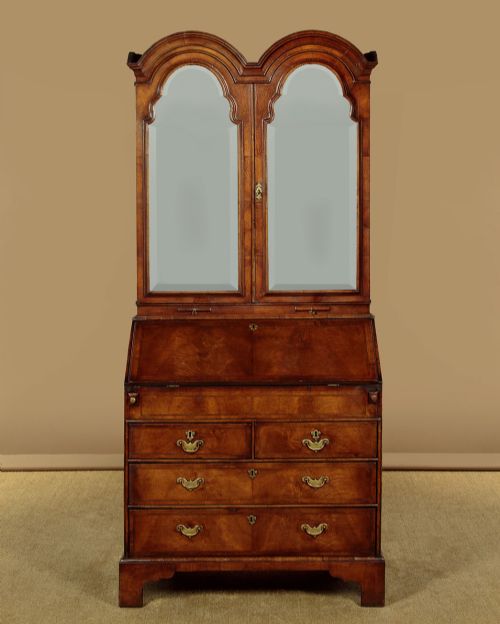

Vintage Double Desk
A vintage double desk is a twin-sided workspace built for two users facing one another, prized for storage and presence.
Vintage Double Desk
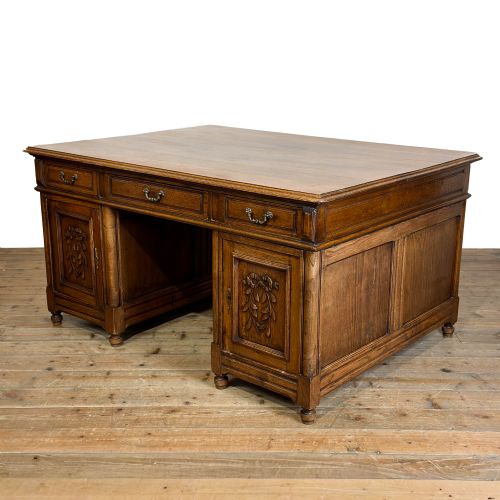
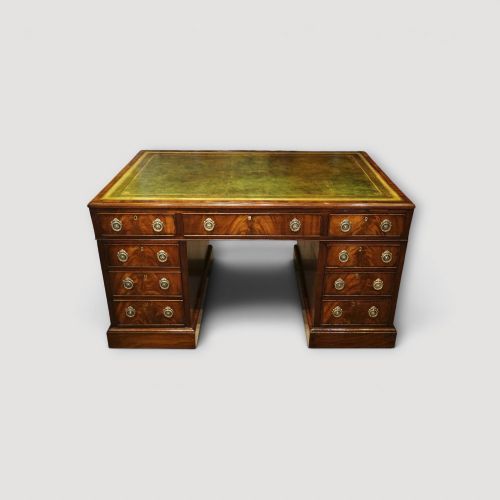
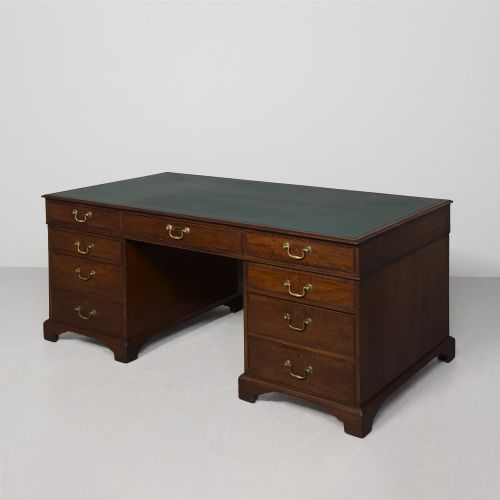
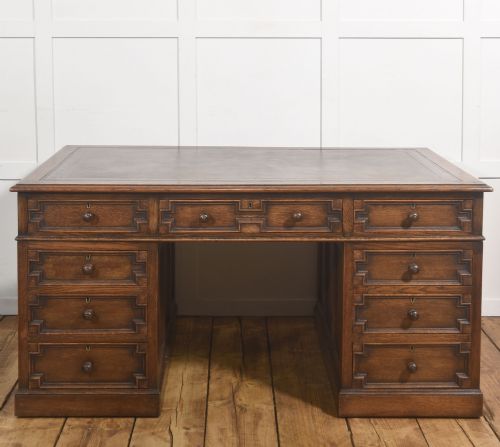
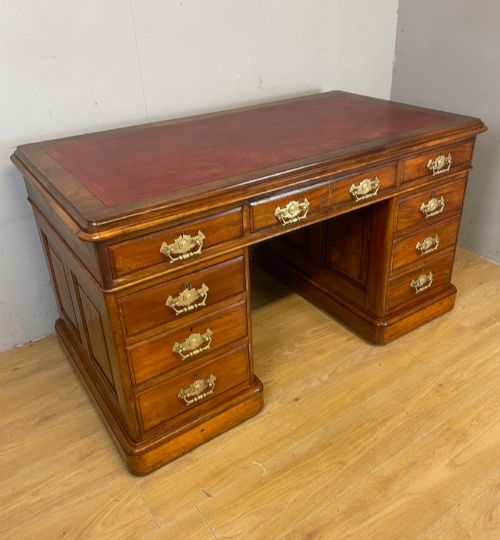
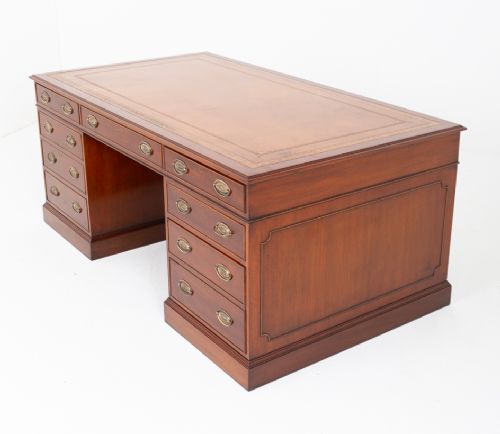
A vintage double desk is designed for two people to work opposite each other, often taking the form of a partners desk with pedestals of drawers on both sides. These large pieces appear frequently in mahogany, oak, and walnut, spanning the Victorian and Edwardian eras.
The layout typically includes cupboards or drawers facing outward on both flanks, providing equal workspace and storage for two individuals. Many examples feature inset leather writing surfaces framed by timber borders.
Originating primarily from nineteenth and early twentieth century workshops, these desks reflect formal study and library interiors. The surviving forms range from traditional English mahogany structures to French oak library tables.
Materials and construction
Makers utilised solid and veneered timbers such as mahogany, oak, walnut, and burr walnut, often mounting the timber carcass on twin pedestals or legs. The working surfaces were frequently lined with panels of tooled leather.
Hardware elements like brass handles, hinges, and locks formed an integral part of the construction, while internal drawer linings relied on secondary softwoods. Joinery methods prioritised stability across large multi-part frames designed to dismantle for transport.
Vintage Double Desk Retail Price Guide 2026
Typical asking prices for vintage double desk among the pieces listed under this phrase on Sellingantiques today, from the lower quarter to the upper quarter. They describe what is for sale here now, not the wider market.
Listings feature double desks and writing furniture spanning the Victorian and Edwardian periods, constructed primarily in mahogany, oak, and walnut.
Distinctions in craftsmanship
Quality rests in the selection of timber figures, such as matched burr walnut or dense mahogany, and the precision of the underlying joinery. Superior pieces maintain crisp carving and well-fitted drawer linings that operate smoothly within heavy pedestals.
The integration of secondary materials like quality brass mounts and properly tooled leather writing surfaces separates standard office utility pieces from finer cabinet-maker commissions.
Maple and Co·Cookes of Finsbury London·Walker And Hall·Harrods·Hermes Paris
The Vintage Double Desk Glossary
- Partners desk
- A double-sided desk built with drawers and cupboards on both flanks to accommodate two users facing each other. This form emerged to serve partners in trade or government.
- Pedestal desk
- A freestanding desk comprising a top surface supported by two independent stacks of drawers or cabinets. These form the base structure for most double-sided writing furniture.
- Burr walnut
- A highly figured timber veneer harvested from the wart-like growths on walnut trees. Cabinet-makers prized this material for its swirling patterns on drawer fronts and surfaces.
- Toggled leather
- A writing surface insert made from leather decorated with gold-tooled patterns around the perimeter. This material provided a smooth, durable pad for handwriting.
Vintage Double Desk: Frequently Asked Questions
How do I place a double desk in a room?
Because these desks are finished on all sides with drawers and panels facing outward, they are intended to sit away from walls in the centre of a room.
Ensure there is sufficient clearance around both sides to allow chairs to pull out fully and users to sit opposite each other comfortably.
Are these desks easy to move?
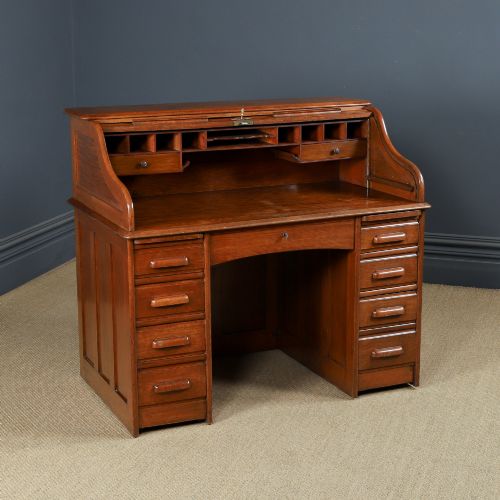
Most large double desks are constructed in three separate sections consisting of two pedestals and a heavy top, which helps with transport.
Lifting them requires multiple people due to the dense timber construction, but separating the modules makes positioning them manageable.
How do I care for the leather top?
The inset leather writing surface benefits from occasional cleaning with a damp cloth and mild soap, avoiding harsh chemical solvents.
Applying a specialist leather balm helps prevent the material from drying out and cracking over time.
How do I identify the period of a desk?
Dating relies on observing timber choices, construction techniques, and hardware styles, such as Victorian mahogany framing or Edwardian oak details.
Secondary wood types inside the drawers and the style of the drawer joints also offer clues to the era of manufacture.