



Vintage Dog Art Print
A vintage dog art print brings canine character to the wall, capturing everything from sporting hounds to studio portraits in ink and paper.
Vintage Dog Art Print
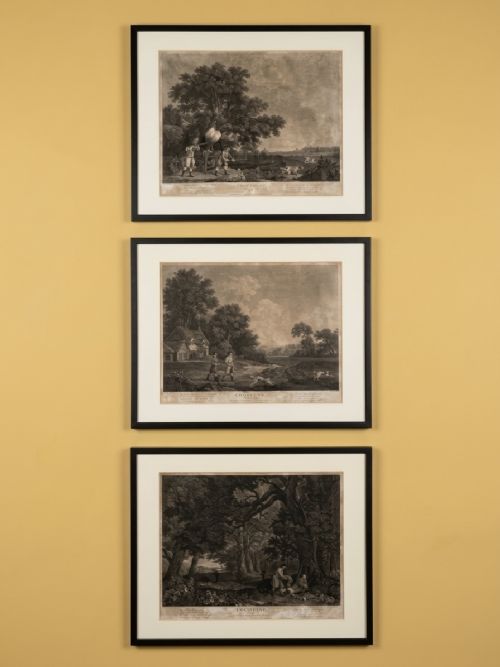
A vintage dog art print encompasses framed works on paper ranging from early nineteenth-century lithographs and engravings to mid-century pastels and advertising pieces. The selection relies heavily on early twentieth-century etchings, sporting watercolours, and Victorian animal portraits.
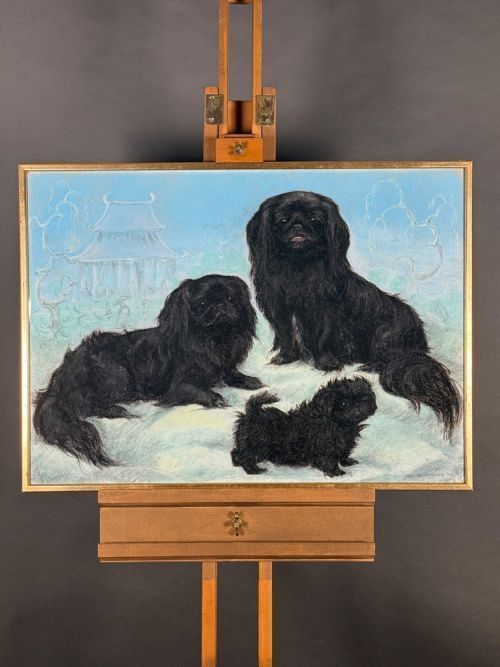
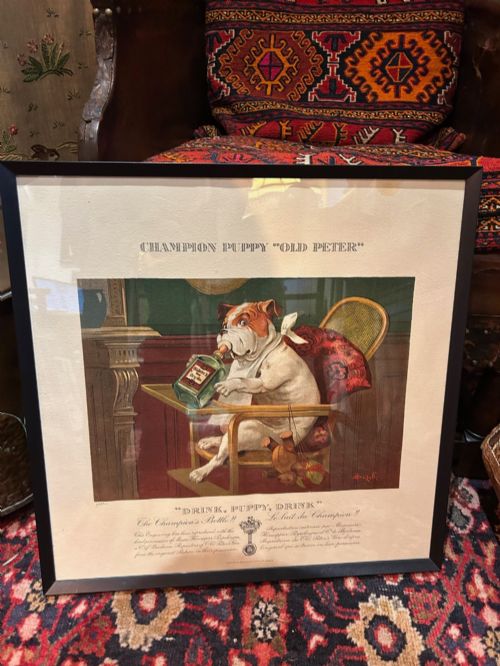
Buyers encounter subjects spanning field sports, individual breed studies, and romantic compositions. Styles shift from Victorian sporting art and Edwardian realism through to Art Deco advertising and nineteen-sixties pastels.
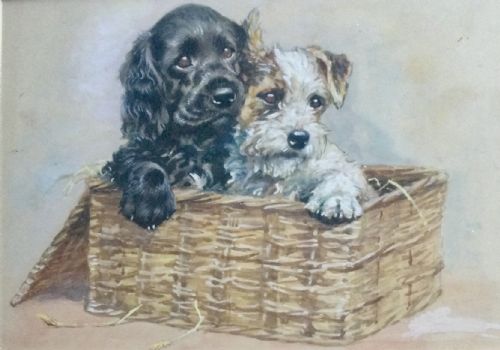
Most examples arrive ready to hang, often mounted behind glass within original wood or giltwood frames. The focus rests squarely on canine subjects, whether working gun dogs, terriers, bulldogs, or Pekingese.
Materials and methods
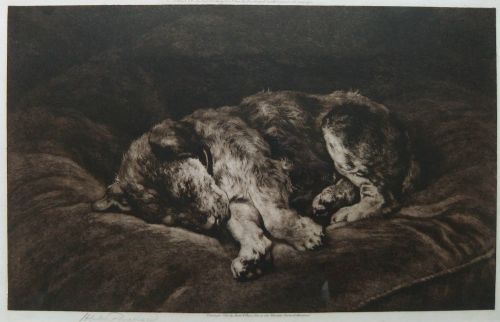
Production methods rely on traditional works on paper, utilising techniques such as etching, drypoint, lithography, chromolithography, and engraving alongside hand-applied watercolour and pastel. Artists laid ink and pigment onto paper supports to capture the texture of fur and the specific anatomy of each breed.
Framing forms an integral part of the physical object, employing wood, giltwood, and glass to protect the delicate paper sheets. Many pieces retain their period frames, which contribute structural context to the artwork.
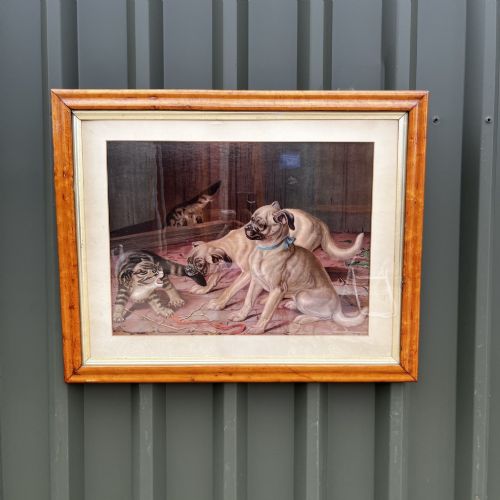
Bulldogs, pugs, and Pekingese command the paper just as much as working pointers and racing greyhounds.
Assessing quality
Quality rests upon the crispness of the line work in etchings and engravings, and the surety of hand in original watercolours and pastels. Stronger works display accurate canine anatomy and expressive detail in the subjects.
The survival of the original paper surface and the integrity of early framing materials elevate certain pieces above others. Clarity of impression in printed works determines visual impact on the wall.
Herbert Dicksee·Marcellin Auzolle·Horatio Henry Couldrey·Mabel Gear·Tom Carr·Florence Mabel Hollams
The Vintage Dog Art Print Glossary
- Etching
- A printmaking technique where lines are bitten into a metal plate with acid before ink is applied and transferred to paper. This process creates fine, detailed tonal lines favoured by animal artists.
- Chromolithography
- A multicolour planographic printing process used to produce vibrant illustrated plates without hand colouring. Commercial and artistic publishers utilised this method for popular prints.
- Drypoint
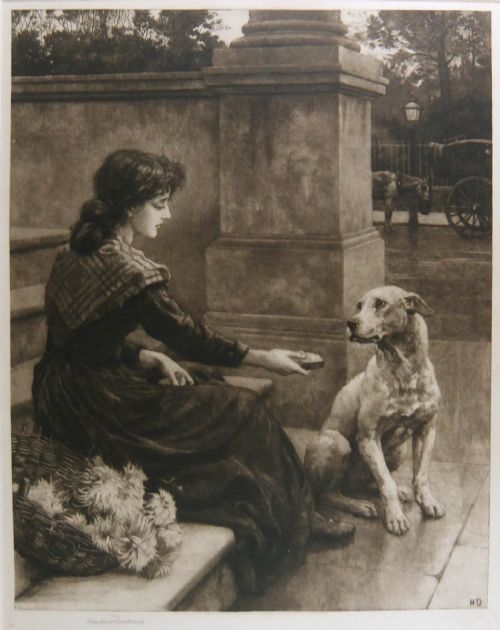
- A printmaking process where an artist scratches directly into a metal plate with a sharp needle, producing characteristic burr lines that hold soft, velvety ink. Herbert Dicksee utilised this technique for his dog subjects.
- Lithography
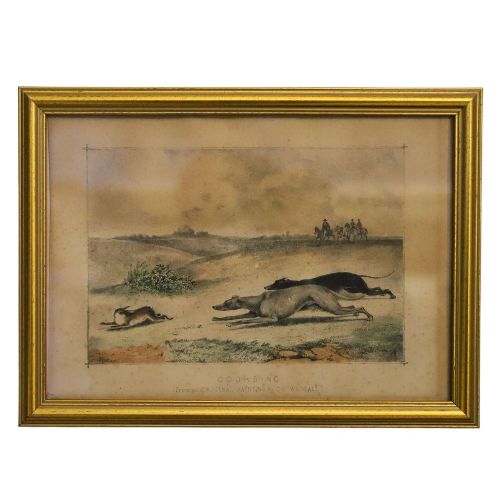
- A planographic printing method based on the repulsion of oil and water on a flat stone or metal plate. Early examples often depict sporting scenes and animal studies.
- Sporting art
- Genre of painting and printmaking dedicated to field sports, hunting, coursing, and working animals. Works in this category frequently feature hounds, pointers, and gun dogs.
Vintage Dog Art Print: Frequently Asked Questions
How do I hang a framed print?
Hang the piece at eye level using appropriate wall fixings that match the weight of the wood and glass frame. Ensure the display position avoids direct sunlight to protect the paper and ink from fading.
Keep the artwork away from damp environments to preserve both the backing paper and the framing materials.
What is a drypoint etching?
A drypoint etching involves drawing directly onto a metal plate with a sharp point rather than using acid. This leaves a raised ridge of metal called a burr, which holds ink to create soft, rich lines.
This technique produces distinct velvety textures that distinguish the process from standard line engravings.
How do I identify a Victorian print?
Victorian prints often feature subjects related to field sports, genre scenes, or formal animal portraits produced between eighteen-thirty and nineteen-hundred. Look at the printing technique and the paper characteristics to help determine the era.
Original framing styles from the period also offer clues regarding the age of the piece.
Are these works original art?
The selection includes both original hand-drawn watercolours and pastels alongside original printed works such as period etchings and lithographs. Each listing specifies the exact medium used to create the piece.
Printed items represent period editions rather than modern reproductions.