


Antique Dog Fine Art
These pieces of antique dog fine art capture canine companionship through centuries of oil paint and canvas.
Antique Dog Fine Art
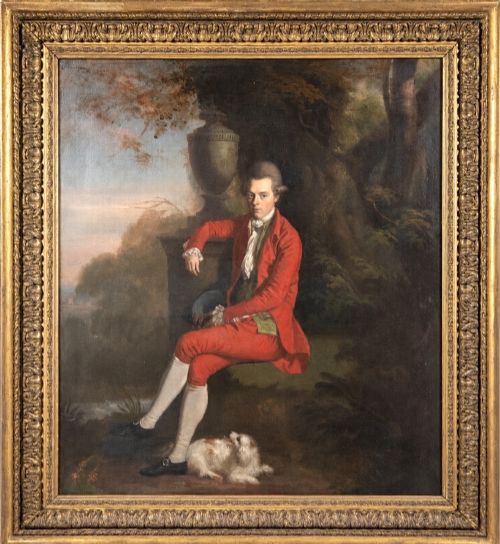
When you search for antique dog fine art, you encounter oil paintings and works on paper depicting hounds, terriers, and spaniels alongside their human companions. The selection spans portraits of named pets, working animals, and distinct breeds rendered by various regional schools. You will frequently meet Victorian and eighteenth-century canvases depicting these subjects in domestic or rural settings.
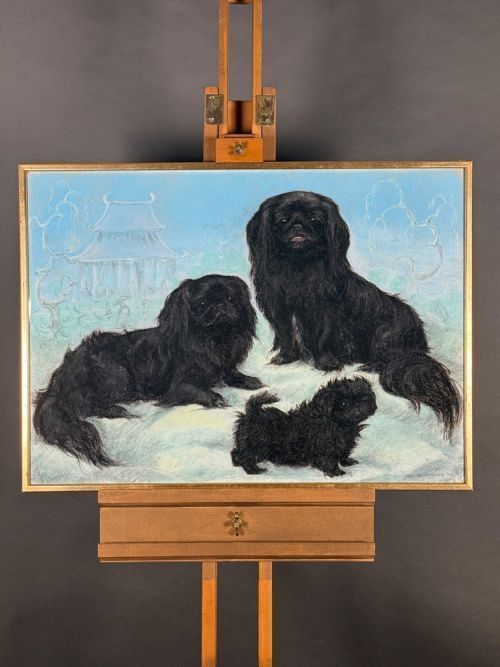
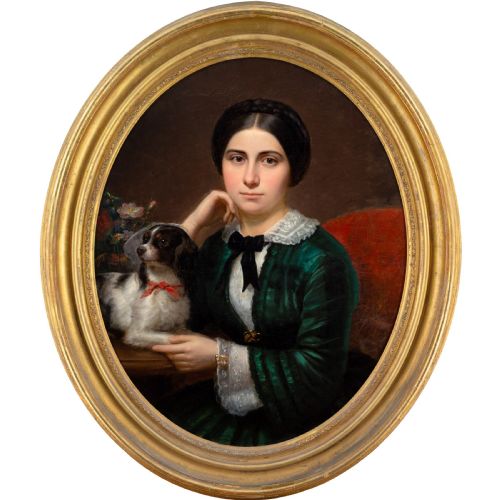
The works range from intimate studies of Pekingese or fox terriers to grander portraits featuring bloodhounds, bull terriers, and spaniels. Many pieces integrate the animal into a human portrait, recording the specific bond between owner and pet across the seventeenth, eighteenth, and nineteenth centuries. These depictions serve as historical records of favoured breeds and the artistic conventions of their respective eras.
How they were made
Makers utilised oil paint applied to canvas, often supported by wooden stretchers and housed in gilded wood frames. Artists built up these compositions using traditional brushwork, layering pigments to capture the texture of fur and the natural light of interiors or outdoor courtyards.
Certain works employ pastel on paper or exist as drypoint etchings, demonstrating alternative graphic techniques used to render animal subjects. The frames themselves frequently incorporate carved giltwood details that complement the period aesthetic of the central artwork.
Framing materials across the selection include gilded wood and giltwood alongside various wooden mouldings.
What varies in quality
The distinction between standard works and superior examples lies in the anatomical accuracy and expressive vitality of the animal depiction. Master painters capture the distinct personality and intelligent gaze of a terrier or bloodhound with assured brushwork, whereas lesser hands produce stiff or generic representations.
Compositional balance and the preservation of the original canvas and giltwood frame further separate ordinary pieces from exceptional finds. Works that retain their untouched surface texture and contemporary framing reflect higher standards of historical preservation.
Valentine Thomas Garland·John Horsburgh·Thomas Hicks·James Ward Ra·Herbert Dicksee
The Antique Dog Fine Art Glossary
- Oil on canvas
- Pigments mixed with a drying oil applied to a stretched woven fabric support. This method allowed artists to achieve rich colour depths and subtle tonal gradations in animal portraits.
- Giltwood
- Wood carved and coated with a thin layer of gold leaf or gilt paint. It is commonly found on the decorative frames enclosing period paintings.
- Drypoint etching
- A printmaking process where an artist scratches a design directly onto a metal plate with a sharp needle. This technique creates velvety lines used in fine canine prints.
- School
- A group of artists working in a particular region or sharing a similar stylistic approach during a specific period. Listings often reference French or Northern European schools.
Antique Dog Fine Art: Frequently Asked Questions
What periods do these dog paintings cover?
The works span from the seventeenth century through the Victorian era and into the early twentieth century. They reflect changing artistic styles across different European and British schools.
Earlier pieces often present formal portraiture, while nineteenth-century works lean towards romantic or realistic portrayals of specific breeds.
How were these artworks framed originally?
Many oil paintings are housed in gilded wood or giltwood frames characteristic of their period of creation. These frames often feature moulding or decorative carving that matches the aesthetic of the artwork.
Original frames contribute to the historical integrity of the piece, though some works have been reframed over the centuries.
Are all the dogs in these pieces identified by name?
Some pieces explicitly name the animal in the title, such as Mr Quiz or specific spaniels and terriers. Other works portray anonymous pets, working dogs, or companion animals belonging to sitters whose identities are lost or recorded.
Both named subjects and unrecorded animals offer insight into historical breeding and human-canine relationships.
What mediums are used besides oil paint?
While oil on canvas dominates the selection, you will also encounter pastels on paper and original drypoint etchings. Each medium offers a distinct texture and visual quality appropriate to the era of its creation.
Works on paper require different mounting and preservation considerations compared to stretched canvas.