



Vintage Dining Room Furniture
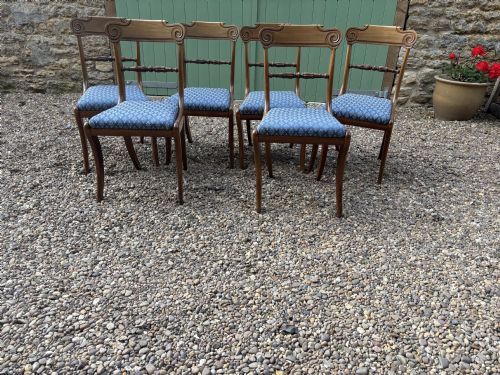
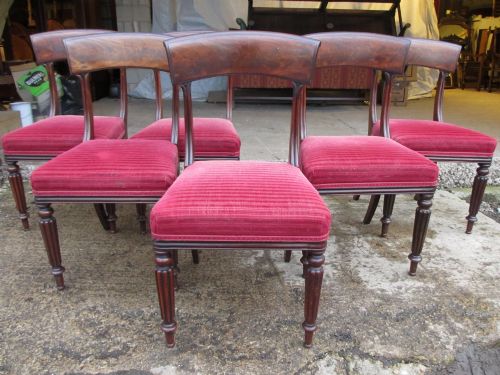
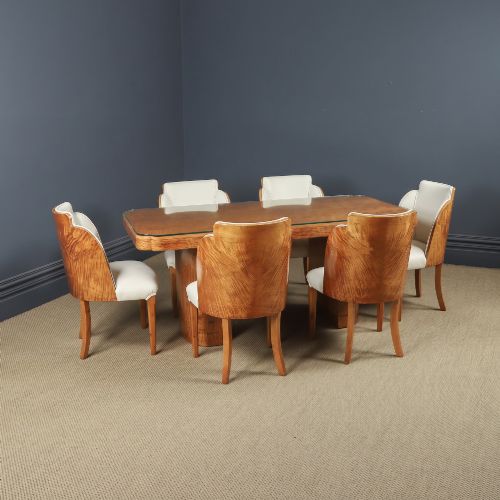
Vintage dining room furniture brings character to meals through timber pieces shaped by Edwardian, Art Deco and Georgian hands.
Vintage Dining Room Furniture
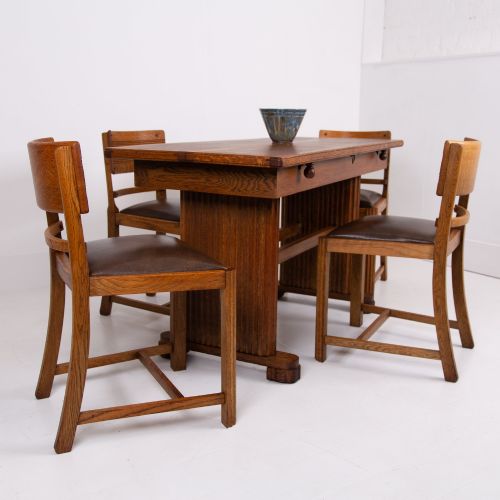
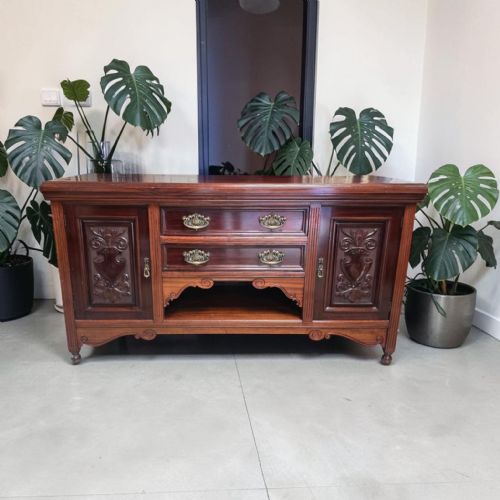
The selection ranges from complete dining suites including tables and leather-seated chairs to specialist serving pieces like cellarettes, dumbwaiters and chiffoniers. Pieces often reflect specific revivals, utilising Queen Anne, Sheraton and Chippendale design motifs on nineteenth and twentieth-century carcases.
What varies in quality
Quality rests upon the selection of timber figures, particularly the grain matching across burr walnut or mahogany veneer panels, and the crispness of hand-carved mouldings. Superior examples maintain structural integrity in their joints and drawer linings without relying on modern fasteners.
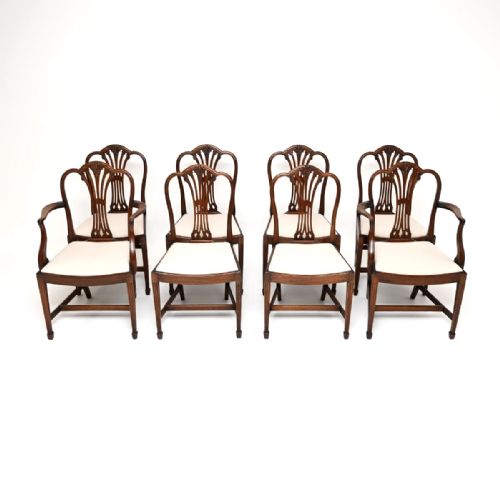
The scale and completeness of matching dining chair sets dictate the standing of a suite, alongside the integration of original hardware such as brass handles and working locks.
Vintage Dining Room Furniture Retail Price Guide 2026
Typical asking prices for vintage dining room furniture among the pieces listed under this phrase on Sellingantiques today, from the lower quarter to the upper quarter. They describe what is for sale here now, not the wider market.
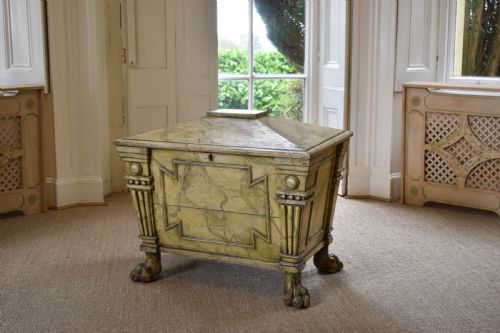
Cellarettes once kept the port secure from thirsty footmen.
Maple and Co·Edwards and Roberts·Hamptons of Pall Mall London·Harry and Lou Epstein
The Vintage Dining Room Furniture Glossary
- Cellarette
- A lockable container used for storing wine and spirits near the dining table, often shaped like a small sarcophagus or fitted with internal bottle dividers.
- Chiffonier
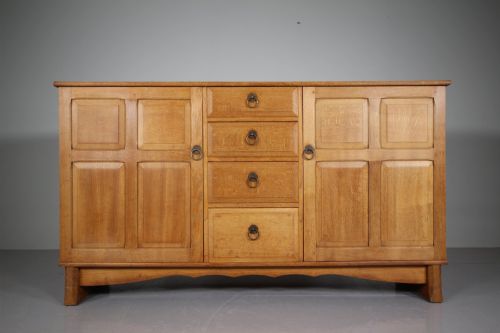
- A low sideboard or cabinet featuring shelves or enclosed cupboards, commonly developed in the nineteenth century for serving food and displaying silver.
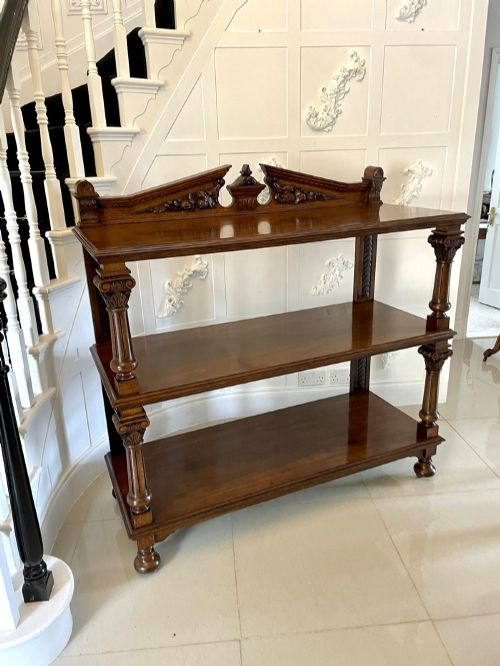
- Dumbwaiter
- A tiered serving stand fitted on a central pillar, designed to hold dishes and glasses beside a dining table without requiring servant attendance.
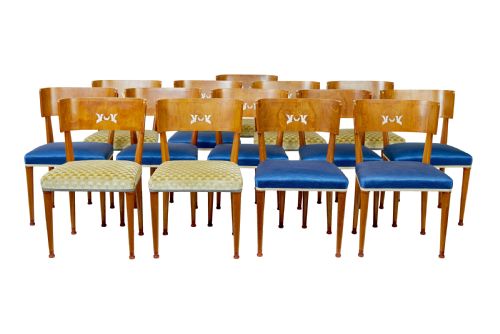
- Klismos
- An ancient Greek chair design revived during the twentieth-century Art Deco period, characterised by curved back rails and sabre legs.
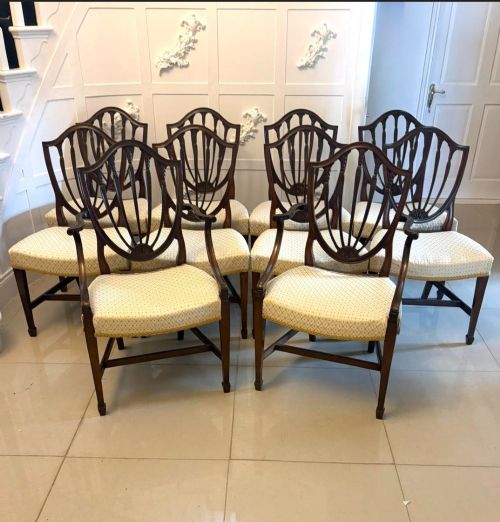
- Shield Back
- A chair back carved in the outline of a heraldic shield, popularised by eighteenth-century makers and repeated in later revival suites.
Vintage Dining Room Furniture: Frequently Asked Questions
How do I match chairs to a table?
Look for shared timber tones, such as matching mahogany or oak finishes, and complementary leg styles between the seating and the dining table. Period revivals often pair well together if the proportions align.
Consider the seat height and apron clearance to ensure chairs slide comfortably beneath the table leaves during meals.
What is a Welsh dresser used for?
A Welsh dresser combines lower storage cupboards or drawers with open upper display shelving, traditionally utilised for organising tableware and serving dishes in the dining room.
The shelves showcase decorative ceramics and glassware while the base conceals linens and larger dining accessories.
How do I clean antique wood surfaces?
Dust timber regularly with a dry, soft cloth and feed the wood periodically with traditional beeswax to maintain the natural lustre of the finish without stripping the polish.
Avoid placing dining furniture near direct heat sources or strong sunlight, which can dry out veneers and cause timber to split.
How do I identify an Art Deco sideboard?
Art Deco sideboards display geometric symmetry, stepped pediments, and bold curved fronts veneered in burr walnut, elm or satinwood. Hardware is often minimal or styled in chrome and brass.
These pieces typically date from the nineteen-twenties and nineteen-thirties, reflecting the streamlined aesthetics of the period.