

Vintage Dining Room Buffet
A vintage dining room buffet provides essential storage and surface space while anchoring a room with traditional timber construction.
Vintage Dining Room Buffet
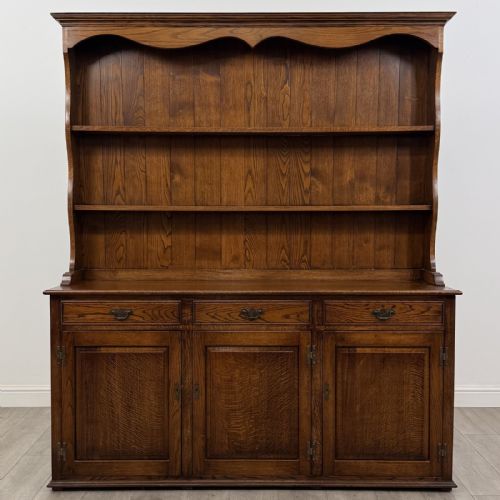
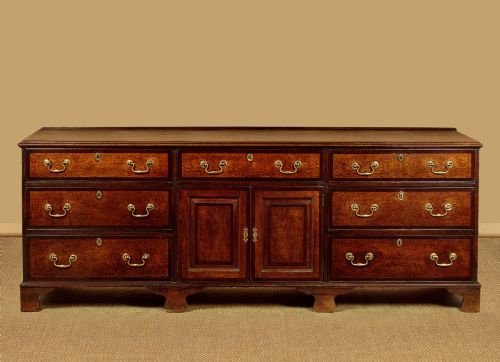
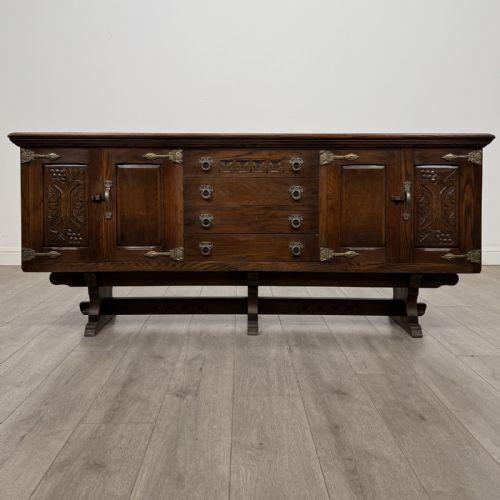
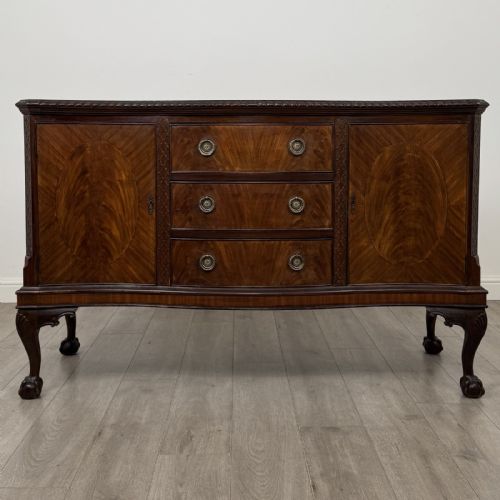
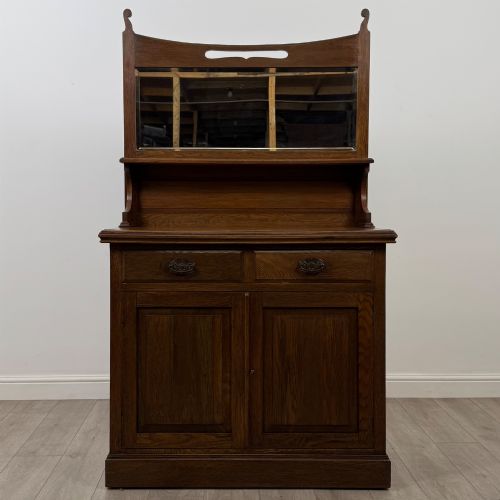
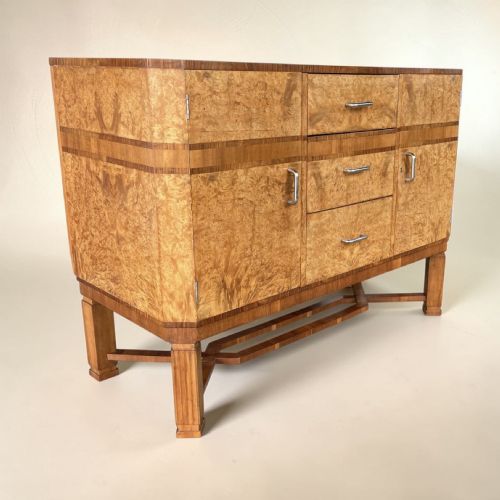
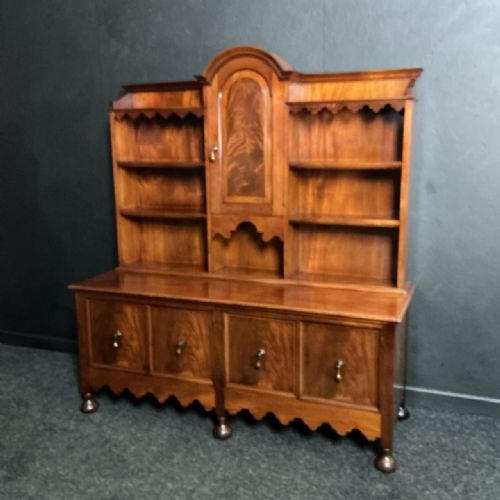
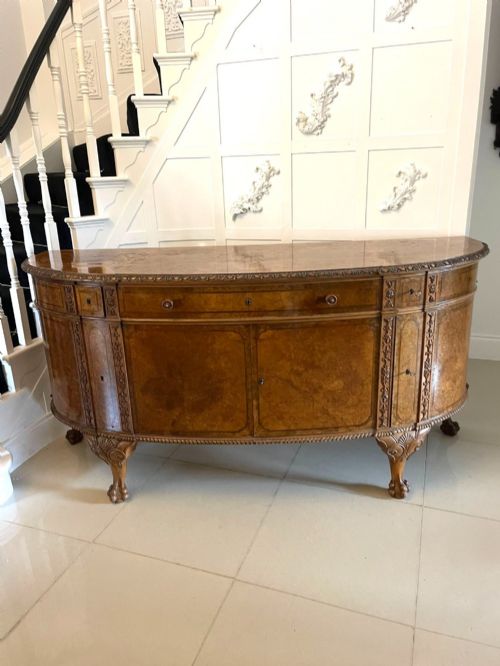
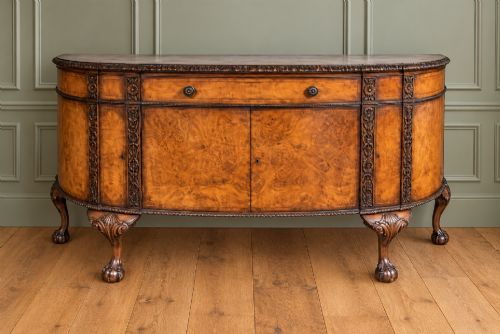
A vintage dining room buffet encompasses a wide variety of large serving and storage furniture, appearing frequently on this page as sideboards, cupboards, and chiffoniers. These pieces originate from multiple eras, including Edwardian workshops, Victorian households, and the Art Deco period.
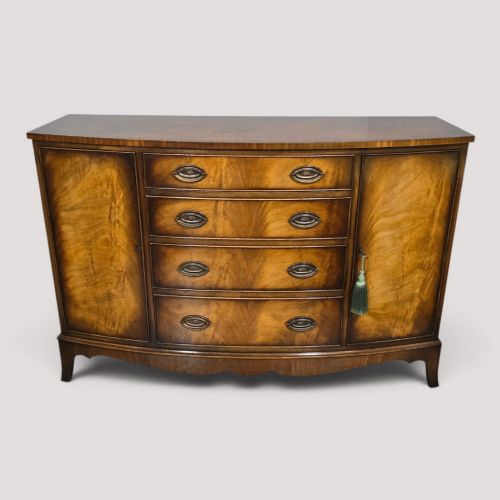
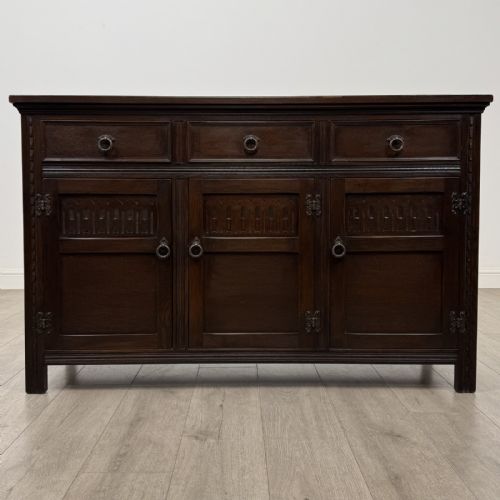
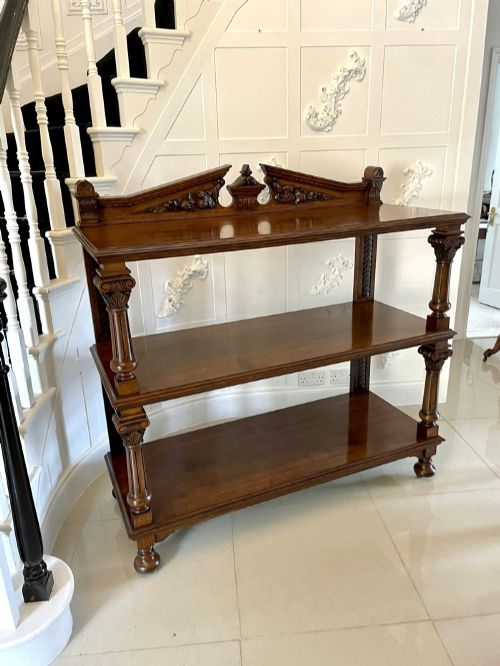
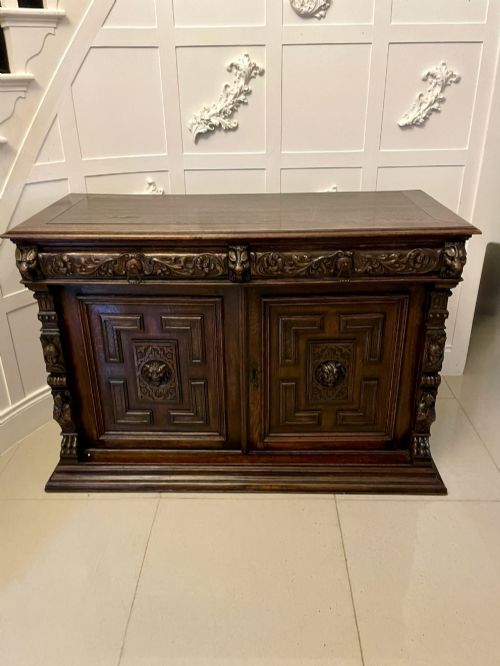
Buyers encounter numerous forms built for dining spaces, ranging from bow-fronted mahogany servers to heavily carved oak court cupboards and dumbwaiters. Many examples adopt stylistic revivals referencing Georgian, Regency, and Jacobean designs.
The selection ranges from straightforward golden oak storage units to elaborate Edwardian inlaid pieces featuring satinwood detailing and flame mahogany veneers. Each object reflects the prevailing domestic requirements for serving food and storing tableware during its respective era.
Materials and Construction
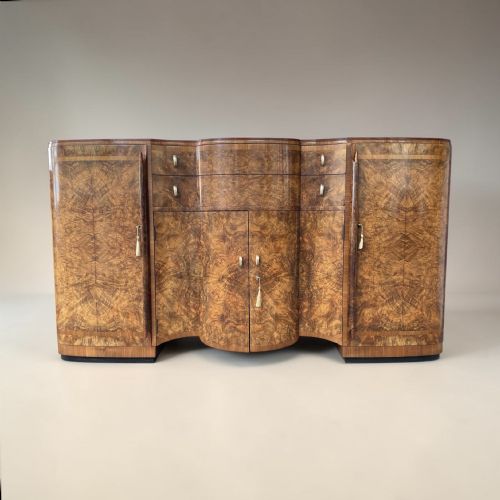
Makers constructed these pieces primarily using solid hardwoods such as mahogany and oak, often applying burr walnut and figural veneers to primary display surfaces. Workshops utilised brass for handles and hardware, alongside glass doors in specific cabinet formats.
Joinery techniques combined solid timber framing with hand-cut dovetails for drawers and framed panels for doors. Craftsmen incorporated decorative elements including satinwood inlay, barley-twist supports, and carved relief details directly into the timber structure.
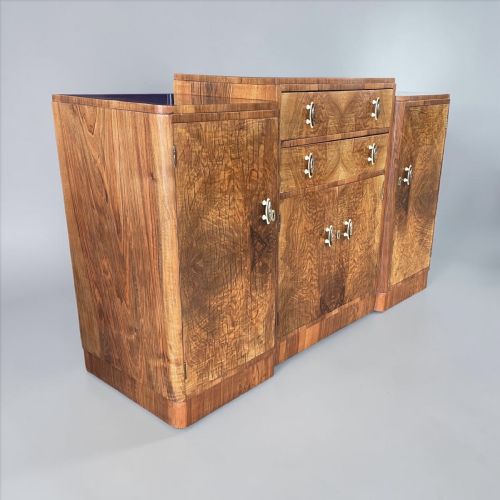
Listings feature oak, mahogany, and burr walnut as the dominant timber materials across Edwardian and 1930s forms.
Distinctions in Standard
Quality separates pieces through the selection of timber figures, such as matched flame mahogany or burr walnut veneers, compared against plain or secondary woods. Superior examples display precise inlay work, balanced proportions, and substantial brass hardware.
Construction methods also define the tier of a piece, distinguishing items built with solid secondary woods and tight joinery from simpler production furniture. Carved details executed with crisp, deep relief indicate higher workshop competency than shallow, mechanical milling.
Maurice Adams·Epstein·M. D. Miller & Sons
The Vintage Dining Room Buffet Glossary
- Bow Front
- A convex curved front contour popular on late eighteenth-century and Edwardian sideboards. This shape softens the profile of large dining room furniture.
- Chiffonier
- A compact sideboard or low cupboard featuring shelving and drawers. Victorian dining rooms utilised these for storing silver and linen.
- Dumbwaiter
- A tiered serving stand or small sideboard designed to hold dishes without needing servants present. These pieces utilise circular shelves or revolving trays.
- Inlay
- A technique where contrasting woods or metals are inserted into recessed portions of a base timber. Sheraton revival pieces frequently use satinwood inlay for geometric or floral patterns.
- Court Cupboard
- An enclosed heavy wooden storage piece with an upper and lower section. Jacobean and 19th century revival versions display deep geometric carving.
Vintage Dining Room Buffet: Frequently Asked Questions
What is a vintage dining room buffet used for?
These pieces serve as practical storage cabinets for dining room essentials like cutlery, table linens, and serving dishes.
The wide top surface also functions as a convenient station for serving food and displaying decorative objects during meals.
How do I identify an Edwardian buffet?
Edwardian buffets frequently feature lighter mahogany timbers, satinwood inlay, and delicate proportions inspired by earlier Georgian designs.
They also appear in golden oak variants, sometimes incorporating Edwardian Art Nouveau carved motifs on the cabinet doors.
What is the difference between a buffet and a sideboard?
While the terms often overlap, traditional buffets were specifically designed for holding and serving food within dining spaces.
Sideboards generally offer more extensive storage compartments, cupboards, and drawers for tableware rather than just serving space.
How do I care for a mahogany buffet?
Keep wooden surfaces away from direct sunlight and heat sources to prevent the timber and veneer from drying out.
Apply a traditional beeswax polish occasionally to nourish the grain and maintain the natural lustre of the mahogany.