

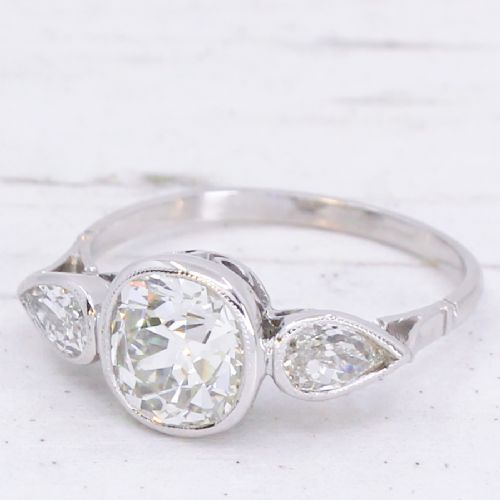
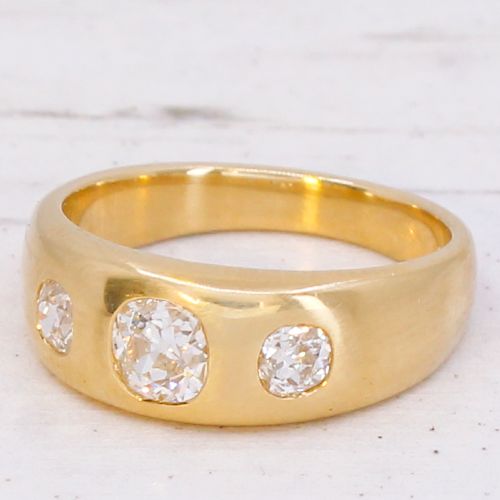
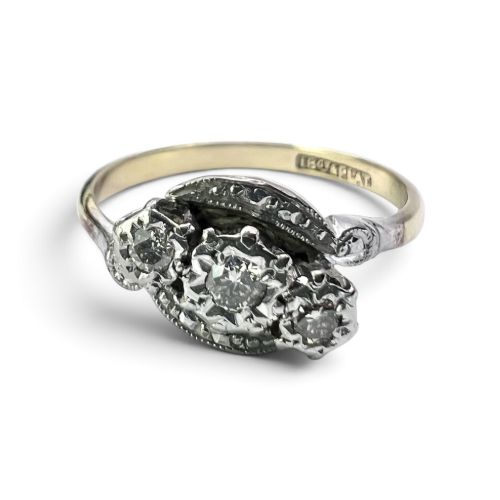
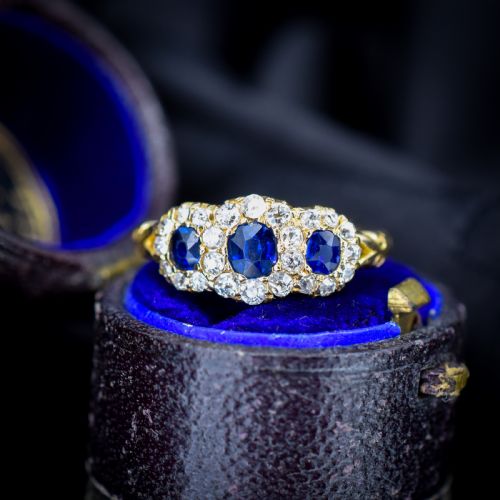
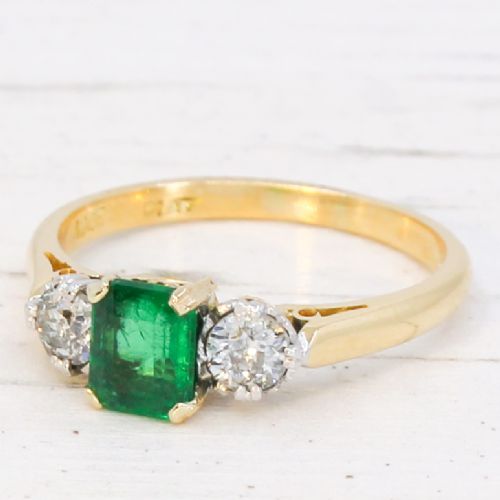
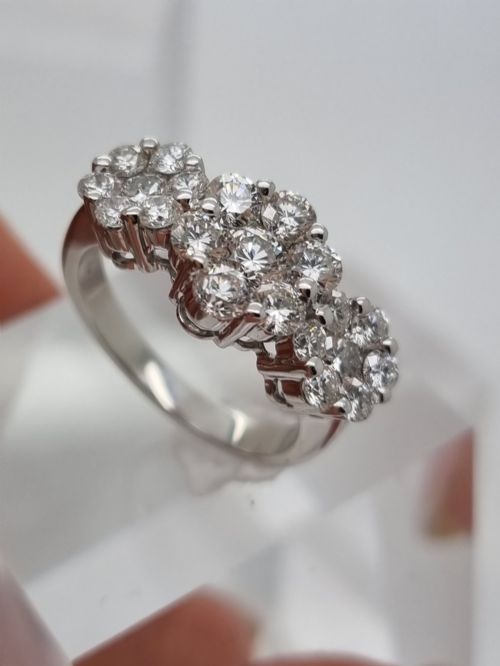
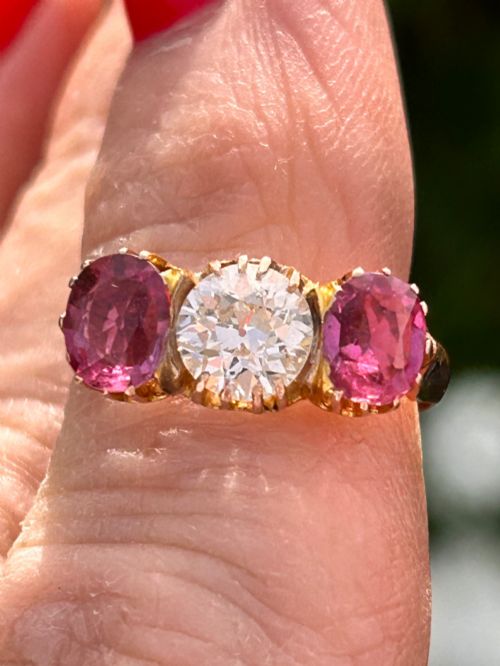
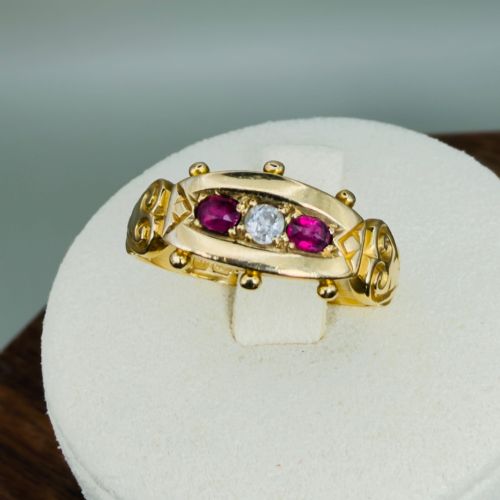
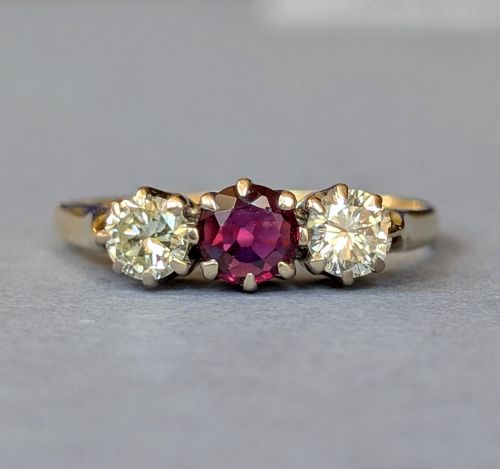
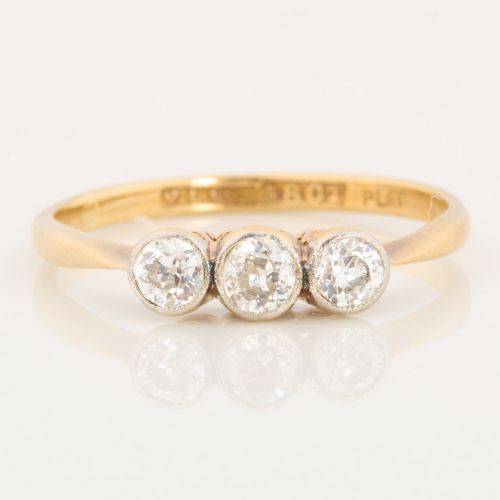
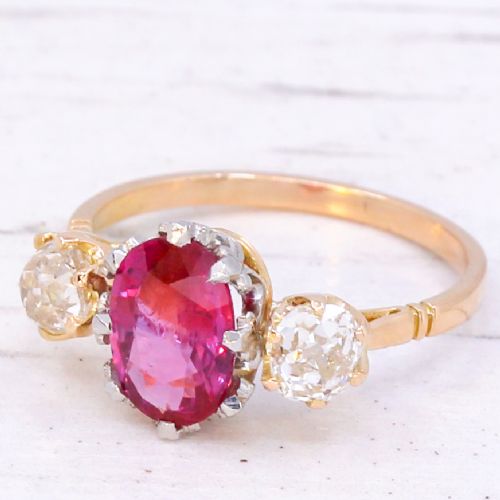
Vintage Diamond Trilogy Ring
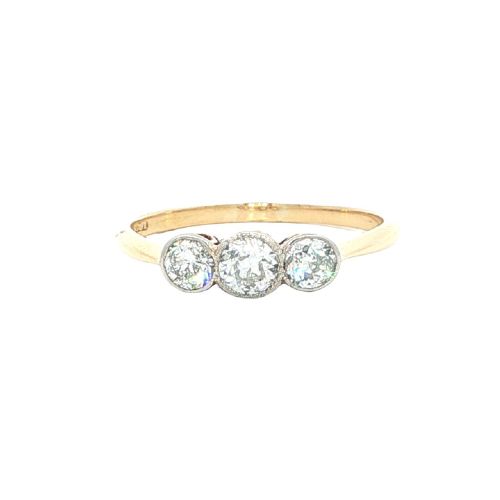
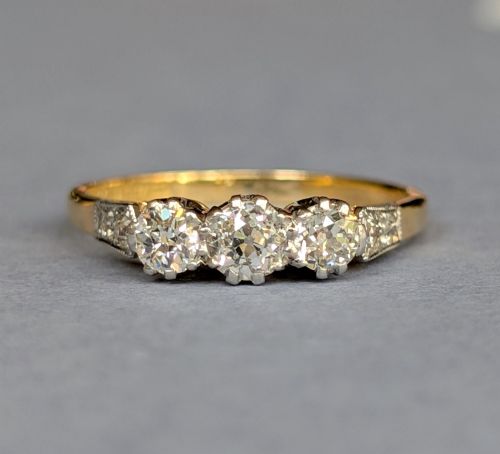
A vintage diamond trilogy ring brings together three stones representing the past, present and future in a classic design.
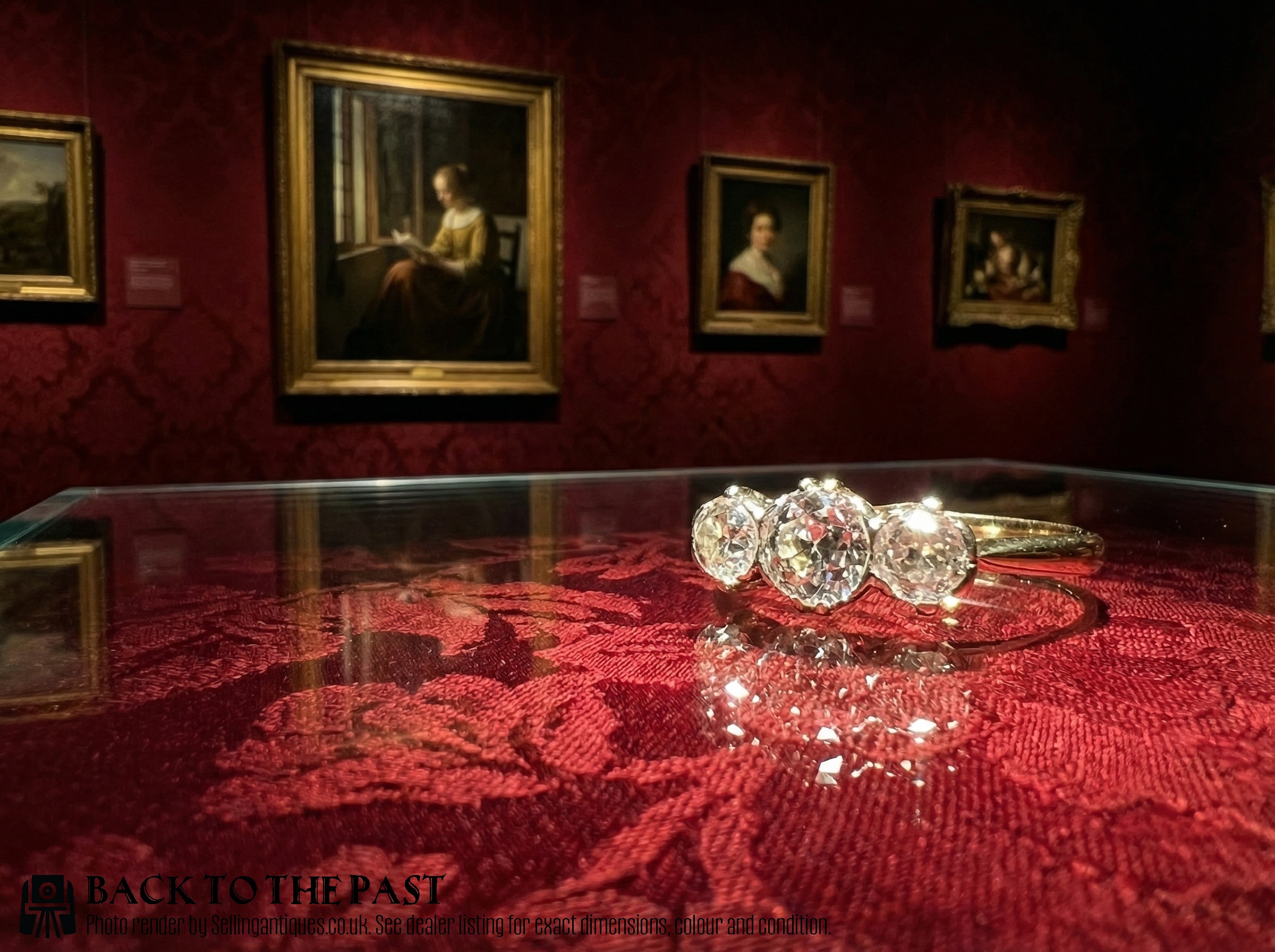
Vintage Diamond Trilogy Ring
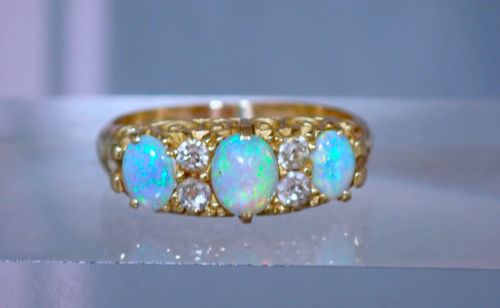
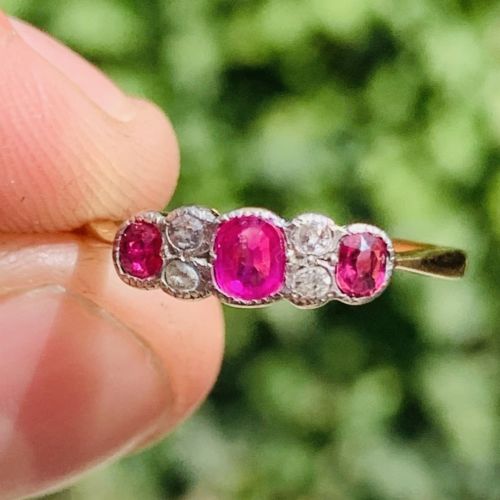
The most frequent configuration pairs central diamonds with side stones or introduces coloured gemstones such as natural opals and Burmese rubies into the three-stone layout. These rings span platinum and 18ct yellow gold constructions, reflecting the shifts in taste from nineteenth-century warmth to the geometric precision of the 1920s and 1930s.
Surviving pieces range from delicate Edwardian mountings to robust mid-century bands, providing options for everyday wear or engagement use. The form adapts across decades while retaining the fundamental three-stone arrangement that defines the category.
Materials and construction
Goldsmiths constructed these rings primarily using 18ct yellow gold, white gold and platinum, often combining gold shanks with platinum settings to secure the stones safely. Platinum gained particular favour during the Art Deco period for its strength and bright finish, which allowed for delicate claw and bezel arrangements.
Gemstones were cut by hand in earlier periods, resulting in old European, old cushion and old mine cuts that display broader facets and softer light reflection than modern brilliant cuts. Settings utilise claw, gypsy and cluster techniques depending on the era, attaching stones securely to the metal foundations.
Vintage Diamond Trilogy Ring Retail Price Guide 2026
Typical asking prices for vintage diamond trilogy ring among the pieces listed under this phrase on Sellingantiques today, from the lower quarter to the upper quarter. They describe what is for sale here now, not the wider market.
Listings feature platinum and 18ct gold spanning the Victorian era through the 1960s, paired with diamonds, rubies, sapphires and opals.
Factors of distinction
Quality in these rings rests on the matching and proportion of the three principal stones, where uniform colour and complementary carat weights create a balanced silhouette. Finer examples display master gemstone selection alongside precise metalwork that shows minimal wear on the prongs and gallery.
The integrity of the original settings and the clarity of hallmarks add considerable merit, distinguishing workshop pieces that retain their structural form from those altered over time. The presence of untreated coloured gemstones alongside original old cut diamonds elevates the distinction of any specimen.
The Vintage Diamond Trilogy Ring Glossary
- Trilogy ring
- A ring featuring three main stones set in a horizontal row, commonly symbolising the past, present and future.
- Old cut diamond
- A diamond shaped by hand before modern machinery, characteried by a smaller table and a higher crown that produce a softer, warmer glow.
- Art Deco
- A design style spanning the 1920s and 1930s defined by geometric lines, symmetry and the frequent use of platinum alongside diamonds and coloured gems.
- Gypsy ring
- A style where stones are flush-set directly into the thick band of the ring rather than held in raised claws.
- Transition cut
- A diamond cut used roughly between 1910 and 1930 that bridges the older hand-cut styles and the modern brilliant cut.
Vintage Diamond Trilogy Ring: Frequently Asked Questions
What does a trilogy ring symbolise?
A trilogy ring carries a traditional meaning of past, present and future, making the three-stone configuration a popular choice for engagements and anniversaries.
This symbolism guided design choices across the Victorian and Edwardian periods, where the central stone was frequently flanked by two matching side gems.
How do I identify an Edwardian trilogy ring?
Edwardian rings typically feature delicate platinum-topped yellow gold work, lacy openwork galleries and hand-cut diamonds shaped before standard machinery.
Makers of this era focused on lightness and grace, often incorporating natural pearls, sapphires or emeralds alongside the central diamonds.
Are these rings suitable for daily wear?
Platinum and 18ct gold mountings provide the durability required for everyday use, provided the settings are checked regularly by a professional.
Care should be taken with softer side stones such as opals, which require gentler treatment than diamonds or sapphires during routine wear.
What is the difference between old cut and modern diamonds?
Old cut diamonds were shaped by hand, resulting in smaller tables, open culets and broader facets that catch candlelight and softer indoor lighting differently than modern stones.
These historic cuts display a distinct visual depth that defines the character of antique and vintage jewellery.