




Marquise Shape Diamond Ring
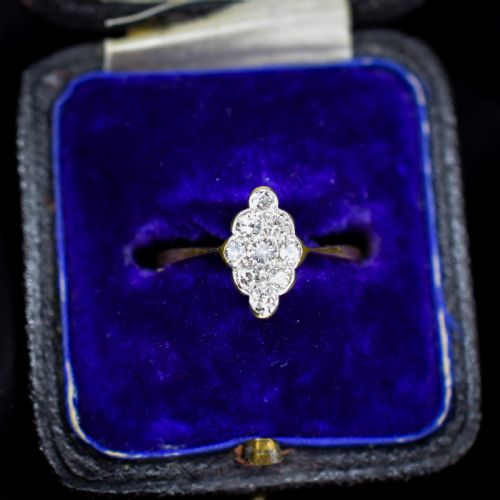
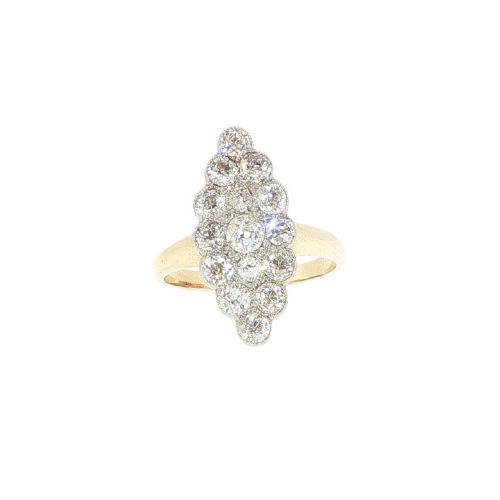
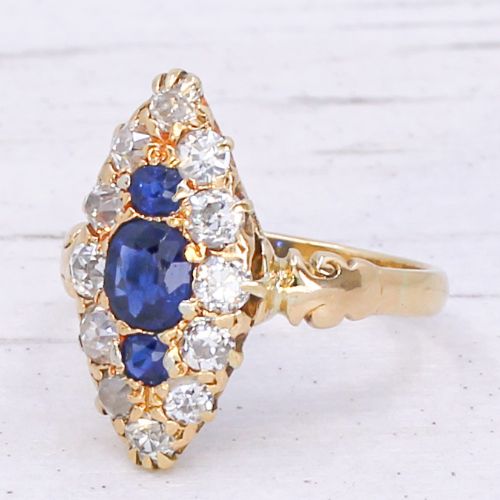
A marquise shape diamond ring brings a sharp, pointed silhouette and substantial finger coverage, drawing eyes with its distinctive boat-like geometry.
Marquise Shape Diamond Ring
When you search for a marquise shape diamond ring, you encounter elongated cluster rings that stretch along the finger. The evidence shows these pieces appearing as navette designs, boat shapes, and multi-stone clusters.
The versions you meet most frequently on this page date from the Victorian, Edwardian, and Art Deco periods. These rings combine pointed geometry with intricate stone settings to create maximum visual presence.
Makers shaped these jewels using combinations of diamond, sapphire, ruby, and pearl set into platinum and gold. The overarching style prioritises length and symmetry on the hand.
How they were made
Goldsmiths constructed these mounts predominantly in 18ct yellow gold, 18ct white gold, and platinum. Platinum gained favour during the Edwardian and Art Deco eras for its strength in holding delicate millgrained edges.
Jewellers utilised old cut diamonds alongside rubies, sapphires, and pearls to fill the elongated navette and cluster frameworks. Hallmarks and assay office marks, such as those from Birmingham and Chester, record the British origins of these pieces.
Marquise Shape Diamond Ring Retail Price Guide 2026
Typical asking prices for marquise shape diamond ring among the pieces listed under this phrase on Sellingantiques today, from the lower quarter to the upper quarter. They describe what is for sale here now, not the wider market.
Listings span the Victorian, Edwardian, and Art Deco periods, utilising diamond, sapphire, ruby, pearl, platinum, and gold.
What varies in quality
The distinction between tiers rests in the harmony of proportions and the precision of the cluster arrangement. Finer examples maintain a crisp, symmetrical taper from centre to points without crowding the stones.
The integration of the metalwork with the gemstones dictates the overall refinement. Superior pieces display meticulous stone matching and secure claw or rubover settings that enhance the elongated outline.
The Marquise Shape Diamond Ring Glossary
- Navette
- A boat-shaped or eye-shaped design that tapers to points at both ends. This French term describes the elongated silhouette typical of many rings in this selection.
- Old cut diamond
- A hand-faceted diamond shape from earlier eras featuring a smaller table and a higher crown. These stones display broader facets that catch candlelight differently than modern brilliant cuts.
- Cluster ring
- A ring design featuring a central stone surrounded by a border of smaller gems. In these pieces, the cluster follows an elongated path rather than a simple circle.
- Millgrain
- A decorative border of tiny raised metal beads along the edge of a setting. This technique was widely employed during the Edwardian and Art Deco periods to soften metal lines.
- Rubover setting
- A mounting style where a thin wall of metal folds over the rim of the gemstone to hold it securely. This technique creates a smooth, continuous outline around the stone.
Marquise Shape Diamond Ring: Frequently Asked Questions
How do I date an antique ring?
Dating relies on hallmarks, metal choices, and stone cutting styles recorded in the piece. Platinum mounts and geometric layouts often point toward the Edwardian and Art Deco eras.
Earlier Victorian pieces frequently employ yellow gold and old cut stones arranged in distinct cluster formations. Comparing these physical traits against documented hallmarks secures the timeline.
Are these rings suitable for daily wear?
These rings tolerate everyday use provided the settings receive routine inspection by a jeweller. The pointed ends of navette designs require care to avoid accidental knocks against hard surfaces.
Sturdy platinum and 18ct gold mounts offer durability for regular rotation on the hand. Pairing the ring thoughtfully with other bands prevents undue friction on the outer edges.
What is an old cut diamond?
An old cut diamond is a historical gemstone faceted by hand rather than by modern machinery. These stones possess smaller tables, thicker girdles, and deeper pavilions.
Their distinctive facet arrangement produces softer light return under ambient conditions. They form a defining feature of the Victorian and Edwardian pieces found here.