


Edwardian Diamond Navette Ring
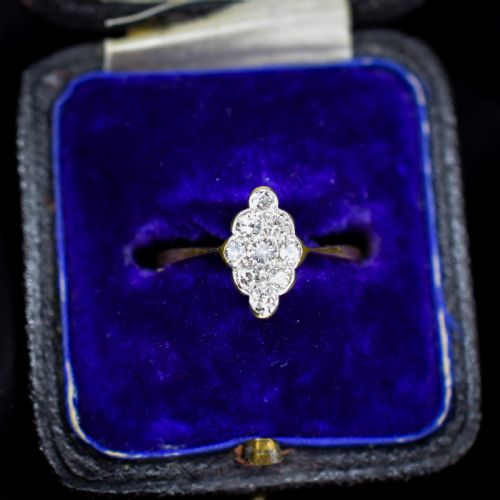
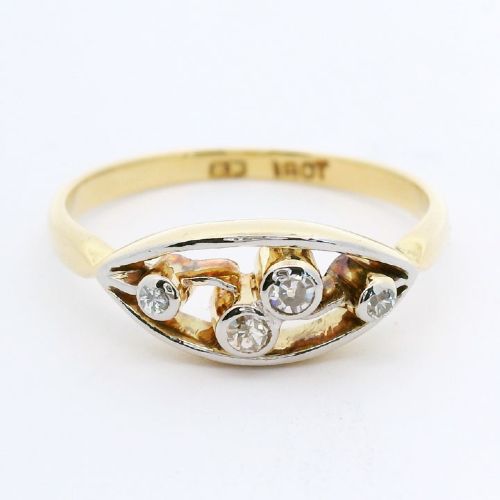
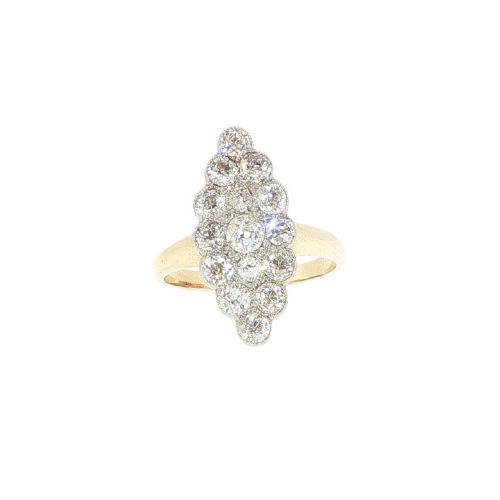
An edwardian diamond navette ring offers a distinctive elongated boat shape that flatters the hand with glittering old cut stones.
Edwardian Diamond Navette Ring
When you hunt for an edwardian diamond navette ring, you are looking at elongated cluster jewels designed to sit lengthwise along the finger. The evidence shows these pieces span periods from Victorian eras through Art Deco, though the classic Edwardian examples dominate.
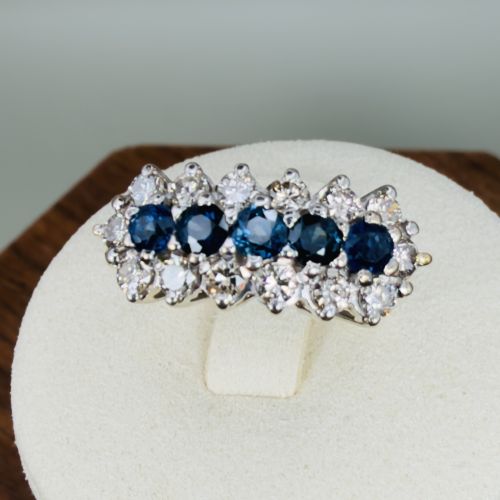
Most pieces combine sparkling diamonds with coloured gems such as sapphires, emeralds, rubies, or natural pearls. They appear primarily in combinations of 18ct yellow gold, white gold, and platinum.
How they were made
Craftsmen built these jewels using a combination of 18ct gold and platinum, often pairing yellow gold shanks with platinum topped settings to showcase the stones against a white metal. Stones are typically old mine, rose cut, or old cut diamonds, secured alongside calibrated emeralds, sapphires, and rubies.
The distinct marquise or boat silhouette relies on precision cluster work, arranging smaller gems in tiered rows around a central focal stone to create a large visual impact.
Several pieces hail from French workshops, proving that early twentieth-century jewellers across the Channel loved a dramatic pointed silhouette just as much.
What varies in quality
The distinction between average and exceptional pieces lies in the crispness of the pierced metalwork and the uniformity of the stone settings. Superior examples display harmonious proportions across the elongated navette face without crowding the smaller diamonds.
Another factor is the integration of platinum with gold, where finer workmanship achieves seamless transitions between the two metals while maintaining structural integrity in the delicate gallery.
The Edwardian Diamond Navette Ring Glossary
- Navette
- A French term meaning little boat, describing the pointed, elongated oval shape of the ring head. This silhouette is also frequently called a marquise.
- Old cut
- A vintage diamond cutting style characterised by a small table, high crown, and large culet, designed to catch candlelight. These stones display softer, broader flashes than modern brilliant cuts.
- Rose cut
- A flat-bottomed stone with a domed, faceted top that resembles an unopened rosebud. It imparts a subtle, translucent glow rather than fiery brilliance.
- Cluster ring
- A design featuring a central stone surrounded by a border of smaller gems. This configuration maximises visual presence and sparkle.
Edwardian Diamond Navette Ring: Frequently Asked Questions
How do I wear a navette ring daily?
Because these rings stretch along the finger, check that the elongated ends sit comfortably against adjacent fingers without pinching.
Pair them carefully with stacking bands, as the pointed tips can rub against straight-edged wedding rings.
Are these rings genuinely Edwardian?
The authentic pieces date primarily from the early 1900s, aligning with the Edwardian era and stretching into the 1920s Art Deco period.
Look for period-appropriate old cut diamonds and hand-finished platinum-on-gold construction to confirm the timeline.
What gems appear besides diamonds?
Many designs incorporate rich coloured stones including emeralds, sapphires, rubies, and natural pearls set directly into the navette cluster.
These coloured gems often frame the central diamonds or form contrasting geometric patterns across the face.
How do I clean an antique navette ring?
Use warm soapy water and a soft brush to gently clear away dust trapped beneath the closed-back or open gallery settings.
Avoid harsh ultrasonic cleaners that can loosen old cut stones or damage softer gems like pearls and emeralds.