






Platinum Top Diamond Ring
A platinum top diamond ring brings together a bright white metal setting and yellow gold shank, offering a striking contrast for everyday wear.
Platinum Top Diamond Ring
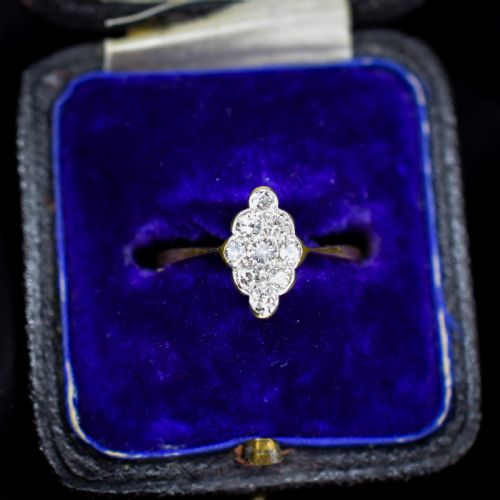
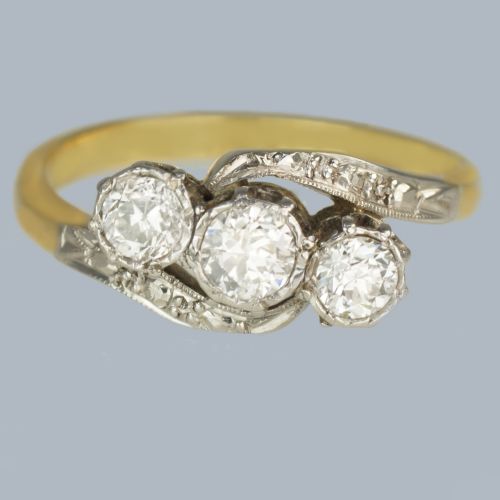
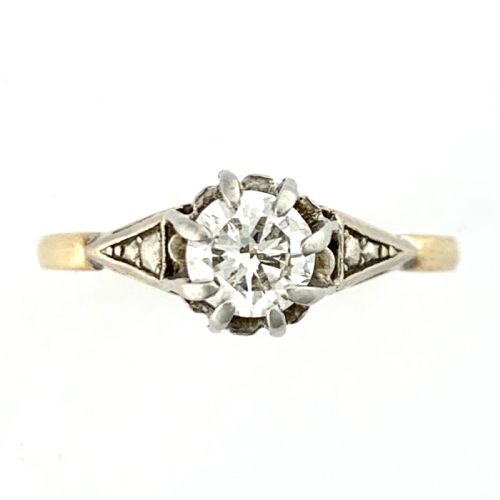
A platinum top diamond ring pairs a precious white metal setting with gold, a traditional combination designed to showcase stones to their best advantage. When you search for a platinum top diamond ring, you encounter cluster, navette, solitaire, and panel forms set with old cut diamonds.
The pieces appearing on this page span the Edwardian, Art Deco, and Retro styles, running through the 1910s, 1920s, 1930s, and into the mid-twentieth century. Edwardian flower and daisy clusters sit alongside geometric Art Deco designs and later twist rings.
Most examples combine a platinum setting directly on top of an 18ct gold or 18ct yellow gold band. This construction allowed makers to utilise the strength and brilliant white colour of platinum for the stone mounts while retaining the warmth of gold for the hoop.
How they were made
Jewellers built these rings using platinum for the upper sections to hold the diamonds securely with fine, crisp metalwork. This upper platinum plate was fused or joined to an 18ct gold or yellow gold shank.
Stones within these mounts are predominantly old cut diamonds, shaped by hand to create deep facets that catch candlelight and low illumination. In certain examples, yellow sapphires or gold accents complement the central diamond work.
Listings span periods from the 19th century through the Edwardian, Art Deco, and Retro eras, executed in platinum, diamond, and 18ct yellow gold.
What varies in quality
Quality rests in the crispness of the platinum top and the precision with which the stones are set into the metal. Finer examples display delicate pierced work and tight claw or bezel settings that hold the diamonds firmly without excess metal.
The proportion between the platinum top and the supporting gold band dictates the visual balance of the piece. Superior rings maintain a seamless transition from the bright white upper section to the warm gold of the shank.
The Platinum Top Diamond Ring Glossary
- Platinum top
- A construction method where the visible face of the ring housing the diamonds is made from platinum, backed or joined to a gold shank. This technique maximised the white brilliance around the stones while using gold for the hoop.
- Old cut diamond
- A hand-faceted diamond cut before modern machinery standardised proportions, typically featuring a smaller table and higher crown. These stones produce distinct broad flashes of light.
- Cluster ring
- A ring design featuring a central stone surrounded by a border of smaller diamonds or coloured gems. The arrangement creates a larger visual presence on the finger.
- Navette
- A boat-shaped ring setting that is elongated along the finger, popular in Edwardian and Art Deco jewellery. This profile provides generous coverage with multiple stones.
- Trilogy ring
- A three-stone ring traditionally symbolising the past, present, and future. The stones are typically graduated in size or set in a graceful twist.
Platinum Top Diamond Ring: Frequently Asked Questions
How do I care for a platinum top diamond ring?
Clean the ring gently using warm soapy water and a soft brush to remove everyday oils from beneath the stones. Avoid harsh chemicals that might affect the gold shank.
Have the setting checked periodically by a jeweller to ensure the platinum claws holding the diamonds remain secure and tight.
Can a platinum top diamond ring be resized?
Most rings featuring a combination of platinum and 18ct gold can be altered by a skilled jeweller. The work is typically done at the back of the gold shank to protect the top setting.
Consult a specialist who understands antique construction methods to ensure the proportions and hallmarks remain undisturbed.
What periods do these rings come from?
The pieces available span the late nineteenth century through the Edwardian era, the 1920s Art Deco period, and into the 1940s and 1950s. Edwardian examples often feature garland and floral motifs.
Later pieces move towards geometric cluster panels and streamlined solitaire or twist forms.
Why did makers use platinum on top of gold?
Platinum offered a bright white surface that did not tarnish and made diamonds appear whiter and more brilliant. Pairing it with a gold shank provided structural warmth and traditional weight.
This method also represented an efficient use of precious metal during periods when platinum was valued for its strength in delicate settings.