
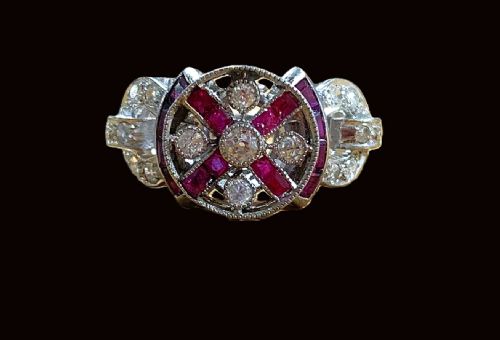


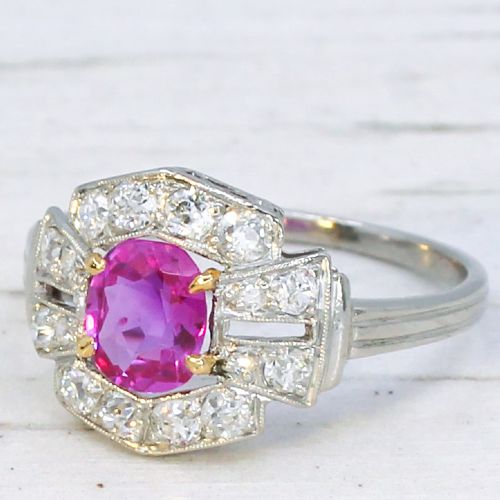


Geometric Diamond Cluster Ring
These geometric diamond cluster ring examples combine sharp lines with brilliant stones, offering a distinctive period look that suits daily wear.
Geometric Diamond Cluster Ring
A geometric diamond cluster ring brings together precise shapes and central stones to create a striking finger profile. These pieces draw on Edwardian foundations and Art Deco aesthetics, featuring angular settings that make the most of each stone.
You will most frequently meet 1930 examples on this page, alongside mid-century interpretations and earlier Edwardian pieces. They span designs built around central diamonds, sometimes accented with sapphire or onyx.
The form relies on balanced layouts where smaller melee diamonds frame a larger focal point. Makers arranged these stones into sharp rectangles, floral arrangements or elongated marquise outlines.
How They Were Made
These rings utilise platinum, 18ct gold and 18ct white gold as foundational metals. Platinum provides the strength needed for delicate claw and bezel settings, while gold forms the warm shanks.
Goldsmiths set old cut diamonds, marquise diamonds and cabochon sapphires into intricate geometric arrangements. Contrast comes from pairing bright white diamonds with dark onyx or rich blue sapphire.
Geometric Diamond Cluster Ring Retail Price Guide 2026
Typical asking prices for geometric diamond cluster ring among the pieces listed under this phrase on Sellingantiques today, from the lower quarter to the upper quarter. They describe what is for sale here now, not the wider market.
Current listings span the Edwardian era through to nineteen fifty, featuring platinum and gold alongside diamond, sapphire and onyx.
What Varies in Quality
The distinction between tiers rests on the precision of the metalwork and the integration of contrasting materials. Better examples show seamless transitions between the platinum or gold structure and the stones.
Stone selection dictates the upper range, particularly where larger carat weights and old cut diamonds meet disciplined geometric layouts. The inclusion of decorative elements like onyx or sapphire requires exacting stone-cutting to maintain the rigid lines.
The Geometric Diamond Cluster Ring Glossary
- Art Deco
- A design style characterised by sleek geometric shapes, streamlined forms and bold lines. It dominated decorative arts through the nineteen-twenties and nineteen-thirties.
- Cluster ring
- A ring design featuring a central stone surrounded by a group of smaller stones. This arrangement maximises visual impact and light return.
- Old cut
- A diamond cutting style preceding modern brilliant cuts, featuring a smaller table, higher crown and open culet. These stones display a softer, blocky sparkle under candlelight.
- Cabochon
- A gemstone shaped and polished with a smooth, rounded surface rather than faceted. This technique is often used for sapphires to display depth and colour.
- Marquise
- A boat-shaped gemstone cut with pointed ends and curved sides. It creates an elongated silhouette on the finger.
Geometric Diamond Cluster Ring: Frequently Asked Questions
How do I clean my ring?
Use warm soapy water and a soft brush to remove everyday oils from beneath the settings. Avoid harsh chemicals that might harm softer accent stones like onyx.
Dry the piece thoroughly with a lint-free cloth before storing it safely in a dedicated box.
Can these rings be resized?
Most precious metal shanks allow for traditional resizing by a skilled jeweller. The geometric shoulders require careful handling to preserve symmetry.
Consult a specialist who understands period settings before attempting any structural alterations.
Are these pieces suitable for daily wear?
Platinum and gold settings provide the durability needed for regular use. Regular checks ensure the tiny claw and bezel settings hold each diamond securely.
Removing the jewellery during heavy manual tasks protects the intricate geometric angles from impact.
What defines Art Deco style?
Symmetric patterns, sharp angles and strong architectural influences define this period. Jewellers prioritized bold visual impact over organic curves.
Contrasting materials like white platinum and black onyx emphasise these rigid geometric lines.