


Platinum Gold Trilogy Ring
A platinum gold trilogy ring unites three stones in a shared mounting of precious metals, embodying a classic design language prized for centuries.
Platinum Gold Trilogy Ring
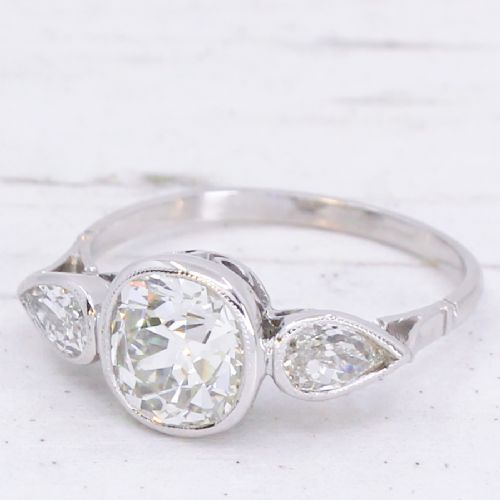
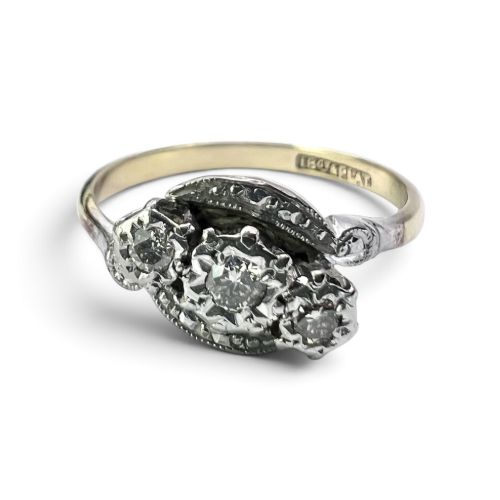
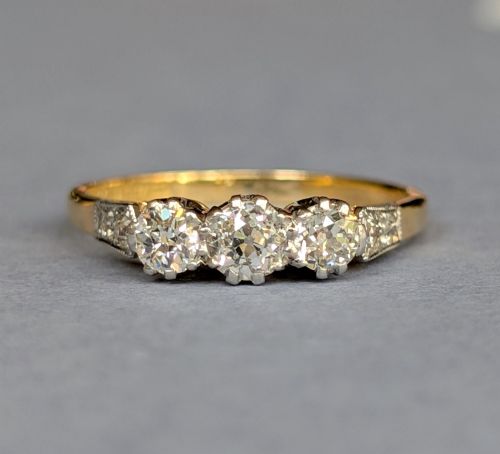
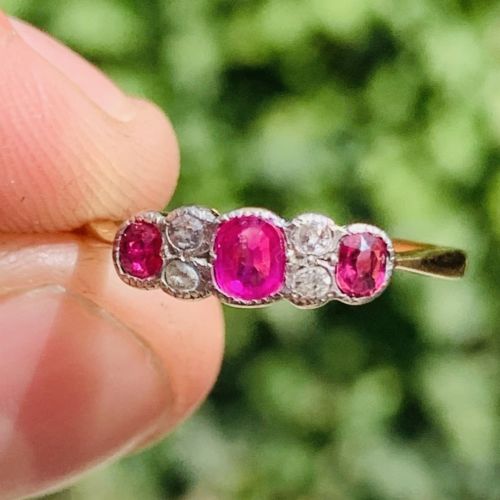
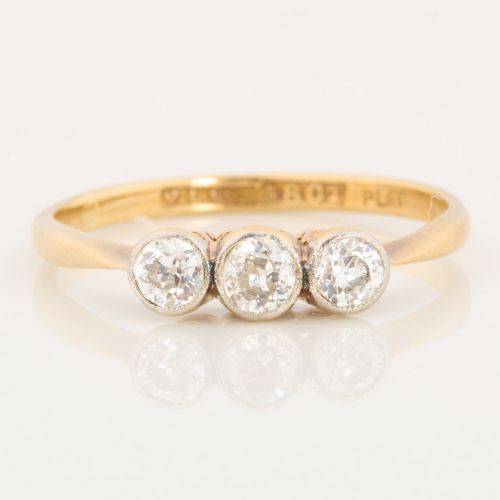
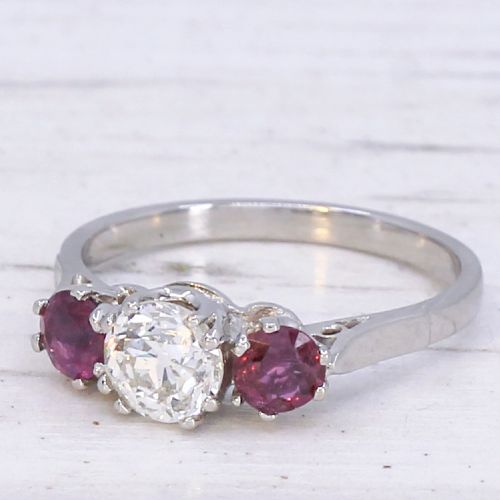
The version most commonly met on this page combines an 18ct gold band with a platinum setting holding old cut diamonds, often styled with geometric details or twist bands. Alongside diamond centrepieces, variations frequently incorporate natural rubies, sapphires, emeralds or pearls.
Originating as meaningful tokens of affection, these rings serve distinct roles as engagement or anniversary jewellery. Their enduring appeal stems from balanced proportions that showcase individual stones while maintaining a cohesive silhouette on the hand.
How They Were Made
Goldsmiths utilised a combination of durable 18ct yellow or white gold for the bands and dense platinum for the setting heads. Platinum allowed artisans to form delicate claw, illusion or bezel settings that secured old cut and cushion cut diamonds with minimal metal obstruction.
Bench workers shaped the precious metals by hand, incorporating delicate millegrain edges, pierced galleries and twisted shank designs typical of Edwardian and Art Deco manufacturing methods. Stones were hand-set, utilising the superior tensile strength of platinum to grip gems tightly.
Old cut diamonds in these rings were shaped by candlelight, waiting patiently for electric light to show off their inner fire.
What Varies in Quality
Quality rests upon the proportion, matching and cut of the primary stones relative to their mounting. Master lapidaries selected old cut diamonds and coloured gems with compatible brilliance and hue to create a harmonious visual weight across the three positions.
Construction integrity distinguishes standard production from finer workshop output, particularly in the precision of platinum head work and the crispness of hand-applied decorative details like millegrain and engraving.
The Platinum Gold Trilogy Ring Glossary
- Trilogy ring
- A jewellery piece featuring three principal gemstones set in a row. This configuration traditionally symbolises the past, present and future.
- Old cut diamond
- A diamond cut by hand before modern machinery standardised facets, typically featuring a small table, high crown and open culet. These stones display a softer, candlelit sparkle compared to modern brilliant cuts.
- Millegrain
- A decorative technique involving a row of tiny raised metal beads along the edge of a setting. It adds textural refinement typical of Edwardian and Art Deco jewellery.
- Illusion setting
- A metal mounting technique designed to make a gemstone appear larger by framing it with a faceted, reflective plate. This method was widely utilised during the early twentieth century.
- Twist ring
- A band configuration where the metal shoulders wrap around the central stones in a crossover motif. This style gained popularity during the late Victorian and Edwardian periods.
Platinum Gold Trilogy Ring: Frequently Asked Questions
What does a trilogy ring symbolize?
A trilogy ring carries symbolic meaning through its three stones, traditionally representing the past, present and future of a relationship. This makes them a popular choice for engagements and significant anniversaries.
The design focuses attention on the central gem while flanked by two matching side stones, creating a balanced and meaningful piece of jewellery.
How can I tell an Edwardian trilogy ring from an Art Deco one?
Edwardian trilogy rings often feature flowing garlands, delicate pierced work and yellow gold bands combined with platinum settings. They lean toward romantic, organic motifs with soft millegrain detailing.
Art Deco examples shift toward geometric precision, straight lines and sharp angles. Platinum settings dominate this later period, frequently paired with white gold or yellow gold bands in symmetrical arrangements.
Are platinum and gold mixed in antique rings?
Yes, combining platinum and gold is a hallmark of early twentieth-century jewellery manufacturing. Platinum was prized for its strength in holding stones securely, while gold provided a warm, sturdy band.
Jewellers utilised platinum specifically for the top settings to keep the metal colour neutral behind diamonds, mounting it onto an 18ct gold shank for structural support and comfort.