


Mid Century Emerald Ring
A mid century emerald ring brings together saturated beryl and period precious metals from the nineteen-fifties and nineteen-sixties.
Identifying a mid century emerald ring
A mid century emerald ring is a vintage piece of finger adornment originating primarily from the decades around nineteen-fifty and nineteen-sixty. These jewels take several distinct forms, from simple solitaires to complex multi-stone configurations.
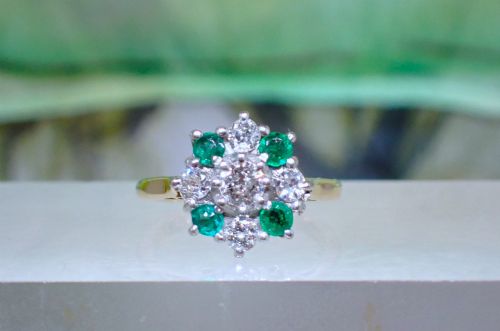
Cluster and crossover designs dominate the selections, alongside dramatic ballerina settings and targeted geometric arrangements. Stones range from modest fractions of a carat to substantial central Colombian specimens exceeding ten carats.
Most examples hail from the mid-century period, adhering to vintage aesthetic standards of the mid-twentieth century. Buyers encounter both natural stones with varying oil treatments and occasional synthetic cabochon alternatives.
Materials and construction methods
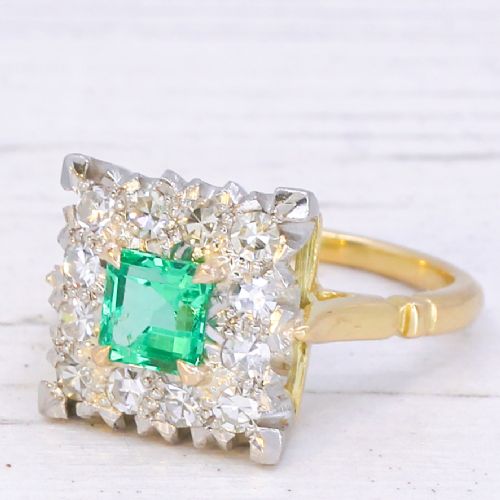
Goldsmiths of the era utilised platinum, yellow gold, white gold, and specific nine-carat or eighteen-carat alloys to build robust settings for fragile gems. Precious metal prongs, bezels, and shoulders secure emeralds alongside supporting white diamonds.
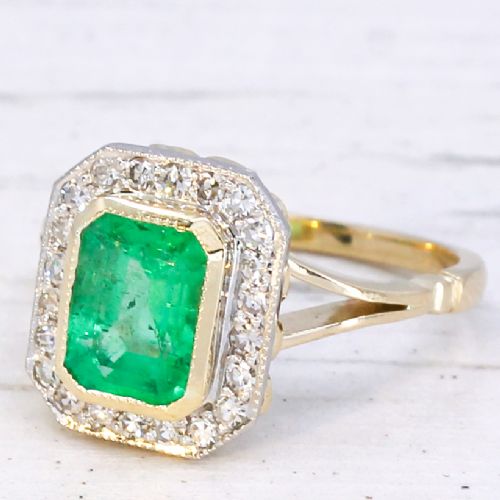
Stones are shaped into emerald cuts, pear drops, baguettes, and smooth cabochons before being integrated into intricate cluster, halo, or trilogy configurations. Master jewellers balanced the heavy presence of central beryl with calculated diamond framing.
Retail Price Guide 2026
Typical UK retail prices for mid century emerald ring, calculated from the Sellingantiques database of over a million retail prices indexed since 2003. This retail price guide relies exclusively on Sellingantiques data; no external sources or auction records are used, so the figures do not describe the wider market.
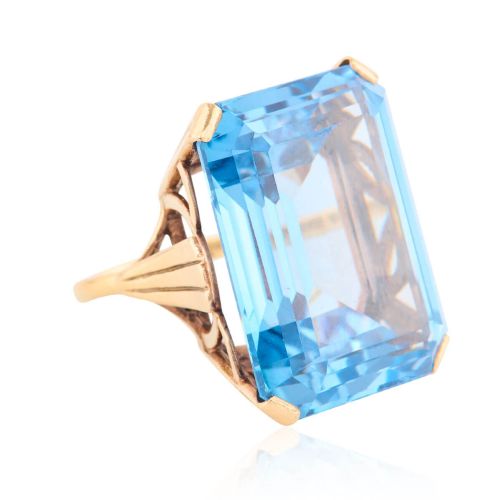
Some mid-century rings deploy thirty-three carats of aquamarine when emeralds take a brief holiday.
Factors defining quality
Quality rests upon the geological origin and optical clarity of the central beryl, with Colombian stones and negligible oil certifications commanding high regard. The absence of heavy fracture filling dictates the purity of the green hue.
Precision in supporting diamond cuts and the structural integrity of platinum or gold metalwork elevate certain items. The visual harmony between the central green gemstone and the surrounding diamond cluster determines overall refinement.
The Mid Century Emerald Ring Glossary
- Cabochon
- A gemstone shaped and polished with a convex rounded surface rather than faceted. This technique suits specific emeralds by emphasising soft internal depth over sharp light reflection.
- Ballerina ring
- A cocktail ring style featuring a central stone encircled by a flared array of baguettes or tapered diamonds resembling a dancer's tutu. It creates a wide, dramatic silhouette upon the hand.
- Solitaire ring
- A piece featuring a single dominant gemstone mounted independently on a metal band. This minimal format places full visual emphasis on the central emerald.
- Columbian emerald
- Beryl sourced from specific South American mines known for vibrant colour saturation. These stones frequently hold distinct geographical provenance confirmed by certification.
- Trilogy ring
- A jewel set with three principal stones representing past, present, and future. Emeralds in this layout usually sit flanked by matching diamonds.
Frequently Asked Questions
How do I wear a vintage emerald ring safely?
Emeralds register lower on the Mohs hardness scale than diamonds, requiring deliberate care during daily activities. Owners typically remove these rings before manual labour or vigorous tasks.
Regular checks by a jeweller ensure the platinum or gold settings hold the central beryl securely within its prongs or bezel.
What does oil treatment mean for emeralds?
Natural emeralds contain microscopic fissures that jewellers traditionally fill with colourless oils to improve optical clarity. Certification documents specify whether an emerald has minor, moderate, or negligible oil enhancement.
Stones with negligible treatment retain greater purity and tend to hold higher regard among collectors.
How can I date a mid-century ring?
Dating relies on stylistic markers typical of the nineteen-fifties and sixties, alongside metal purity hallmarks stamped inside the band. Platinum and eighteen-carat white or yellow gold frequently indicate specific mid-century manufacturing standards.
Archival comparisons with documented cluster and ballerina designs help narrow the production window.
Are synthetic emeralds common in vintage rings?
Laboratory-created stones do appear in mid-century jewellery, particularly smooth cabochon solitaires produced during that era. Certification reports verify whether a specimen grew naturally within the earth or in a laboratory.
Buyers examine documentation to confirm the geological origins of the beryl.