

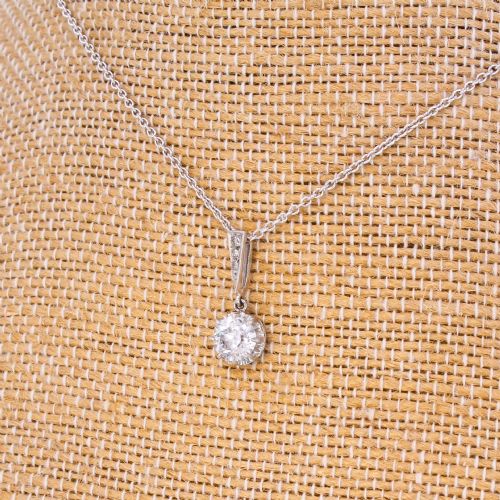
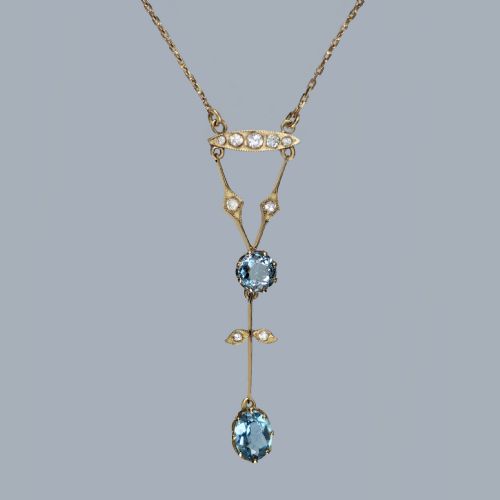

Vintage Diamond Pendant Necklace
A vintage diamond pendant necklace brings together historical craftsmanship and precious gemstones, offering a wearable piece of heritage that catches the light with every movement.
Vintage Diamond Pendant Necklace
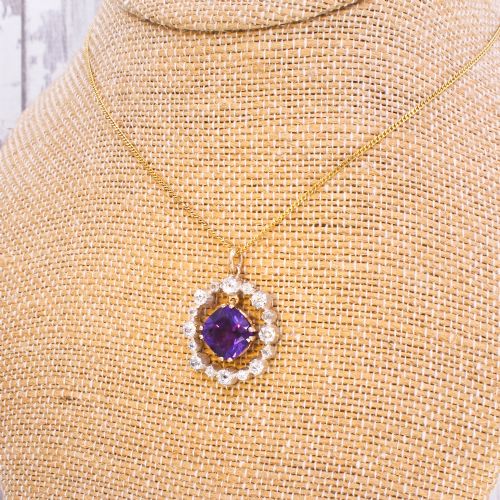
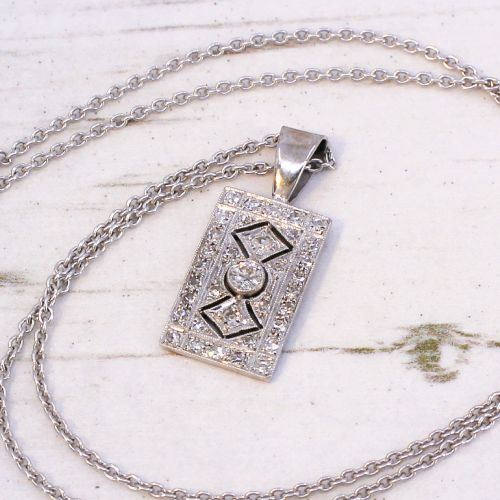
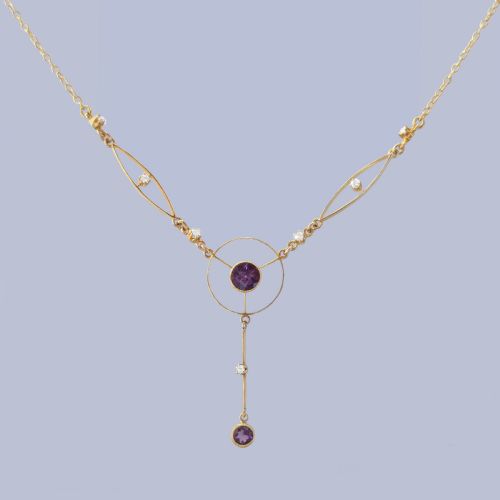
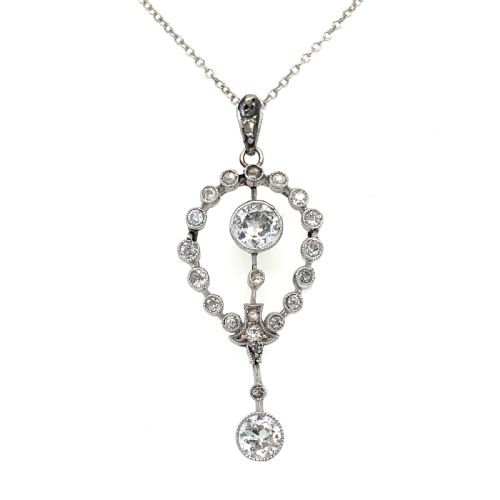
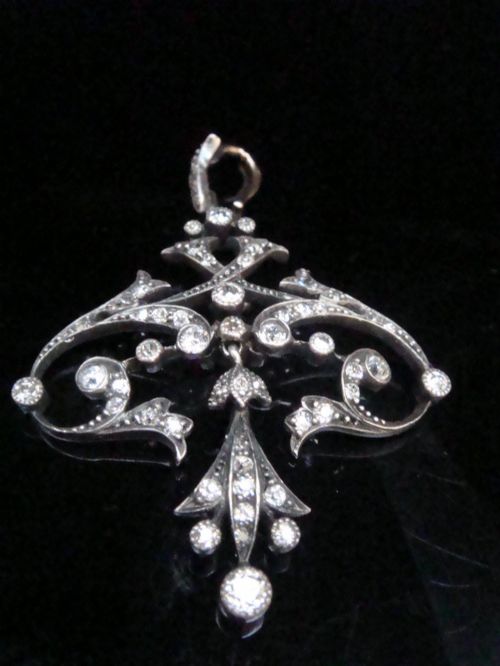
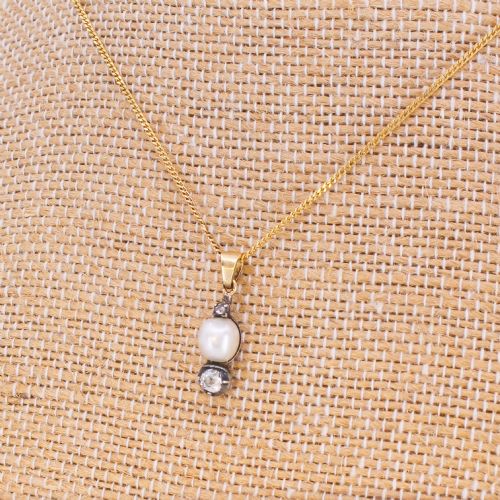
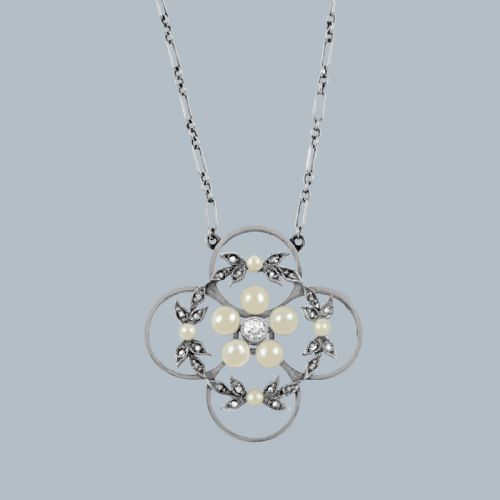
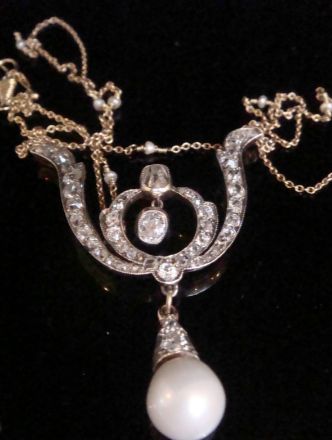
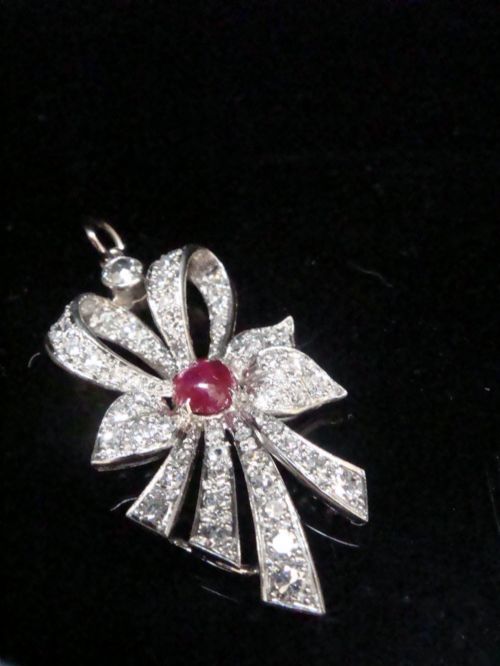
A vintage diamond pendant necklace encompasses delicate Edwardian lavalieres, geometric Art Deco platinum designs, and mid-century cluster drops. These pieces combine central diamonds with coloured gemstones or pearls, suspended from fine chains.
The selection ranges from turn-of-the-century antique work to later mid-century creations, utilising gold, platinum, and silver. Buyers encounter everything from simple solitaire drops to elaborate multi-stone cluster pendants.
How they were made
Craftsmen shaped platinum and various grades of gold, including 9ct, 14ct, and 18ct white and yellow gold, to form the structural mounts and delicate settings. Platinum gained favour in early periods for its strength, allowing for fine wirework and secure prong settings.
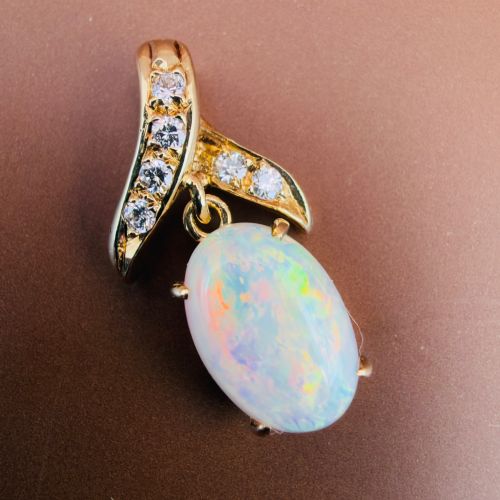
Gems such as old cut diamonds, pearls, aquamarines, opals, and emeralds were hand-set alongside smaller accent stones. Artisans utilised techniques like millegrain edging and pierced metalwork to add texture and catch the light.
Materials span platinum, silver, yellow gold, and white gold, paired with diamonds, pearls, opals, and emeralds.
What varies in quality
The standard of a piece rests on the harmony of its design, the skill of the metalwork, and the quality of the central gemstones. Early hand-cut diamonds show distinctive faceting that differs from later brilliant cuts, influencing the overall sparkle and character.
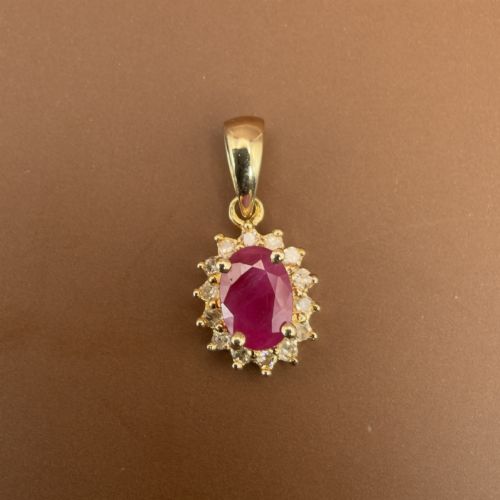
The integrity of the original settings, the clarity and colour of accompanying stones like rubies or emeralds, and the presence of makers' marks or fitted boxes distinguish finer examples from standard production.
Eduard Foehr
The Vintage Diamond Pendant Necklace Glossary
- Old cut diamond
- A diamond cut by hand before modern machinery, typically featuring a small table, high crown, and large open culet that creates a soft, candlelit glow.
- Lavalier
- A necklace featuring a pendant that drops below the main chain line, often incorporating multiple dangling stones and popular during the Edwardian period.
- Millegrain
- A decorative technique involving a row of tiny raised metal beads along the edges of a setting, common in Edwardian and Art Deco jewellery.
- Cluster pendant
- A central gemstone surrounded by a border of smaller accent stones, frequently diamonds framing a sapphire, ruby, opal, or emerald.
- Plat
- A shorthand reference to platinum, a dense and durable white metal widely utilised in antique jewellery for secure and delicate stone settings.
Vintage Diamond Pendant Necklace: Frequently Asked Questions
How do I identify an Edwardian pendant?
Edwardian pieces often feature platinum settings, delicate filigree work, and motifs like bows or garlands. They frequently incorporate pearls and old cut diamonds in airy, lace-like designs.
Look for hand-carved details and lightweight constructions that sit close to the collarbone on fine gold or platinum chains.
What is the difference between antique and vintage?
Antique jewellery generally refers to pieces over a century old, covering Victorian, Edwardian, and early Art Deco eras. Vintage items usually date from the mid-twentieth century onwards.
Both categories encompass distinct stylistic periods with characteristic materials and manufacturing techniques recorded in the hallmarks and metal grades.
Can I wear a delicate antique necklace daily?
Many Edwardian and Art Deco pendants are remarkably well-made, but their fine chains and antique stone settings require gentle care. It is wise to remove them before sleeping, swimming, or engaging in strenuous physical activity.
Regular checks by a jeweller ensure that the claws holding the diamonds and coloured stones remain secure.
What stones appear alongside diamonds in these necklaces?
Natural pearls, aquamarines, opals, rubies, emeralds, and sapphires frequently accompany diamonds in these designs. Different eras favoured specific combinations, such as pearls and diamonds in the Edwardian era.
Coloured gemstones add vibrant hues that contrast with the neutral sparkle of old cut or brilliant cut diamonds.