


Turn of the Century Jewellery
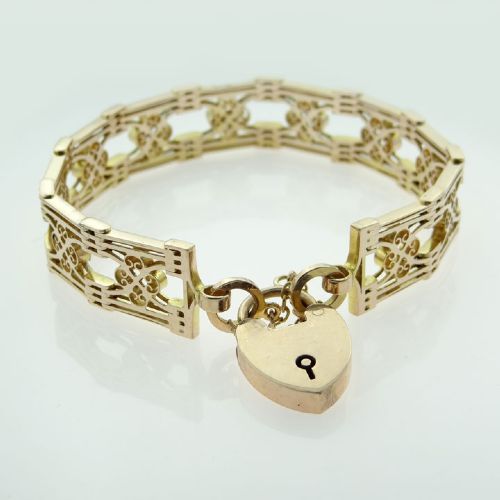
Turn of the century jewellery brings together delicate Edwardian diamond work, flowing Art Nouveau motifs and warm yellow gold pieces.
Turn of the Century Jewellery
When you search for turn of the century jewellery, you encounter pieces principally dated around nineteen hundred alongside related nineteenth century and Edwardian items. The selection on this page centres on rings, pendants, and brooches rather than large ornaments.
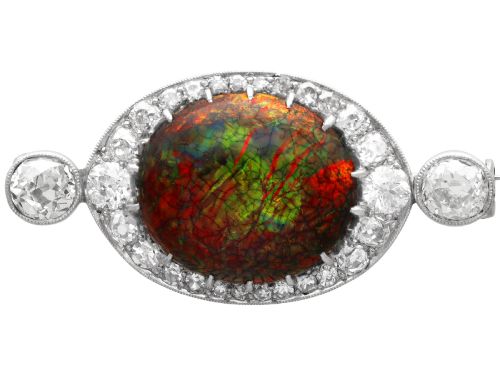
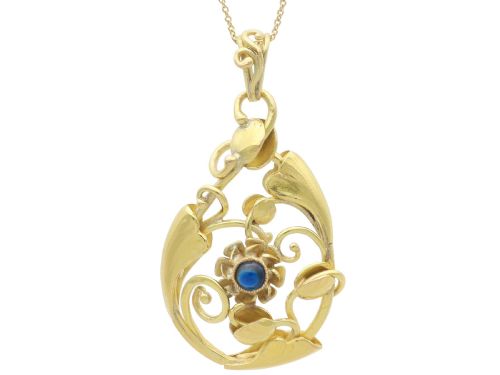
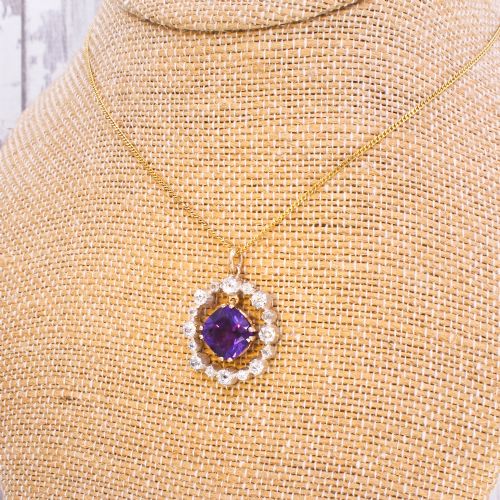
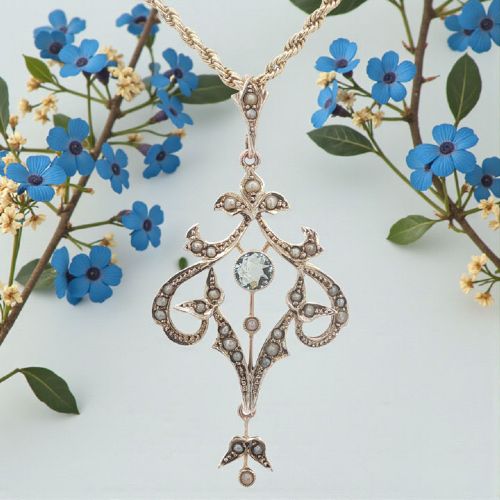
Most examples lean towards the aesthetic movements of the era, notably Art Nouveau designs featuring natural motifs and stylised figures. Alongside these, traditional yellow gold settings holding diamonds, aquamarines, and seed pearls represent the mainstream taste of the period.
Materials and construction
Goldsmiths of this period commonly utilised yellow gold, nine carat gold, and platinum to mount precious and semi-precious stones. Metals were frequently worked by hand to create intricate wirework settings and engraved galleries.
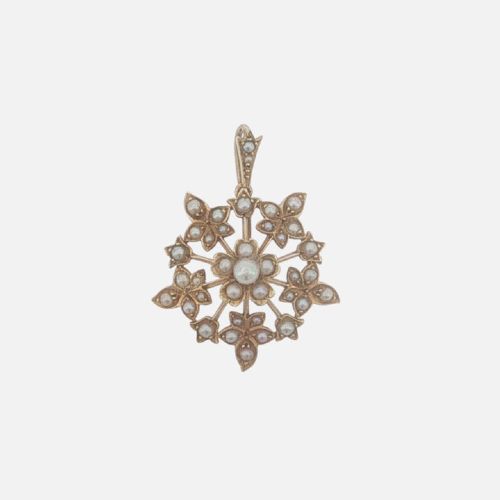
Gemstones such as old cut diamonds, sapphires, amethysts, and aquamarines were set alongside organic materials like seed pearls and natural pearls. Enamel work also appears frequently, particularly in pieces influenced by Art Nouveau styles.
Listings under this phrase encompass items from the nineteenth century through to nineteen forty, incorporating platinum, yellow gold, silver, and boxwood.
Assessing quality and craftsmanship
Quality in these pieces rests primarily upon the precision of the metalwork and the selection of the stones. Finer examples display meticulous hand engraving, secure stone settings, and well balanced compositions without excess bulk.
The condition of delicate elements such as enamel panels, seed pearls, and fine platinum claws dictates much of the desirability. Pieces that retain their original fastenings and show minimal wear to the high points of the metal command greater appreciation.
The Turn of the Century Jewellery Glossary
- Art Nouveau
- A stylistic movement spanning the late nineteenth and early twentieth centuries characterised by flowing, organic lines and floral motifs. This style heavily influenced jewellers of the period.
- Old cut diamond
- A diamond cut by hand before modern machinery standardised proportions, typically featuring a small table and high crown. These stones exhibit a distinctive, softer scintillation under candle or low light.
- Seed pearl
- A very small natural or cultured pearl, often drilled and strung or set closely together in clusters. They were widely utilised in Edwardian pendants and brooches.
- Platinum
- A dense, durable white metal that gained popularity for jewellery mountings around nineteen hundred because it allowed for delicate, lace-like stone settings. Its strength secured diamonds with minimal visible metal.
Turn of the Century Jewellery: Frequently Asked Questions
How do I care for turn of the century jewellery?
These delicate pieces require gentle handling, particularly items set with seed pearls or enamel which can be damaged by harsh cleaning agents or ultrasonic baths.
Store each item separately in a soft pouch to prevent scratching, and check settings regularly by a professional if worn frequently.
Can I wear these rings every day?
While many rings from this era are robust enough for daily wear, older settings with thin bands or delicate claws need careful consideration.
It is wise to remove them during heavy manual tasks or sports to preserve the original metalwork and secure the gemstones.
How do I identify Art Nouveau jewellery?
Art Nouveau pieces are recognised by their asymmetrical designs, whiplash curves, and depictions of flora, fauna, and stylised female figures.
Jewellers of this movement favored enamel and softer stones over purely high value gem-led displays.
Are these pieces marked with hallmarks?
Many items feature traditional maker marks, purity stamps, or regional assay office symbols, though smaller items and foreign imports may bear partial or rubbed marks.
Examining the metal with a loupe often reveals these tiny stamps tucked away on the reverse or inside the band.