



Vintage Desk Trinket Box
A vintage desk trinket box organises small keepsakes on a writing surface while adding period character to a room.
Vintage Desk Trinket Box
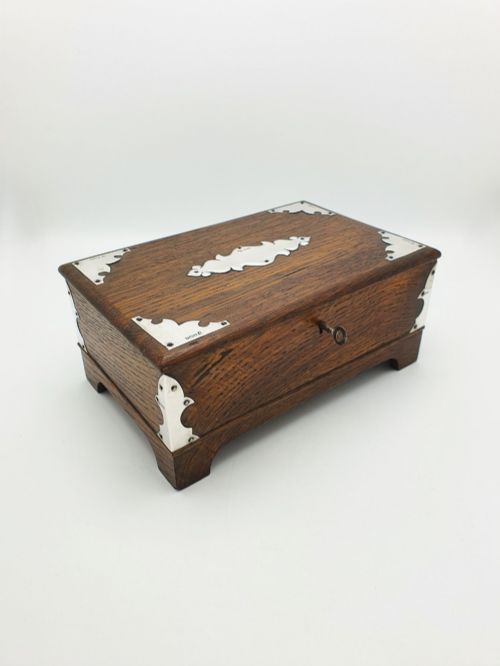
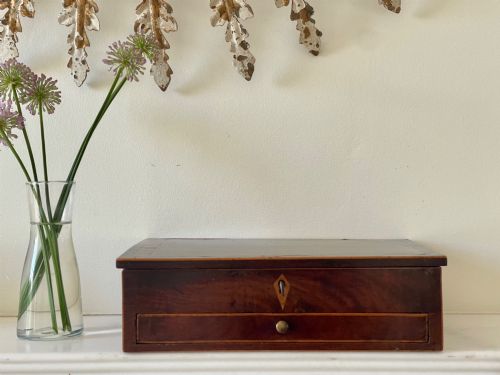
A vintage desk trinket box encompasses small lidded vessels fashioned to hold stamps, tobacco, stationery, or personal keepsakes. These items span periods from the eighteenth century through the mid twentieth century, reflecting the changing requirements of domestic and office writing spaces.
The assortment relies heavily on British and continental European examples, alongside pieces from Indian and Asian workshops. Most frequent are rectangular desk boxes, compact snuff boxes, and lidded caskets suited for desktop placement.
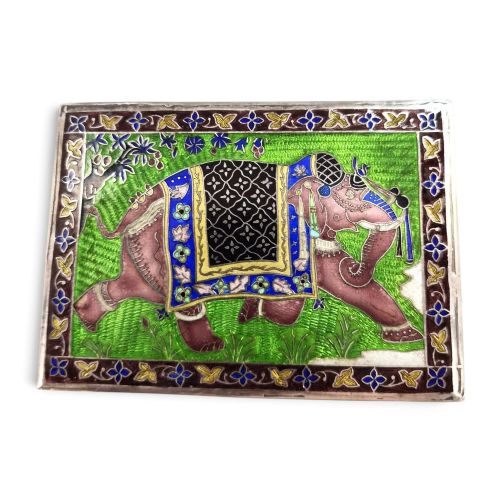
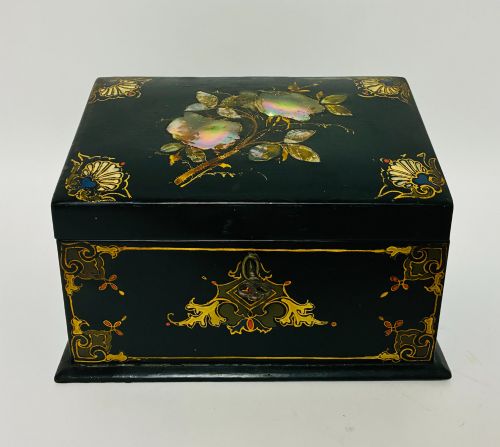
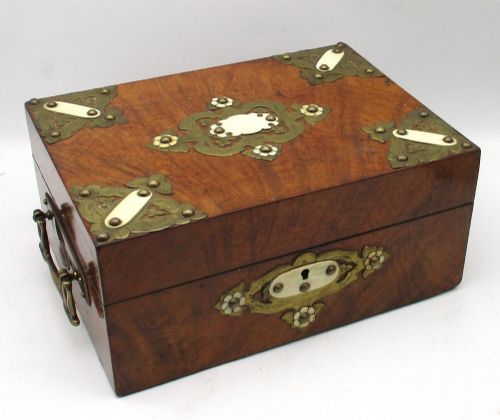
Materials range from native timbers such as oak, walnut, and mahogany to solid silver, brass, and copper. Decorative additions include enamel, mother of pearl, bone, and shagreen, which elevate utilitarian containers into display objects.
Materials and Technique
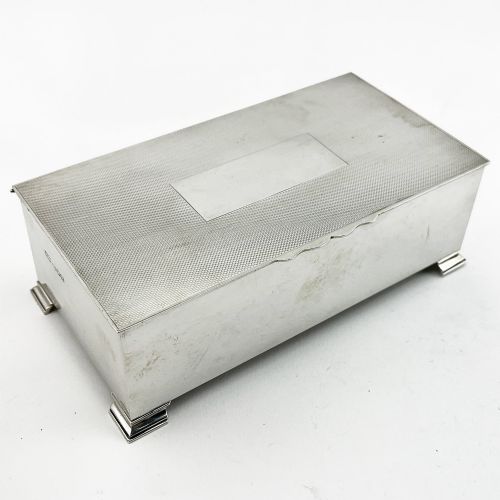
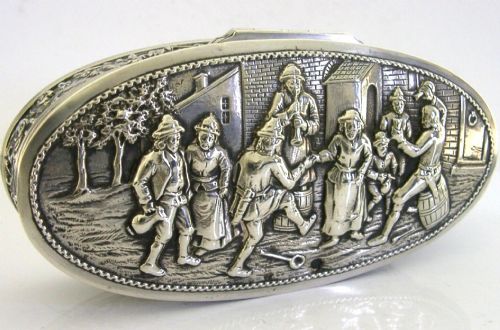
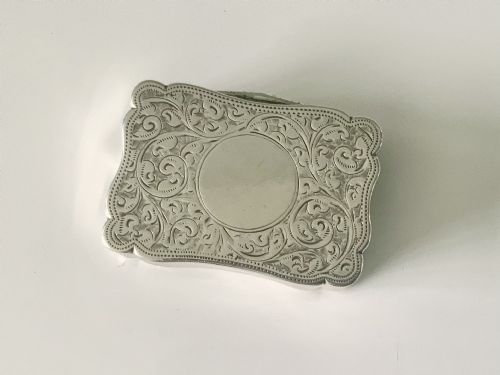
Metals are worked through casting, repousse decoration, and fine silver smithing, often accented with niello or applied enamel work. Sterling and solid silver boxes frequently display crisp hallmarks, while brass and copper pieces rely on hand-beaten textures and applied mounts.
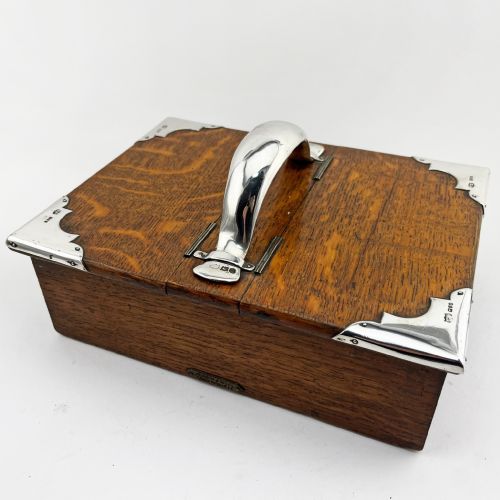
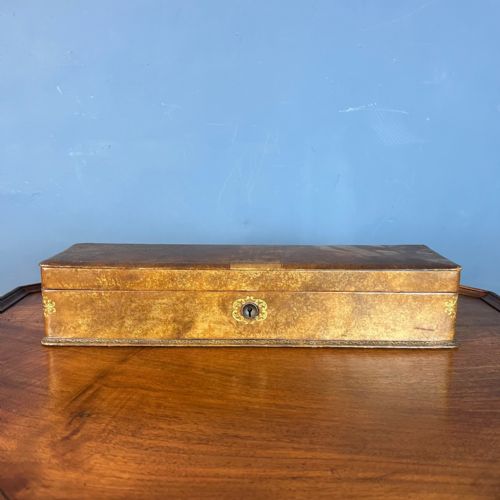
Wooden desk boxes combine structural joinery in walnut, oak, and mahogany with delicate veneers, marquetry, and tooled leather linings. Artisans incorporated specialist materials such as tortoiseshell, shagreen, and carved bone to frame hinges and lids.
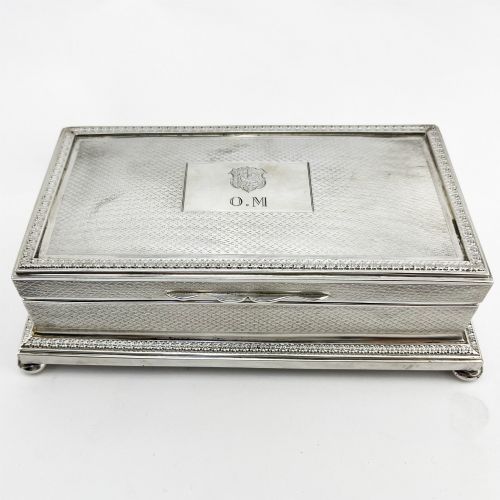
Decorative detailing on both metal and wood relies on hand engraving, floral scrolls, and inset metal mounts. Craftsmanship is visible in the precise fitting of lids, hinges, and internal dividers designed for stationery or small valuables.
Listings feature woods such as oak, walnut, mahogany, and coromandel alongside solid silver, brass, and copper.
Material Depth and Execution
Quality rests upon the integrity of the primary material and the skill of its execution, whether in the weight of a solid silver housing or the selection of figured mahogany and walnut veneers. Superior examples display substantial gauge metalwork or dense, well-chosen hardwoods that retain their structural stability over generations.
The standard of hand finishing separates standard containers from finer productions, evident in crisp engraving, tight joints, and original interior linings. Integrated elements such as silver mounts, enamel panels, and working locks demonstrate higher workshop ambition.
Mappin & Webb·Georg Jensen·Edward Farrell·A & J Zimmerman Ltd
The Vintage Desk Trinket Box Glossary
- Navette
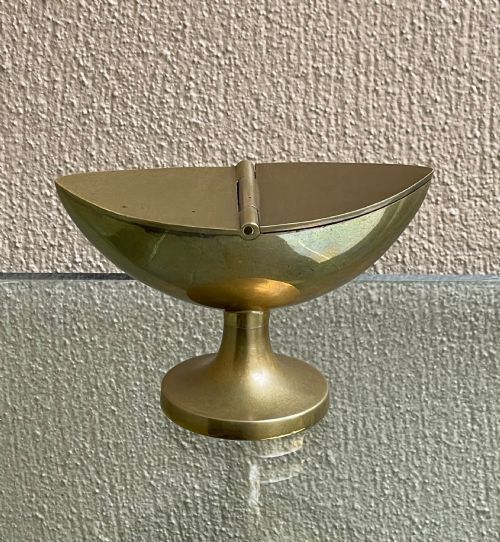
- A boat-shaped decorative form with pointed ends, commonly found on Georgian table snuff boxes.
- Niello
- A black metallic alloy used as an inlay on engraved silver surfaces to highlight decorative patterns.
- Repousse
- A metalworking technique where the design is hammered into relief from the reverse side.
- Shagreen
- Untanned skin with a granular surface, historically prepared from shark or ray skin and utilised for covering luxury boxes.
- Coromandel
- A dense, heavily figured tropical hardwood prized for nineteenth-century luxury stationery and writing boxes.
Vintage Desk Trinket Box: Frequently Asked Questions
How were antique trinket boxes used on desks?
These boxes served to corral stamps, nibs, tobacco, and private correspondence within arm's reach of the writer. Their presence on a desk kept loose items contained while projecting personal taste.
Larger wooden formats held stationery or cigars, while smaller silver and brass vessels functioned as pocket item depositories at the end of the day.
What materials are common in vintage desk boxes?
Construction materials divide primarily between solid metals and figured hardwoods. Sterling silver, brass, and copper frequently appear alongside oak, walnut, mahogany, and exotic timbers.
Many examples incorporate secondary details in bone, ivory, mother of pearl, enamel, and shagreen to enhance the decorative effect of the lid.
How do I date an antique wooden box?
Dating relies upon timber selection, construction methods, and hardware such as hinges and escutcheons. Georgian and Regency pieces often feature flame mahogany or coromandel with hand-cut dovetails.
Later Victorian and Edwardian examples introduce machine-made screws and mass-produced brass mounts, while Arts and Crafts boxes show hand-beaten copper work.
Are silver desk boxes marked with hallmarks?
British silver boxes typically carry standard hallmarks indicating the assay office, maker, and year of production. These stamps provide a reliable method for dating the piece precisely.
Continental and Asian silver boxes may display alternative regional marks, silver purity standards, or artisan signatures instead of traditional British assay stamps.