

Vintage Desk Mirror
A vintage desk mirror brings reflective depth and period character to a dressing surface, combining functional glass with fine cabinetry.
Vintage Desk Mirror
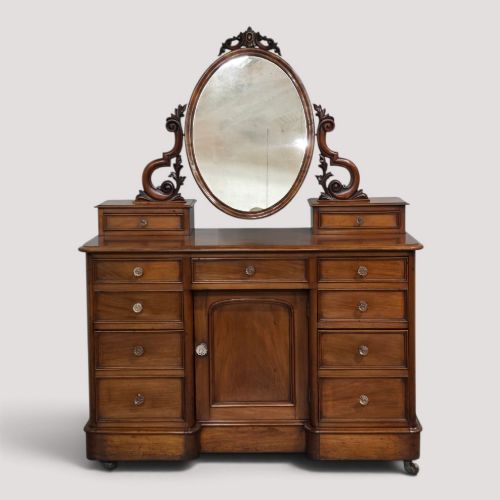
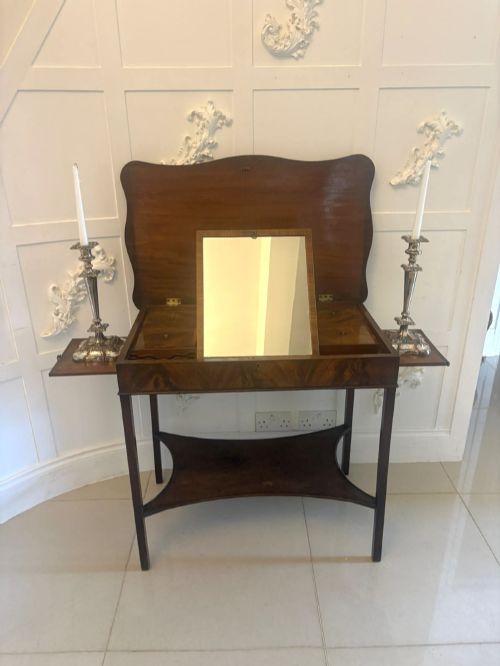
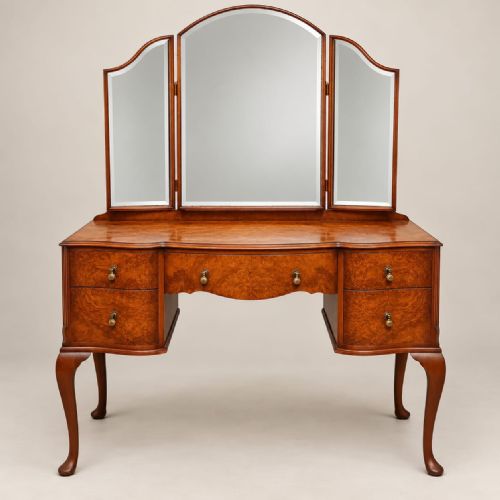
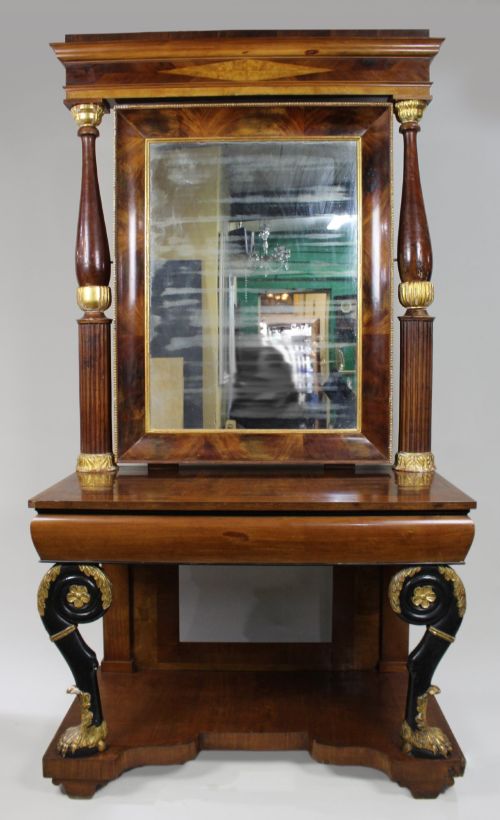
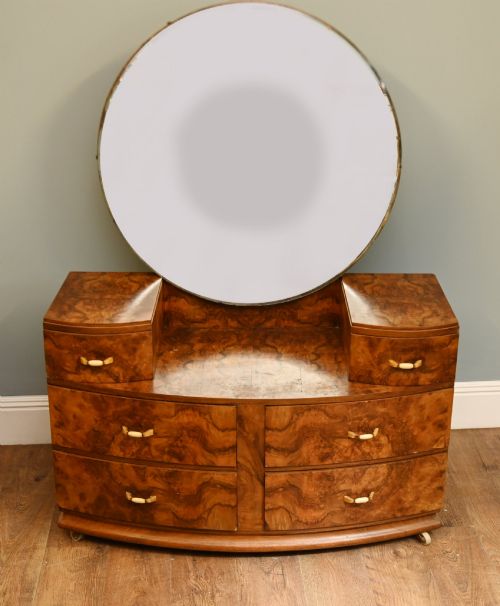
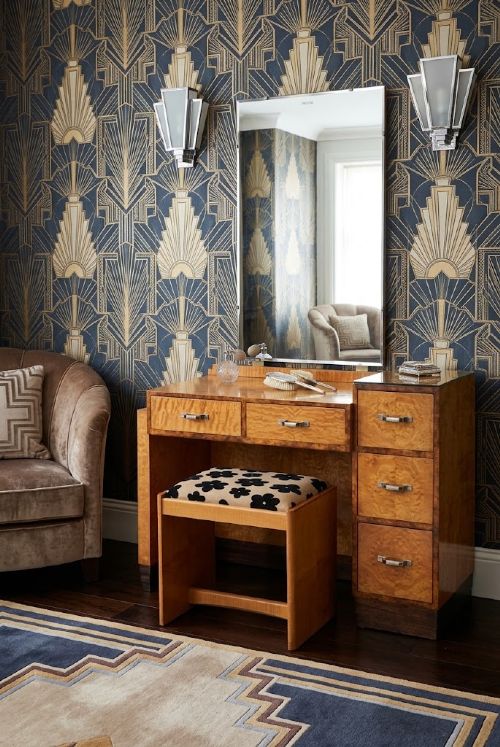
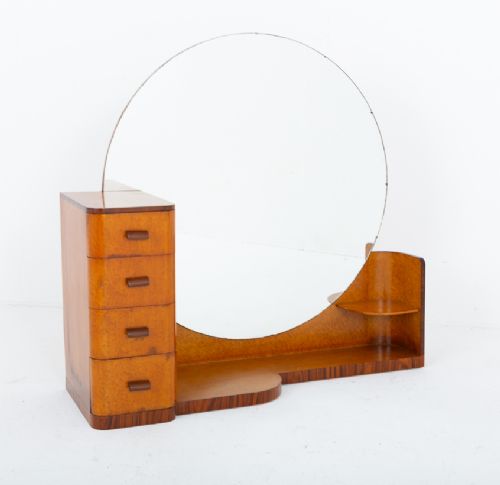
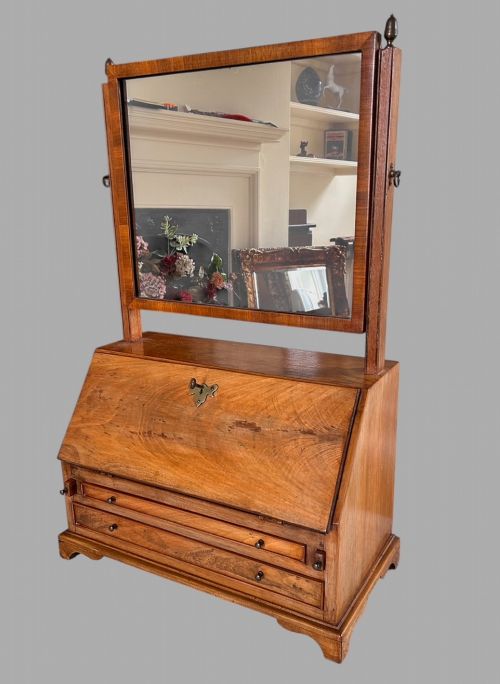
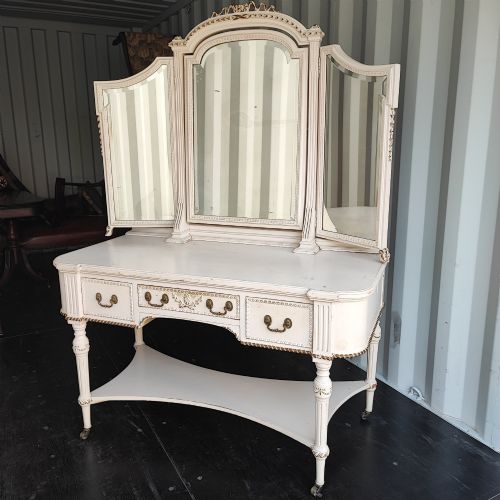
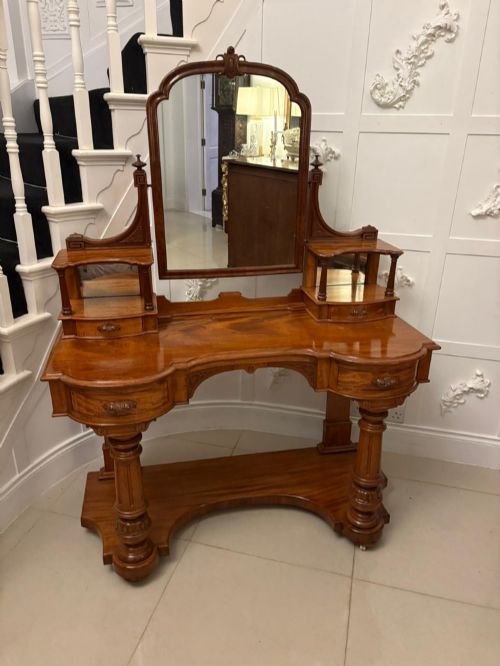
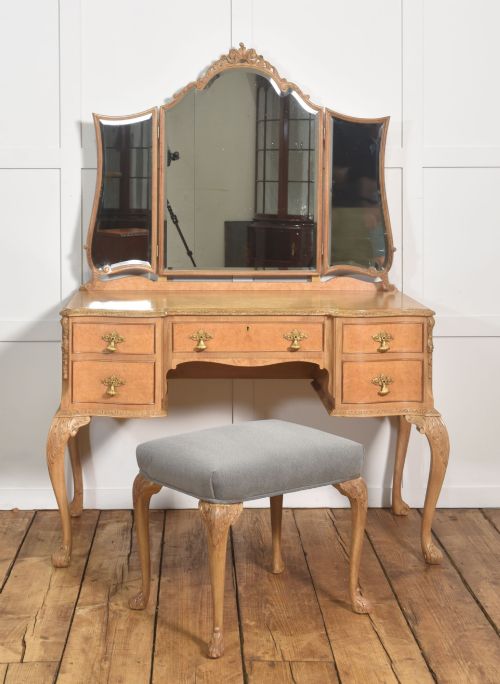
When searching for a vintage desk mirror, buyers encounter a variety of tabletop and dressing pieces spanning the Victorian, Edwardian, and Art Deco periods, alongside earlier Georgian and 18th Century examples. Many of these mirrors are integrated into larger dressing tables and chests, while others appear as standalone easel or pedestal pieces designed for domestic use.
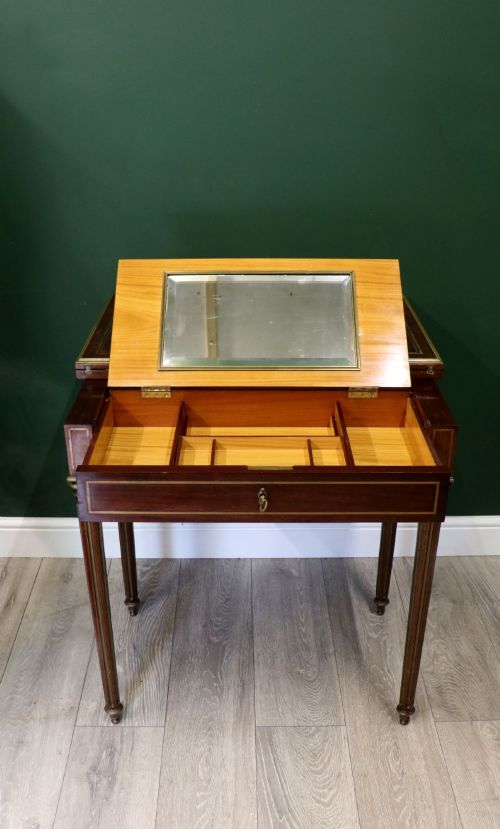
The selection ranges from simple mahogany and oak frames to elaborate Chinoiserie lacquered surfaces and carved giltwood designs. Pieces often feature adjustable glass mounted on pivoting pivots or upright standards, reflecting the domestic habits of their respective eras.
Materials and Construction
Cabinetmakers utilised dense timbers such as mahogany, walnut, burr walnut, and oak, frequently enhancing grain patterns with satinwood inlay or maple veneers. Glass is set into sturdy wooden or cast bronze frames, sometimes accompanied by brass brackets and fittings.
Construction techniques include traditional joinery for the supporting stands and fine carving for stylistic elements like Rococo Revival scrolls or Arts & Crafts linear details. Finishes range from French polish on hardwoods to original painted surfaces and lacquered Chinoiserie.
Vintage Desk Mirror Retail Price Guide 2026
Typical asking prices for vintage desk mirror among the pieces listed under this phrase on Sellingantiques today, from the lower quarter to the upper quarter. They describe what is for sale here now, not the wider market.
Some Victorian mirrors incorporated scientific optical lenses, allowing users to inspect their reflections with clinical precision.
Craftsmanship and Proportion
Quality rests in the harmony of proportion between the glass frame and its supporting base, as well as the selection of figured timbers like burr walnut or figured mahogany. Superior examples show crisp, confident carving and precise inlay work rather than mechanical repetition.
The integrity of the mirror glass itself and the smooth operation of adjustable pivots or drawers indicate the standard of original manufacture. Maker attribution, through labels or distinctive workshop traits, further separates standard production from exceptional pieces.
Heals·Shapland and Petter·Harry and Lou Epstein·Edwards and Roberts·Thomas Rubergall·Maples of London and Paris·Smiths Clock Company
The Vintage Desk Mirror Glossary
- Easel mirror
- A freestanding glass supported by an inclined prop at the back, designed to stand upright on a table or desk surface.
- Pedestal dressing table
- A large vanity unit featuring banks of small drawers flanking a central kneehole, typically surmounted by a fixed or adjustable mirror.
- Burr walnut
- A highly prized wood veneer taken from the knotted growths of the walnut tree, creating intricate swirling patterns across the surface.
- Satinwood
- A pale, lustrous timber imported from tropical regions, frequently utilised for decorative stringing and inlaid motifs on darker cabinet furniture.
- Chinoiserie
- A European decorative style employing simulated Chinese motifs, often executed in lacquer and raised gilt on wooden panels.
Vintage Desk Mirror: Frequently Asked Questions
How do I date a desk mirror?
Dating relies on examining the timber species, construction methods, and secondary woods used in the backing or drawer linings. Stylistic clues such as Art Deco geometry or Victorian carving provide further chronological markers.
Bevelled edges on mirror glass and the type of screw heads or fixings also help determine whether a piece belongs to the 19th Century or the early decades of the 20th Century.
Were these mirrors originally part of larger tables?
Many tabletop mirrors were manufactured as components of dressing chests or vanity tables rather than standalone items. Over time, some mirrors became separated from their original bases.
Examining the mounting tenons and pivot brackets often reveals whether a glass plate belongs to a specific piece of case furniture.
How should I clean a vintage mirror frame?
Wooden frames require gentle dusting with a dry, soft cloth to protect the polished finish or original lacquer. Avoid harsh chemical sprays that can strip historic surfaces.
Glass panels can be cleaned with a mild glass cleaner applied to a cloth rather than directly onto the mirror, preventing moisture from seeping behind the silvered backing.
What is the difference between Edwardian and Art Deco mirrors?
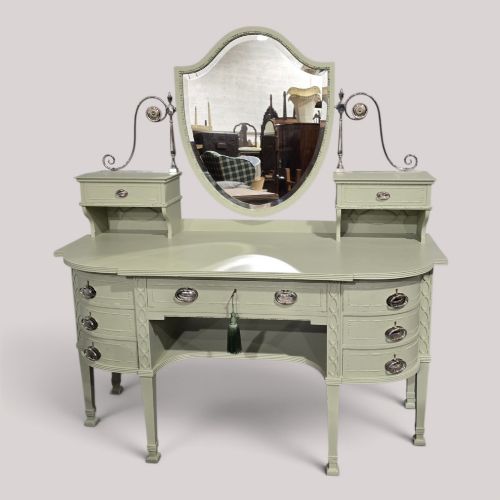
Edwardian mirrors frequently draw upon Georgian revival themes, using mahogany and inlaid satinwood with classical proportions and softer decorative flourishes. They often feature adjustable shield or oval glass plates.
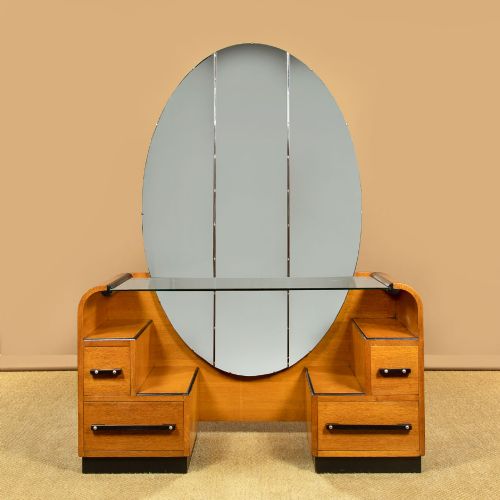
Art Deco mirrors embrace streamlined geometry, peach mirror glass, and modernist materials like maple or contrasting veneers, reflecting the design shifts of the 1930s.