





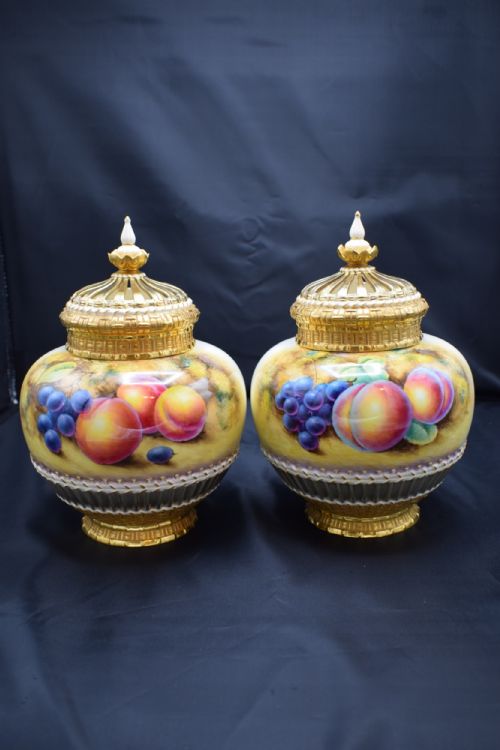


Vintage Decorative Lidded Pot
These vintage decorative lidded pot pieces range from Victorian biscuit barrels to Asian enamel jars, offering ornamental presence and practical containment.
Vintage Decorative Lidded Pot
A vintage decorative lidded pot serves as a container for pot pourri, biscuits, or ink, combining utility with display value across various historical periods. The selection on this page draws heavily from Victorian and mid-twentieth-century eras, featuring distinct forms such as pot pourri vases and lidded jars.
Makers utilised porcelain, ceramic, brass, silver, and enamel to shape these objects, often incorporating gilding or gold leaf for added visual weight. Traditional English styles sit alongside Asian regional designs, Kashmiri craftsmanship, and Anglo-Indian pieces, reflecting diverse global manufacturing traditions.
How they were made
Pottery and porcelain examples rely on skilled throwing, moulding, and firing techniques, frequently finished with hand-painted decoration or transfer printing. Artists such as John Smith and Ayrton applied painted fruit and botanical motifs directly onto porcelain bodies before a final glaze firing.
Metal vessels combine casting, hammering, and engraving, particularly visible in brass inkwells, silver boxes, and cloisonné items. Enamel work and silver plating add durable surface decoration, while gilt highlights accentuate the moulded contours of the lids and bases.
Vintage Decorative Lidded Pot Retail Price Guide 2026
Typical asking prices for vintage decorative lidded pot among the pieces listed under this phrase on Sellingantiques today, from the lower quarter to the upper quarter. They describe what is for sale here now, not the wider market.
Object forms include biscuit barrels, inkwells, and pierced pot pourri vessels decorated with hand-painted fruit.
What varies in quality
Quality depends heavily on the precision of the hand-painting and the execution of surface details, such as signed artistry on porcelain or fine cloisonné wirework. Pieces featuring named artists or established manufactories demonstrate a higher tier of craftsmanship compared to standard decorative wares.
The choice of materials also dictates standard, with solid silver, heavy brass castings, and complex silver plate mounting representing superior construction. Balance in proportion between the vessel body and the cover ensures an integrated design that elevates the object's visual success.
Royal Worcester·Masons Ironstone·Royal Winton
The Vintage Decorative Lidded Pot Glossary
- Pot Pourri
- A mixture of dried petals and spices placed inside a pierced vessel to scent a room. These lidded pots often feature perforated covers designed to release fragrance gradually.
- Biscuit Barrel
- A lidded ceramic or glass container used for storing dry biscuits at the dining table. They frequently incorporate silver plated mounts, swing handles, and fitted lids.
- Cloisonne
- An ancient technique for decorating metal object surfaces with enamel compartments. Thin metal strips are soldered to the base to form the design before filling with coloured glass paste and firing.
- Imari
- A style of Japanese porcelain exported to Europe, characterised by underglaze blue and overglaze red, gold, and green. English makers frequently copied these vibrant palettes on ironstone and earthenware.
- Grand Tour
- A cultural trip of Europe undertaken by wealthy young men in the eighteenth and nineteenth centuries. Souvenirs collected on these journeys included decorative brass and cut-glass inkwells.
Vintage Decorative Lidded Pot: Frequently Asked Questions
What were lidded pots used for historically?
These vessels served diverse domestic functions, ranging from holding scented pot pourri to storing dry biscuits and desk ink.
Their lidded design helped preserve contents or diffuse aromas while acting as ornamental centrepieces on tables and mantelpieces.
How do I identify the period of a lidded pot?
Dating relies on examining the material composition, maker marks, and stylistic traits associated with specific eras like the Victorian period or the nineteen-thirties.
Pottery marks and metal hallmarks provide the most direct evidence of manufacturing date and origin.
How should I display a decorative lidded pot?
These pieces suit placement on sideboards, mantelpieces, or bookshelves where their form and colour contribute to interior decoration.
Positioning them away from direct sunlight protects enamel finishes, painted fruit motifs, and delicate gilding from fading over time.
What materials are common in these pots?
Construction materials span porcelain, ceramic, and pottery, often paired with metal elements like brass, silver, and gold leaf.
Enamel and glass also appear frequently, particularly in items influenced by Asian regional workshops and nineteenth-century European craft traditions.