


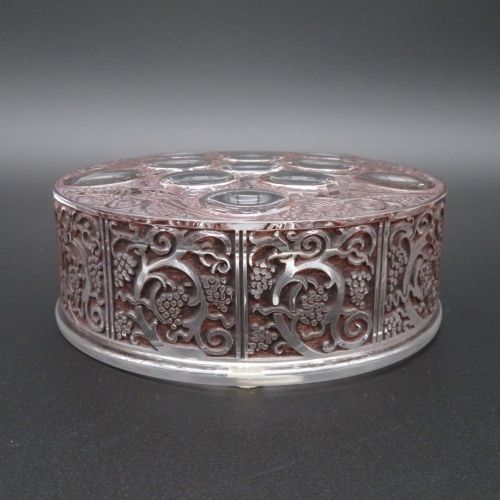


Art Deco Lidded Jar
An art deco lidded jar brings geometric elegance and practical vanity storage to a dressing table.
Art Deco Lidded Jar
An art deco lidded jar combines functional storage for powders, creams or trinkets with the sharp, clean lines characteristic of the interwar period. The pieces on this page span the 1920s and 1930s, reflecting an era of distinct design transformation in both domestic interiors and personal accessories.
Vanity jars, powder boxes, trinket boxes and small ceramic vases with covers form the majority of the objects seen here. Originating from British, French, German and Javanese workshops, these vessels vary from ceramic bonbonnieres to crystal jars mounted with precious metals.
The most frequent encounter on this page is the silver-mounted glass jar featuring guilloche enamel, alongside earthenware and porcelain novelty pieces from circa 1930. Buyers select these containers to introduce period character and compact storage into modern rooms.
How They Were Made
Metalwork and glass production formed the basis of many pieces, with sterling silver mounts fitted securely to cut crystal or amethyst glass bodies. Silversmiths stamped hallmarks onto mounts, while glassblowers utilised moulds to shape the heavy vessels.
Ceramic bodies were cast in earthenware or porcelain, then finished with hand-painted glazes or transfer printing to depict figures such as bathing belles. French and English potteries employed these techniques to achieve smooth surfaces ready for decorative motifs.
Enamel work required skilled artisans to apply translucent coloured layers over engine-turned guilloche metal grounds, creating intricate patterned effects beneath the coloured surface. Tortoiseshell and shagreen were also applied to silver frames as organic contrast to the cold metal and glass.
Art Deco Lidded Jar Retail Price Guide 2026
Typical asking prices for art deco lidded jar among the pieces listed under this phrase on Sellingantiques today, from the lower quarter to the upper quarter. They describe what is for sale here now, not the wider market.
Some jars feature ceramic bathing belles lounging precariously on the lids, ready to supervise your morning powder routine.
What Varies in Quality
The distinction between standard production items and finer examples rests upon the execution of the decorative surface and the weight of the materials. Heavy, thick-walled crystal and crisp silver castings indicate superior manufacture compared to lighter, pressed alternatives.
Enamel work demonstrates quality through the uniformity of the engine-turned pattern beneath and the absence of chipping or heavy scratching in the coloured layers. Similarly, ceramic pieces rely on the precision of the hand-painted details and the clarity of the glaze finish.
Hasset and Harper·Goldsmith's and Silversmith's Co.·Royal Winton·Limoges·W.M.F.
The Art Deco Lidded Jar Glossary
- Guilloche
- A decorative engraving technique producing precise, intricate geometric patterns on a metal surface. Enamellists frequently applied translucent coloured glazes over this work.
- Bonbonnieres
- Small decorative containers originally intended to hold sweets or bonbons. They appear in porcelain and ceramic during the interwar period.
- Shagreen
- Undyed skin from a shark or ray, recognised by its rough, pebble-grained texture. Makers utilised it to cover luxury boxes and vanity items.
- Repousse
- A metalworking technique where the artisan hammers the design from the reverse side to form a raised relief on the front.
- Rouge pot
- A small lidded vessel designed to hold cosmetic cheek or lip colour. They often featured precious metal mounts and coloured glass.
Art Deco Lidded Jar: Frequently Asked Questions
What were art deco lidded jars used for?
These vessels served primarily on dressing tables and desks to contain face powder, rouge, trinkets or stamps. Their secure lids kept contents clean and private.
Larger ceramic or crystal versions also functioned as bonbonnieres for sweets or small preserve pots for the dining table.
How do I clean silver and enamel jars?
Silver mounts require gentle cleaning with a soft microfibre cloth and a reputable silver polish, taking care to avoid the enamel surfaces entirely.
Enamel and glass components tolerate warm water and mild soap, but harsh abrasives will scratch the delicate coloured layers and crystal body.
How can I tell a 1920s jar from a 1930s jar?
Pieces from the 1920s frequently incorporate Edwardian transitional motifs alongside early modernist symmetry, often featuring tortoiseshell or delicate guilloche enamel.
By the 1930s, designs leaned further into streamlined geometric shapes, bolder ceramic glazes, and novelty figures like bathing belles.
Are ceramic jars fragile for daily use?
While earthenware and porcelain withstand normal handling, their lids represent the most vulnerable point due to potential drops or knocks against the rim.
Treating them with care ensures they remain intact for display and gentle storage on modern dressing tables.