


Vintage Decorative Columns
Vintage decorative columns bring classical proportion and vertical presence into a room, spanning carved wood, gleaming brass and hand-painted surfaces.
Vintage Decorative Columns
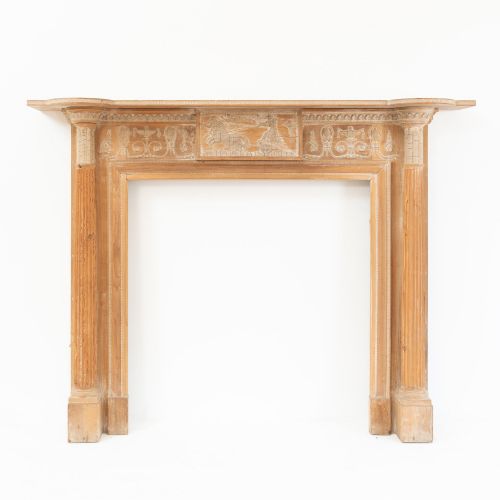
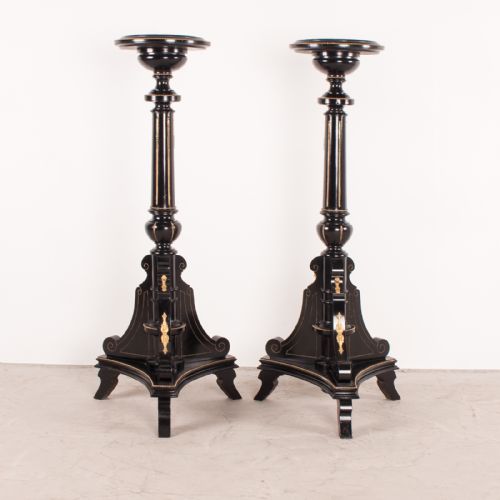
Vintage decorative columns encompass architectural salvage, plant stands, torchières and table lamps drawn from the nineteenth and early twentieth centuries. These pieces translate classical building forms into domestic furnishings designed to elevate ornaments or cast light.
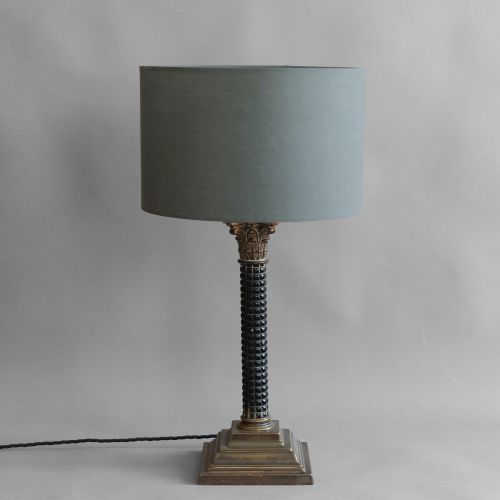
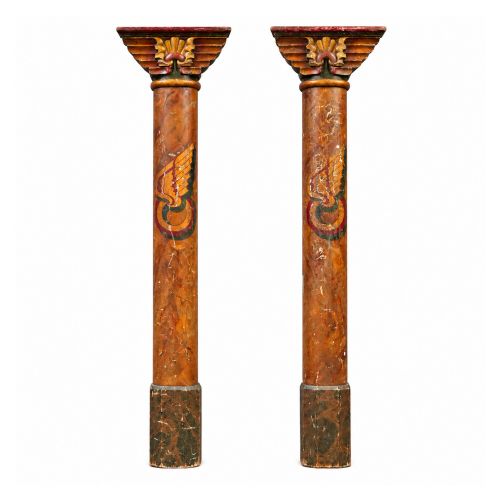
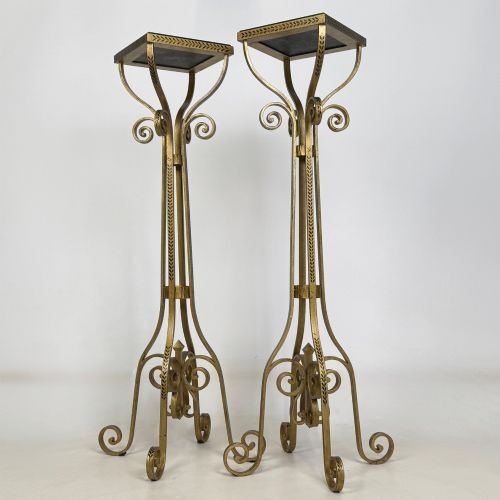
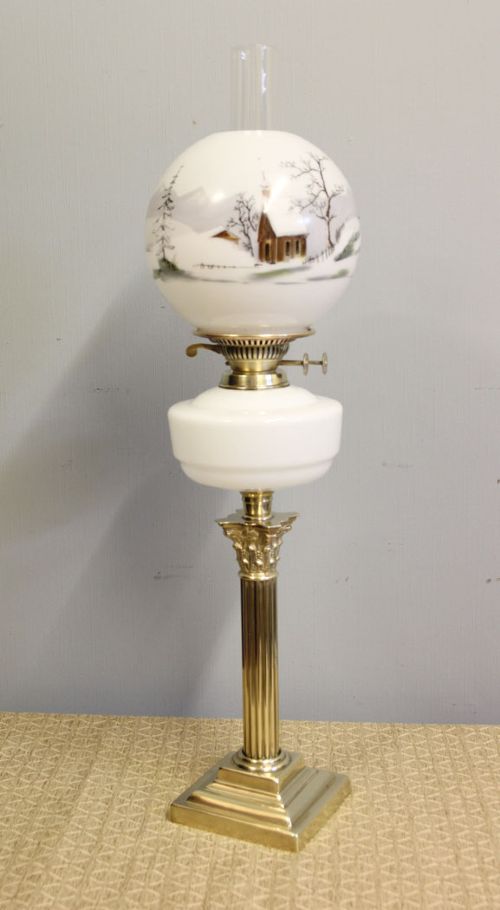
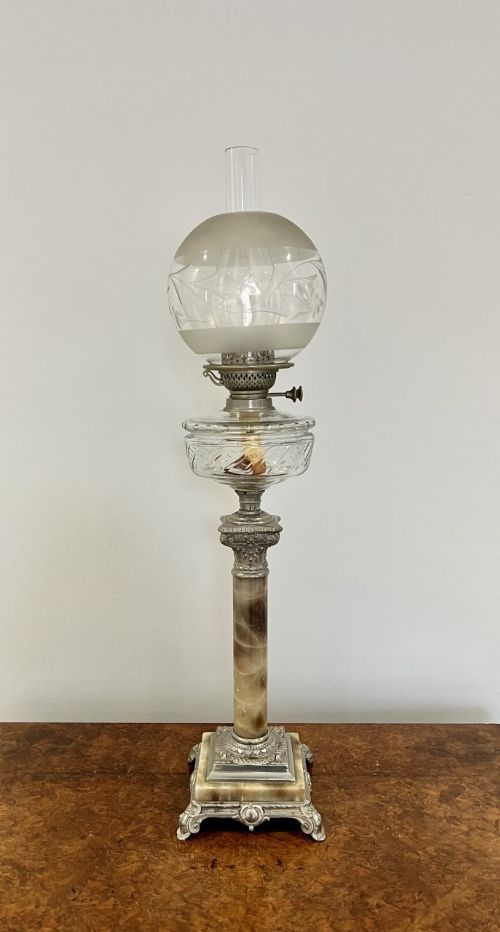
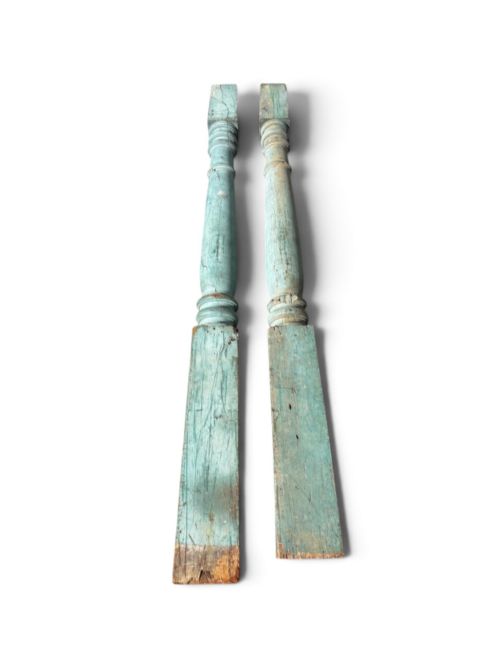
The selections available here range from tall Victorian wooden pillars and Edwardian marble-topped pedestals to brass table lamps styled with Corinthian capitals. Many pieces appear in matched pairs, offering symmetry for flanking doorways, mantelpieces or corners.
Origins stretch across English, French and Kashmiri workshops, incorporating styles from Neoclassical Revival to Art Deco and French Chateau. Buyers encounter everything from rough softwood architectural salvage to polished walnut pedestals.
How they were made
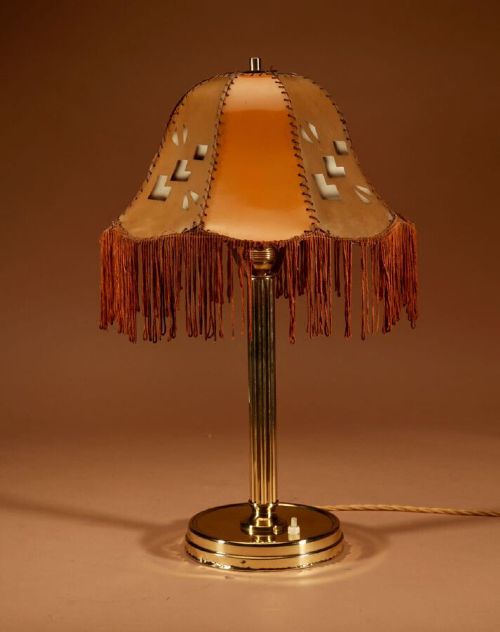
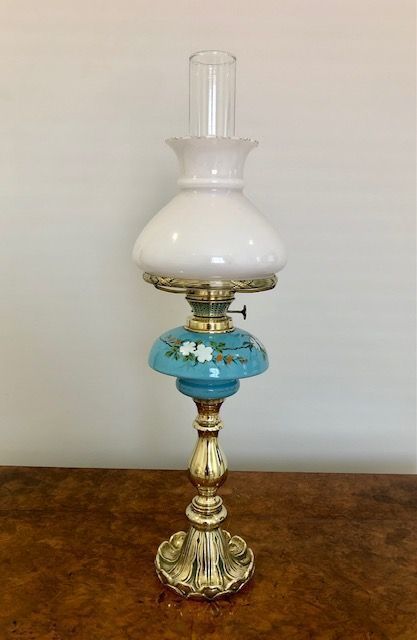
Craftsmen built these pieces using traditional methods in hardwood, softwood, brass, gilt bronze and marble, often applying gesso, paint or fine veneers over the core structure. Wood elements feature hand-carved capitals and turned shafts, whilst metal components combine cast brass with glass fonts and shades.
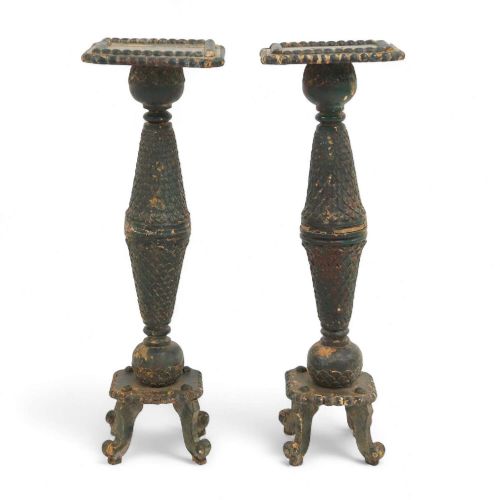
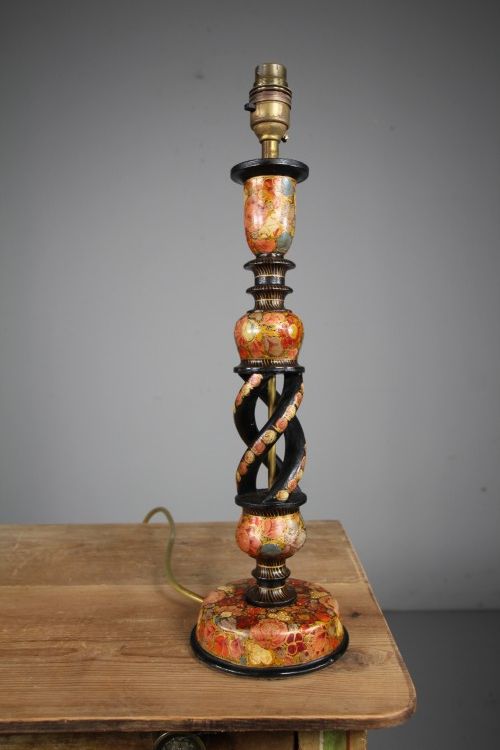
Surface decoration plays a defining role, with makers employing original green paint, faux marble finishes, giltwood and hand-painted Kashmiri floral patterns. Structural elements frequently integrate stone bases or marble tops to add weight and textural contrast to wood and metal.
Current listings feature pieces spanning the Victorian and Edwardian eras alongside 1920s and 1930s designs, incorporating brass, marble, giltwood and hand-painted wood.
What varies in quality
Quality rests in the crispness of the carving, the selection of timber such as macassar ebony or mahogany, and the preservation of original surfaces like early green paint or gilding. Superior examples display harmonious proportions and substantial materials rather than thin veneers or cast substitutes.
The integrity of the construction distinguishes finer items, whether in the precision of a Corinthian brass capital or the stability of a hardwood pedestal with carved ionic details. Complete sets, matched pairs and untouched original finishes command greater appreciation than heavily altered pieces.
The Vintage Decorative Columns Glossary
- Torchere
- A tall, slender stand designed to support a lamp or candle. These pieces often feature carved wooden shafts and elevated platforms for display.
- Corinthian
- A classical architectural order characterised by ornate capitals decorated with acanthus leaves. This motif appears frequently on brass and stone table lamps.
- Giltwood
- Wood that has been coated with gold leaf or gold paint. This technique creates a luminous decorative surface seen on Edwardian and nineteenth-century pieces.
- Pedestal
- A support or base for a statue, urn or plant stand. Versions in this collection incorporate marble tops and faux stone finishes.
- Faience
- Tinned-glazed earthenware pottery used for decorative jardinières and planters. These glazed ceramics bring rich colour and pattern to nineteenth-century plant stands.
Vintage Decorative Columns: Frequently Asked Questions
How do I style a vintage column at home?
Place a pair of wooden or marble-topped torchières to flank a fireplace or frame a doorway to create immediate architectural symmetry. A taller pedestal works effectively in an empty corner to elevate a bronze sculpture, a ceramic planter or a large floral arrangement.
Shorter column forms, such as brass table lamps, sit comfortably on sideboards or desks to introduce vertical light and metallic sheen. Keep surrounding furniture understated to let the carved details and historical patination remain the focal point of the room.
Are these columns strong enough to hold heavy items?
Many nineteenth-century wooden and marble-topped pieces were built specifically to bear the weight of heavy bronze urns, large plants or heavy lamps. Hardwood construction and stone bases provide natural stability for everyday domestic use.
Lighter architectural salvage or softwood columns intended for restoration may require reinforcement before supporting valuable objects. Check the base material and structure of each individual piece to confirm its load-bearing capacity.
How can I tell the period of a column?
Examine the materials, joinery techniques and decorative motifs to determine the era of manufacture. Nineteenth-century examples often display hand-carved pine, heavy brass castings and naturalistic faux marble finishes.
Early twentieth-century pieces, including Art Deco designs and 1920s carousel columns, typically incorporate streamlined geometries, macassar ebony or distinct painted fairground decoration. Edwardian pieces frequently combine carved giltwood with clean marble tops.