


Carved Wooden Pilasters
Carved wooden pilasters bring architectural depth and historical character to a room, offering tactile ornamentation derived from centuries of classical design.
Carved Wooden Pilasters
When you search for carved wooden pilasters, you encounter architectural elements and decorative carvings spanning from the seventeenth century through to the Victorian era. These pieces manifest as architectural salvage, freestanding carvings, and integrated components of larger furniture forms like bookcases and sideboards.
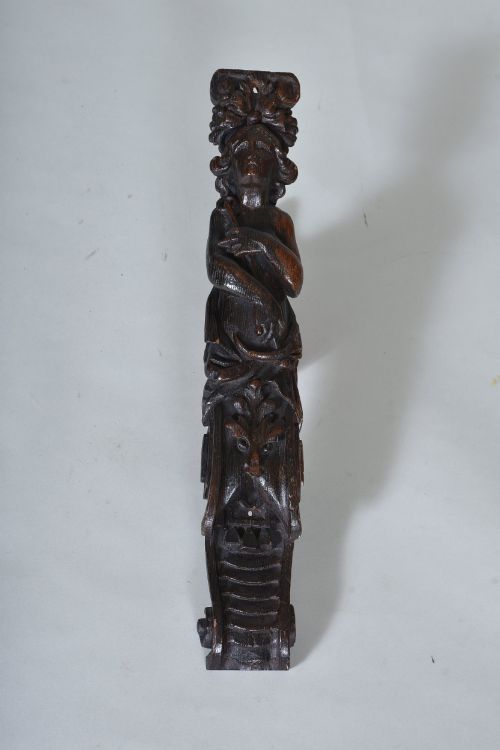
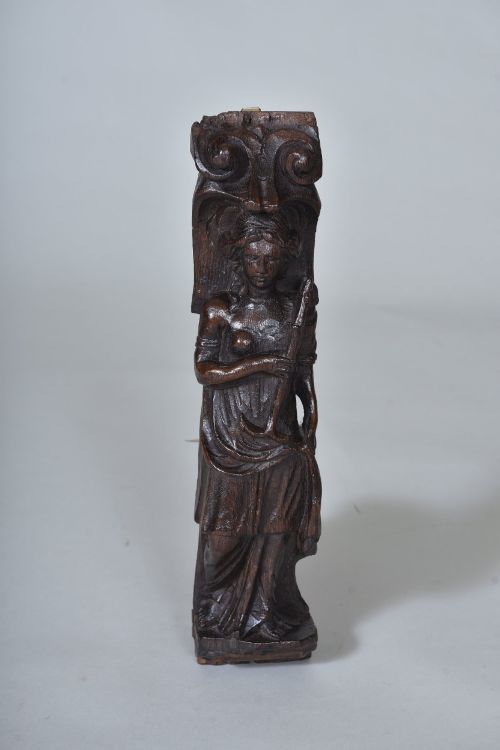
The selection ranges from early oak panels and caryatids to later mahogany and walnut columns, capitals, and herms. Early examples often display deep relief work rooted in seventeenth-century Jacobean or Flemish Renaissance traditions.
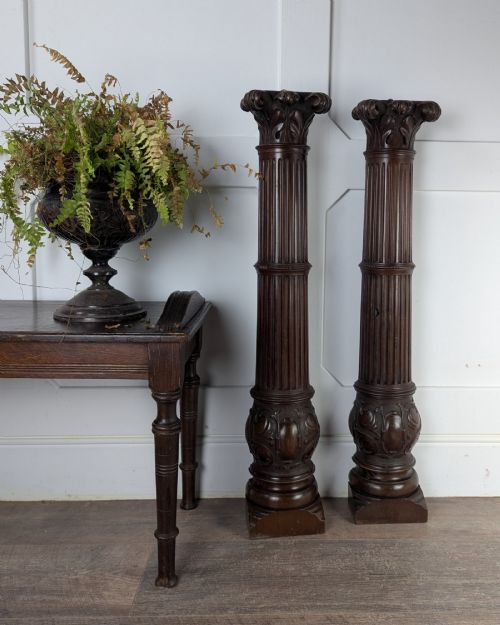
Victorian and Georgian interpretations also appear frequently, often taking the form of reeded half columns or decorative terms. Buyers most often meet these as architectural salvage or salvaged decorative carvings rather than complete structural elements.
Materials and carving techniques
The pieces rely on hardwoods selected for stability and grain, primarily oak, walnut, and mahogany, alongside occasional use of satinwood, chestnut, and dark oak. Craftsmen utilised these dense timbers to achieve crisp lines and enduring structural integrity in deep relief.
Carving methods involve hand-choking and chiselling to produce sculptural figures, Corinthian capitals, and fluted shafts. The work demonstrates traditional joinery and sculptural techniques appropriate to periods ranging from the seventeenth century to the nineteenth century.
Listings feature woods spanning walnut, oak, mahogany, and satinwood, originating across the seventeenth, eighteenth, and nineteenth centuries.
Distinctions in quality and execution
Quality rests in the sculptural depth, anatomical proportions of figures such as caryatids and herms, and the crispness of the acanthus or Corinthian detailing. Superior examples show confident handling of the timber grain and harmonious balance across pairs.
The integrity of the surface patina and the preservation of the original hand-carved edges distinguish finer historical survivals from later or heavily restored pieces. Depth of undercut work and the natural ageing of walnut and oak further define the upper tier.
The Carved Wooden Pilasters Glossary
- Caryatid
- A sculpted female figure serving as an architectural support taking the place of a column or pilaster. These figures often appear in seventeenth-century oak carvings.
- Herm
- A carved bust or figure atop a tapered pillar, originating in ancient Greece and revived in later European furniture and architecture. Early nineteenth-century examples often utilise chestnut.
- Capital
- The uppermost member of a column or pilaster, often carved with foliage such as acanthus leaves or classical orders like Corinthian. They provide the visual transition to the entablature above.
- Reeded
- Decorated with parallel convex mouldings resembling bundled reeds. This surface treatment frequently appears on nineteenth-century mahogany columns and furniture elements.
Carved Wooden Pilasters: Frequently Asked Questions
How were pilasters used originally?
Pilasters served as decorative framing elements on architectural facades, mantelpieces, and grand case furniture such as bookcases and cabinets. They provided visual support and rhythm to flat walls and large wooden structures.
Over time, many of these elements survived as architectural salvage when buildings were altered or dismantled. Today, collectors repurpose them as wall art or mount them within modern interiors.
How do I identify seventeenth-century carvings?
Seventeenth-century pieces typically employ heavy dark oak with deep, robust hand-chisel marks and distinct Tudor or Jacobean motifs. Figures like caryatids from this period display weighty proportions and dark, oxidised timber patinas.
Comparing the joinery style and tool marks helps differentiate these early works from nineteenth-century revival pieces. Genuine seventeenth-century items show authentic age shrinkage and dry, stable timber.
Are these pieces supplied as pairs?
The inventory includes both individual carvings and matched pairs of columns or capitals. Pairs are particularly sought after for symmetrical interior design schemes flanking doorways or fireplaces.
Single figures, such as caryatids or term busts, often function well as standalone sculptural display pieces. Checking the descriptions confirms whether items retain their original matching companion.
How should I clean wooden carvings?
Maintenance requires gentle dusting with a soft, dry cloth to protect the historic surface patina and delicate carved details. Avoid commercial liquid polishes or harsh solvents that can strip original wax finishes from antique oak or walnut.
Applying a microcrystalline wax occasionally helps nourish dry hardwoods without building up heavy residues. Keep the carvings away from direct heat sources and strong sunlight to prevent timber splitting.