


Vintage Dancer Table Light
A vintage dancer table light brings authentic Art Deco form into a room, casting a warm glow through sculpted figures.
Vintage Dancer Table Light
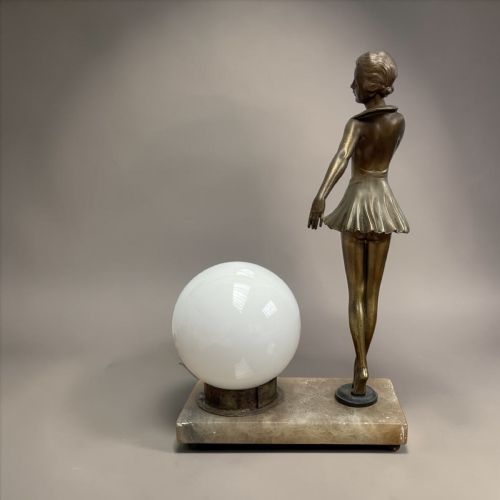
A vintage dancer table light is a figural lamp representing a female dancer, athlete, or nude figure. These pieces belong to the Art Deco period, spanning the nineteen twenties, nineteen thirties, and nineteen forties.
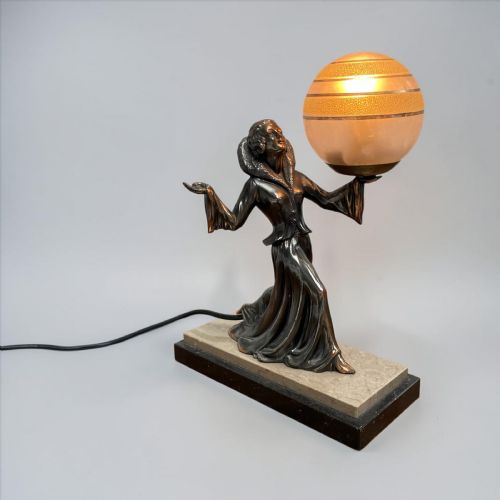
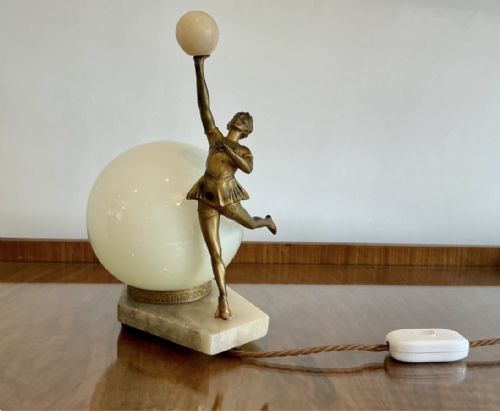
The most common examples on this page are figural lamps taking the form of a lady holding a ball, an athlete, or a double lady design. They combine sculptural metal figures with glass elements to function as both lighting and ornamentation.
Origins represented in these listings point towards English manufacture from around nineteen thirty, alongside general Art Deco pieces. Collectors seek these lamps for their distinct sculptural presence and period character.
How they were made
Makers utilised metals such as chrome, brass, bronze, patinated metal, silver plate, and spelter to cast the figural bases. These metals were shaped into dynamic poses representing dancers and athletes.
Lighting components incorporated glass elements, specifically frosted glass and opaline glass, alongside alabaster. These translucent materials diffused the light emanating from the lamp body.
Several ladies spend their evenings permanently holding a ball aloft while illuminating the room.
What varies in quality
Quality rests in the definition and detailing of the figural casting, distinguishing a finely modeled dancer from a simpler commercial piece. The choice of base material, from standard spelter to heavy bronze or silver plate, alters the substance of the object.
The integration of the glass shade or globe with the metal figure dictates the overall cohesion of the design. Alabaster and frosted glass elements show varying degrees of translucency and working skill.
The Vintage Dancer Table Light Glossary
- Art Deco
- A design style of the nineteen twenties and nineteen thirties characterised by sleek lines and modern materials. It dominates the aesthetic of these figural lamps.
- Spelter
- A zinc alloy commonly utilised as a base metal for cast figures. It takes plating well to imitate bronze or silver.
- Opaline glass
- A milky, semi-translucent glass used to soften light output. It appears frequently in period lighting fixtures.
- Patinated metal
- Metal treated with chemicals or heat to alter its surface colour and tone. This finish adds depth to figural castings.
Vintage Dancer Table Light: Frequently Asked Questions
What periods do these lamps come from?
These lamps originate primarily from the nineteen twenties, nineteen thirties, and nineteen forties. The styling reflects the height of the Art Deco movement.
Dates cluster around nineteen thirty, encompassing both English production and continental manufacturing styles.
What materials were used to make them?
Constructed from a mix of metals and glass, these lamps utilise chrome, bronze, brass, silver plate, and spelter for the figures. Bases often incorporate marble or alabaster.
Lighting elements consist of frosted glass or opaline glass shades designed to hold bulbs and diffuse the illumination.
How do figural lamps differ from standard lamps?
Figural lamps incorporate a sculptural human form, such as a dancer or athlete, directly into the stem or body of the light. The figure itself forms the primary visual focus of the object.
Standard lamps rely on abstract columns, urns, or geometric shapes rather than representing a specific character in motion.
Where should I place a table light?
These lamps suit side tables, desks, or mantelpieces where their sculptural qualities can be viewed up close. Their dual function provides low-level ambient lighting alongside decorative presence.
Placement should allow the frosted or opaline glass to cast light effectively without the figural base being obscured.