
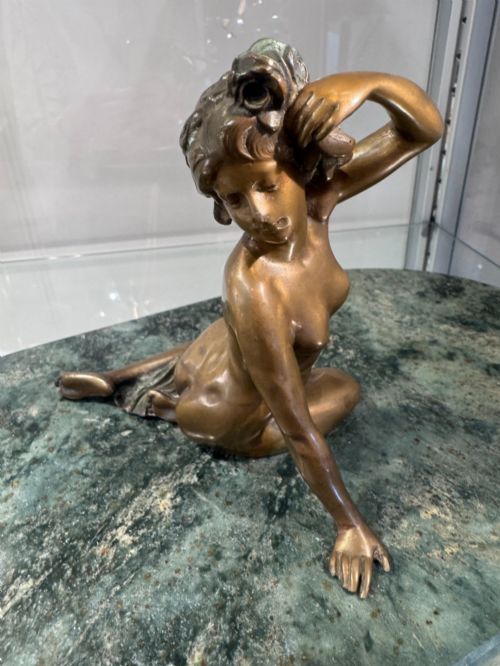


Patinated Metal Lady Statue
A patinated metal lady statue brings a striking silhouette into a room, capturing the distinct elegance of the late nineteenth and early twentieth centuries.
Patinated Metal Lady Statue
A patinated metal lady statue encompasses a range of female figures and busts executed in bronze, spelter, and patinated metal. These sculptural works take the form of table lamps, portrait busts, and freestanding figures.
The pieces on this page span the Victorian era, the late nineteenth century, and the Art Nouveau and Art Deco periods. Buyers are most likely to encounter Art Deco spelter figures and lamps from around nineteen thirty.
Originating largely from French and English workshops, these statues range from classical reclining studies to stylized figures holding mirrors or seated upon marble bases.
Materials and construction
The mounting of these sculptures frequently involves contrasting natural stones, with marble and onyx serving as heavy plinths or bases to anchor the metal figures.
Distinguishing quality
The integration of the secondary materials, such as the fit of a marble base or the quality of an associated glass lamp element, separates mass-produced decorative items from more accomplished studio pieces.
Jennings Brothers·H. Bal·J C De Blezer
The Patinated Metal Lady Statue Glossary
- Spelter
- A zinc alloy commonly used as a cost-effective alternative to bronze in nineteenth and twentieth-century figures. It accepts patination well but is softer than bronze.
- Patination
- The surface coloration achieved through chemical treatment, age, or application of pigment. A deliberate finish that highlights the contours of the metal.
- Cold painted
- A technique where pigment is applied to metal without heat after the casting process. This finish can show delicate coloration on clothing and skin.
- Art Deco
- A design style dominant in the nineteen twenties and thirties characterised by streamlined geometric forms and stylized depictions of the human figure.
Patinated Metal Lady Statue: Frequently Asked Questions
How do I date a lady statue?
Dating relies on stylistic markers such as the geometric lines of Art Deco or the flowing vegetal motifs of Art Nouveau. The choice of materials, including specific spelter alloys and base stones, also points to the era of manufacture.
Signatures or foundry marks stamped into the metal provide further clues, helping to narrow the decade of production.
Where should I display my statue?
These figures suit placement on mantelpieces, side tables, or desks where their silhouettes can be appreciated from multiple angles. Lamp variants function well as accent lighting in living spaces.
Keep metal sculptures away from direct moisture and excessive direct sunlight to preserve the stability of the patination and any attached stone bases.
What is the difference between bronze and spelter?
Bronze is a durable copper alloy that takes fine detail and holds a rich patina over centuries. Spelter is a softer, zinc-based metal that was widely utilised for decorative figures during the nineteenth and twentieth centuries.
Spelter is lighter than bronze and often requires a heavier marble base to ensure stability.
How do I clean patinated metal?
Dust the surface regularly with a soft, dry cloth to prevent the accumulation of grit in the crevices of the casting. Avoid harsh chemical cleaners or abrasive polishes that can strip away the original patination.
Professional conservation is recommended if deeper cleaning is required to address surface oxidation.